Natural slate: types, properties and applications
A dense, low-absorption natural stone for floors, walls, façades and patios
Slate is a fine-grained metamorphic rock. It formed over millions of years from clay-rich sediments such as shale and mudstone, compressed and heated deep in the earth’s crust. That process aligned its minerals into thin parallel layers. This is why slate splits naturally into flat sheets and shows a clearly layered texture on a riven surface.
Colours range from black and anthracite to grey, green and rust tones, depending on the minerals in the original sediment and the quarry of origin. Low water absorption and high density make slate suitable for indoor flooring, wall cladding and façades, and most varieties are frost resistant for outdoor paving. A riven finish suits rustic and traditional settings, while honed slate gives a smoother, more contemporary surface.
Discover our slates
Slate applications: flooring, patios, cladding, stairs and fireplaces
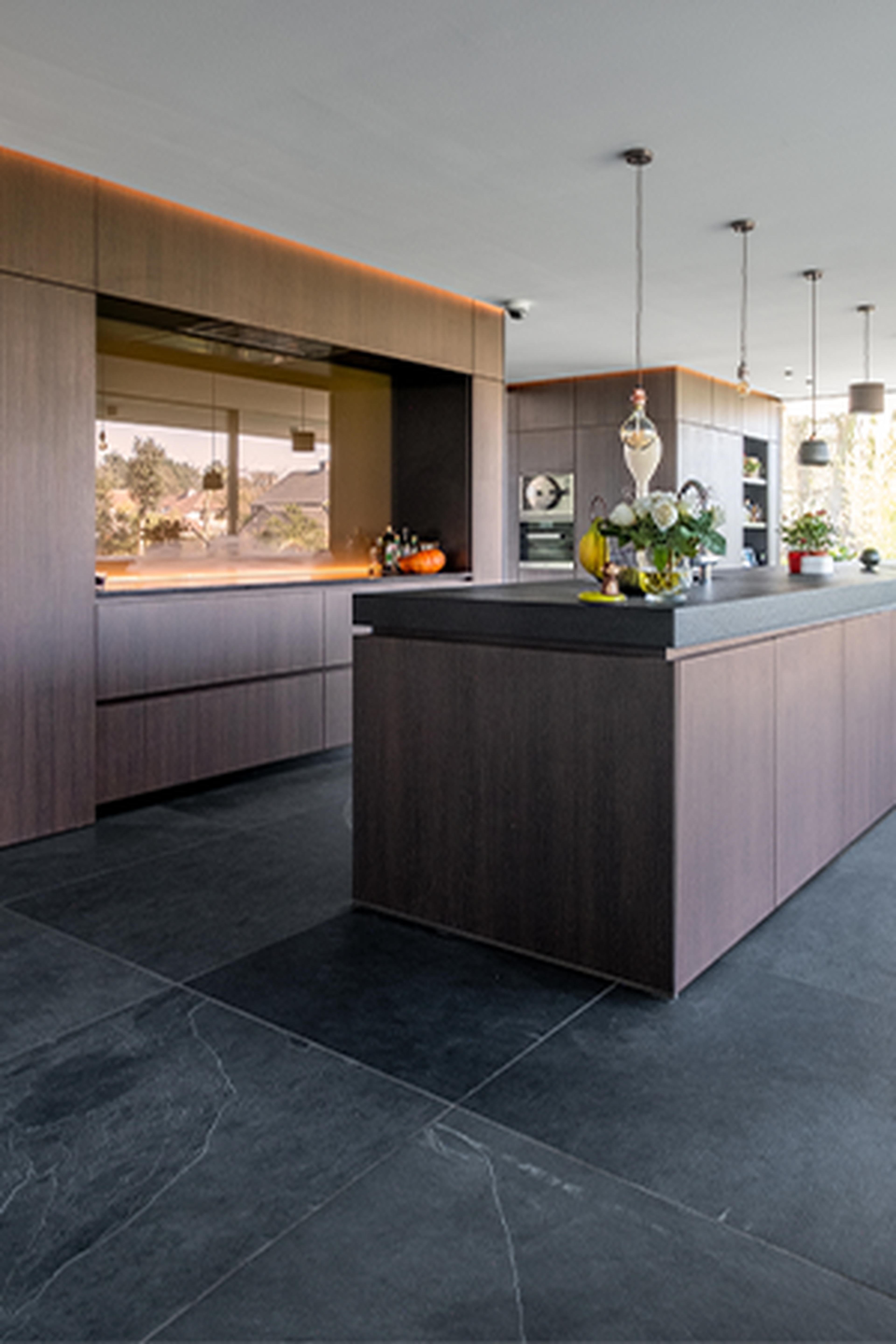
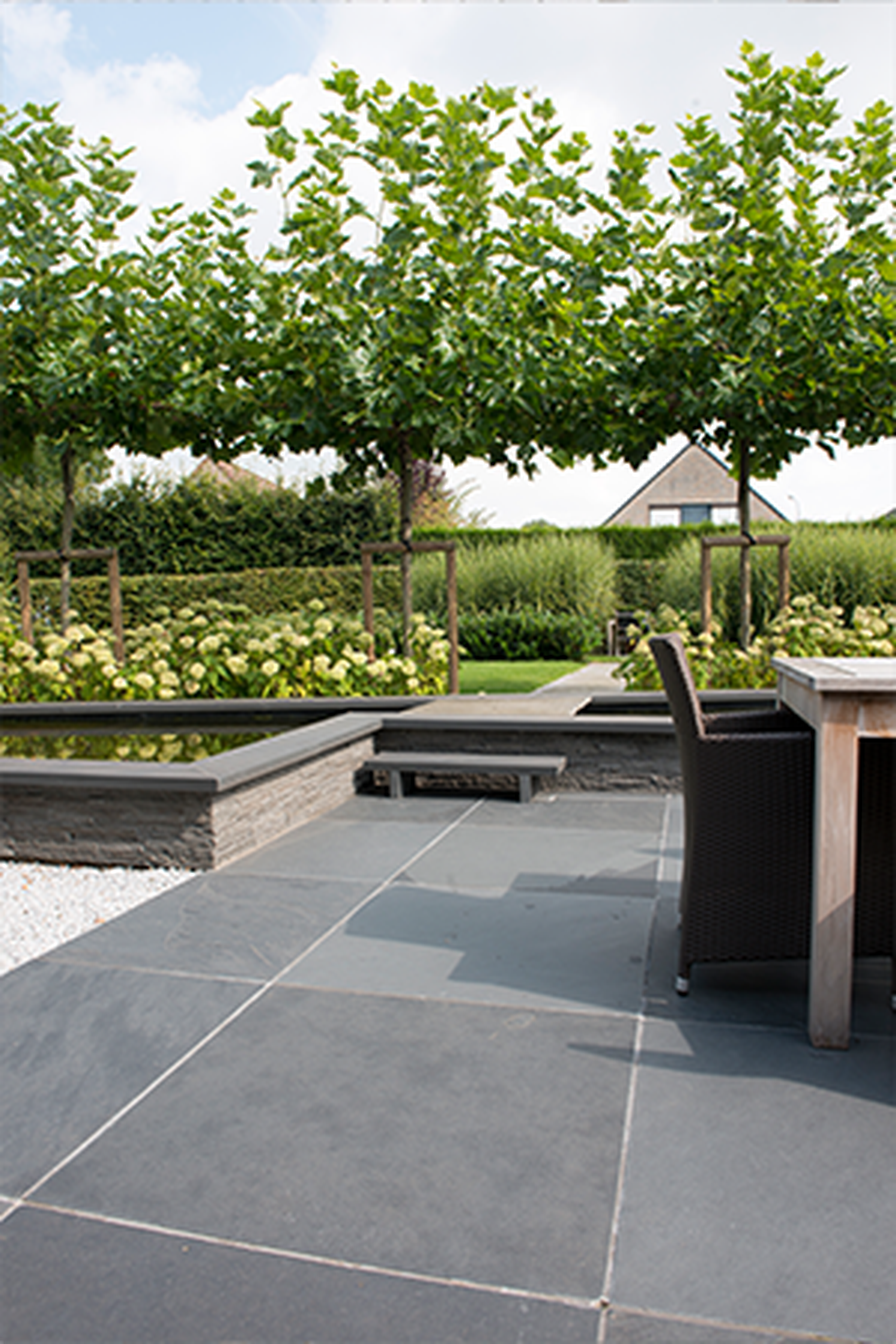
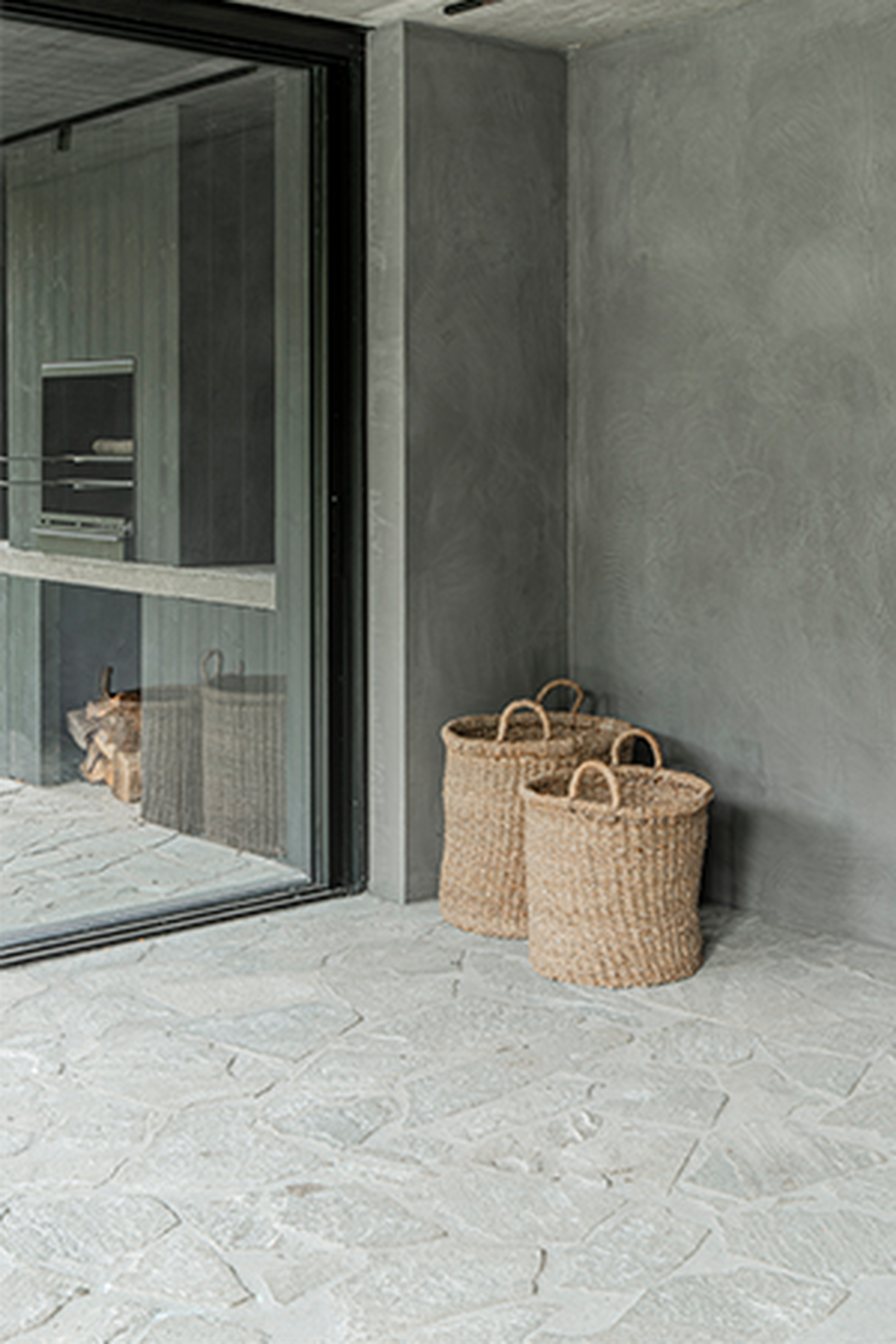
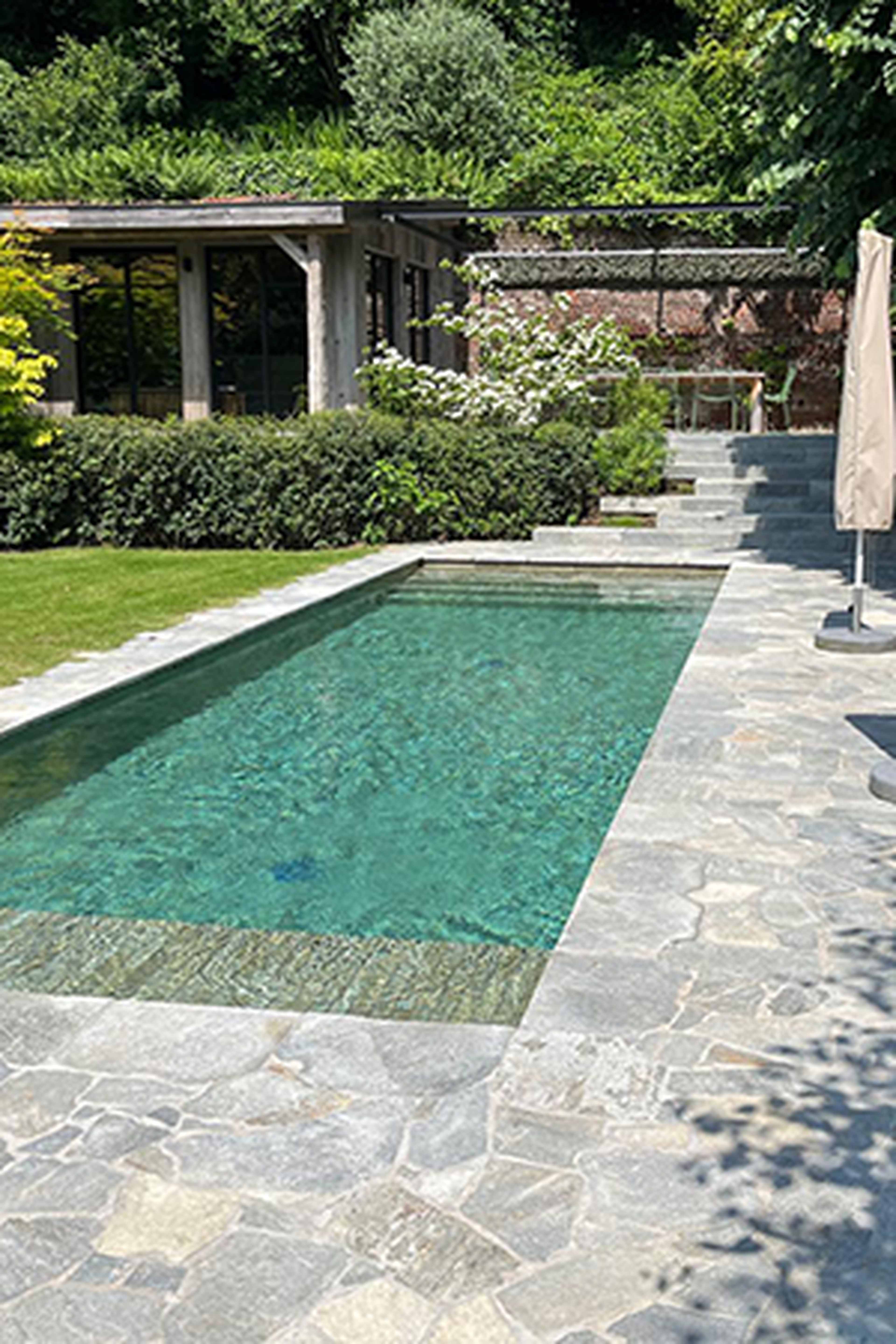
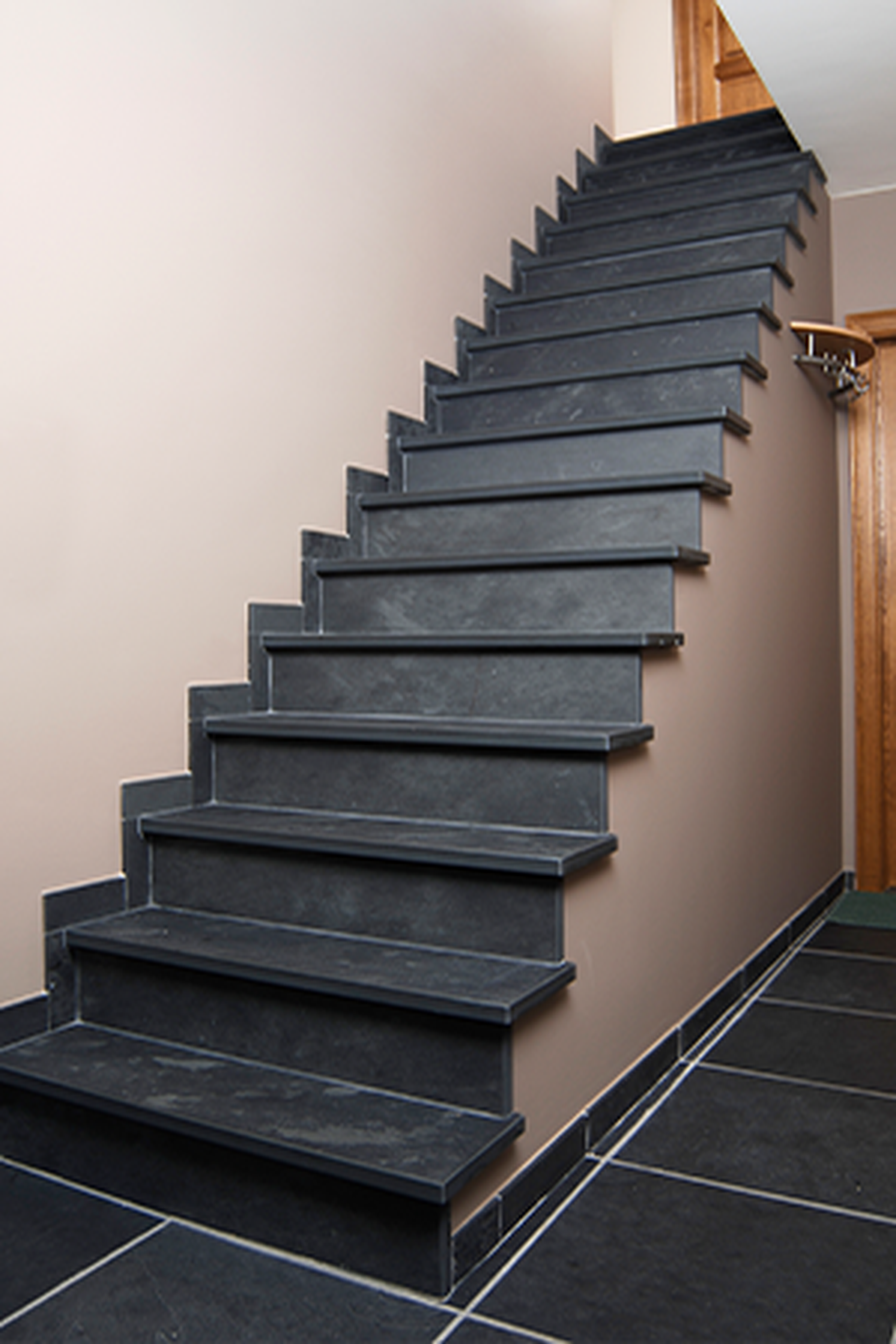
Slate is best known as a roofing material, but Brachot slate is mainly used for floors, walls and outdoor paving, most often for:
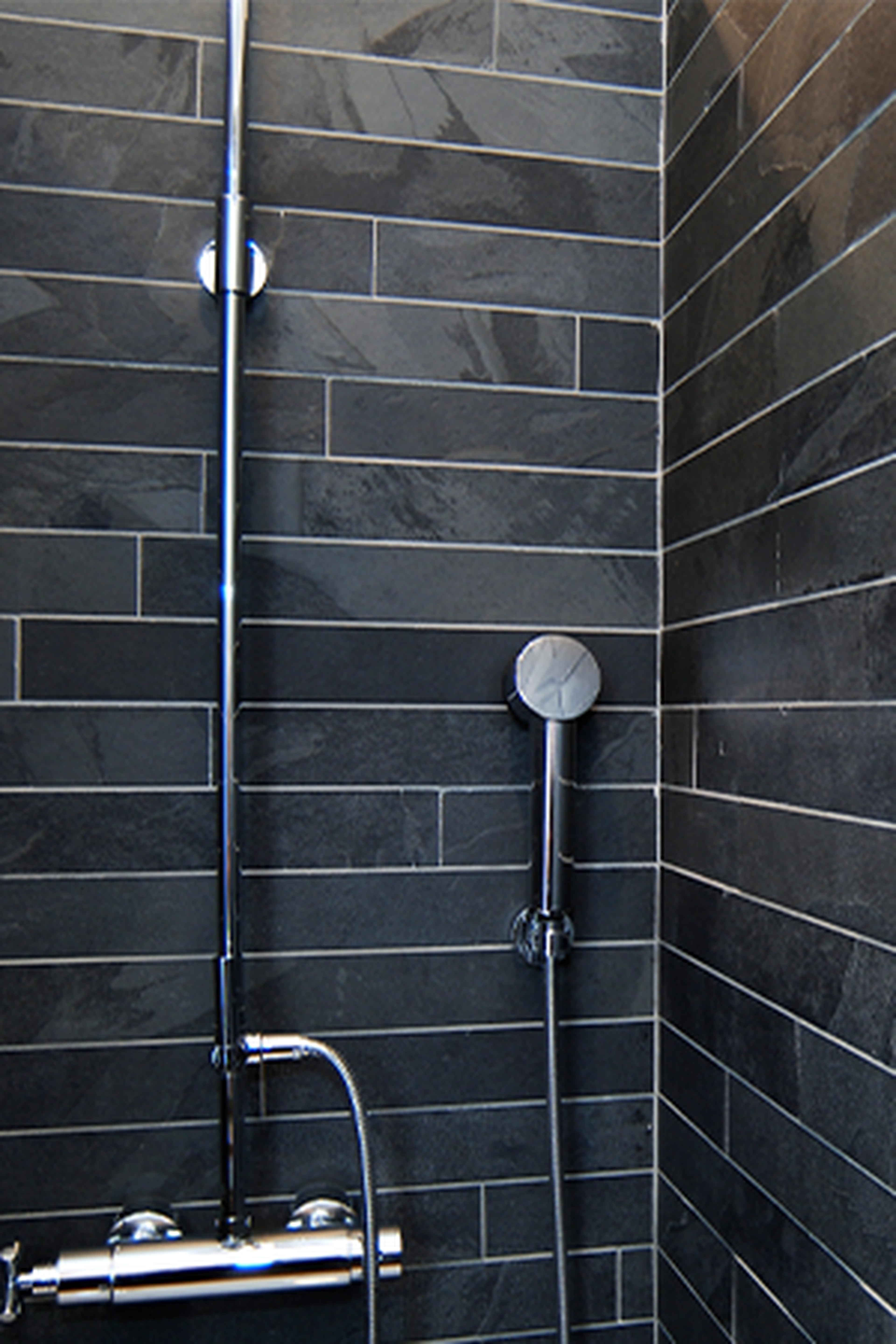
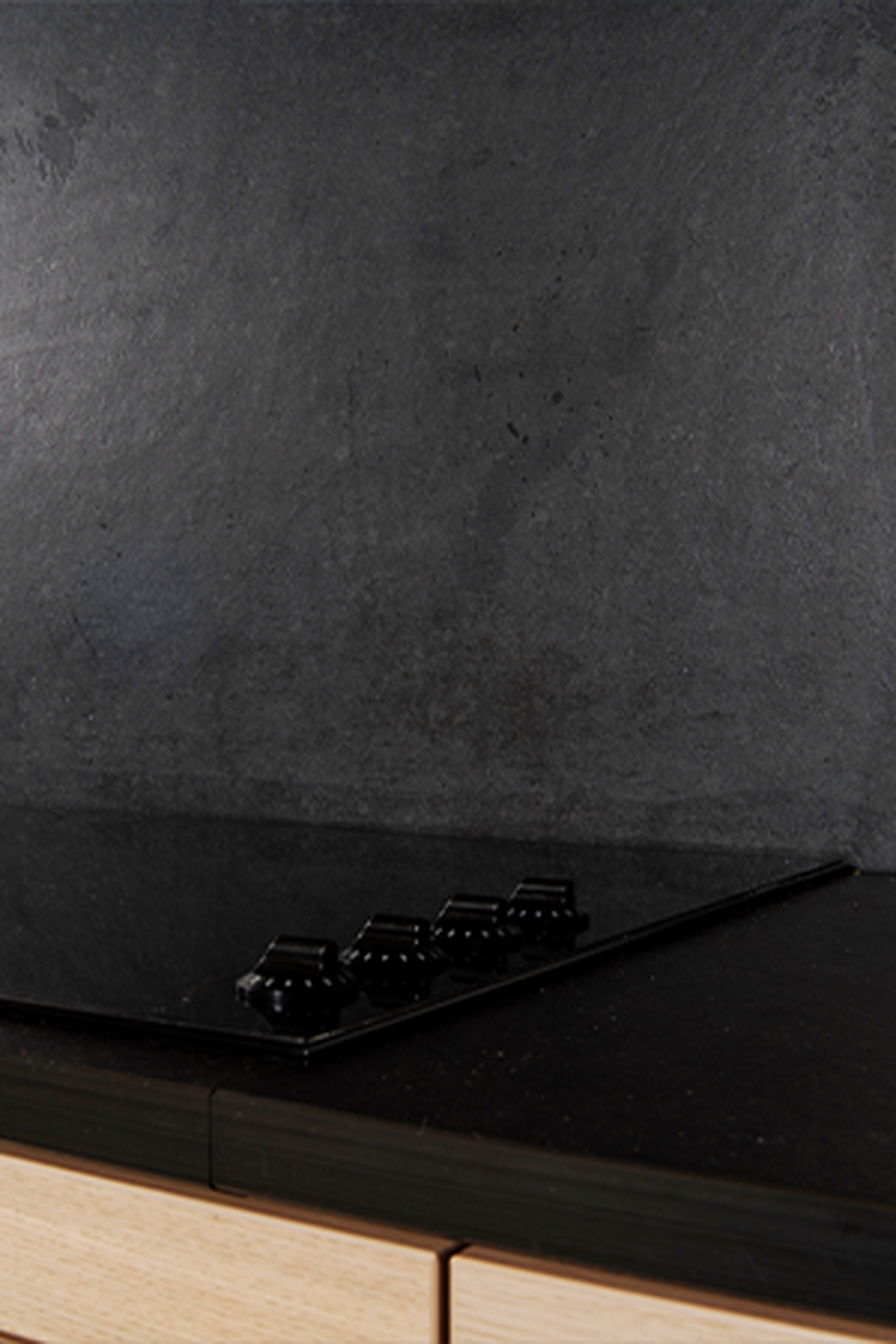
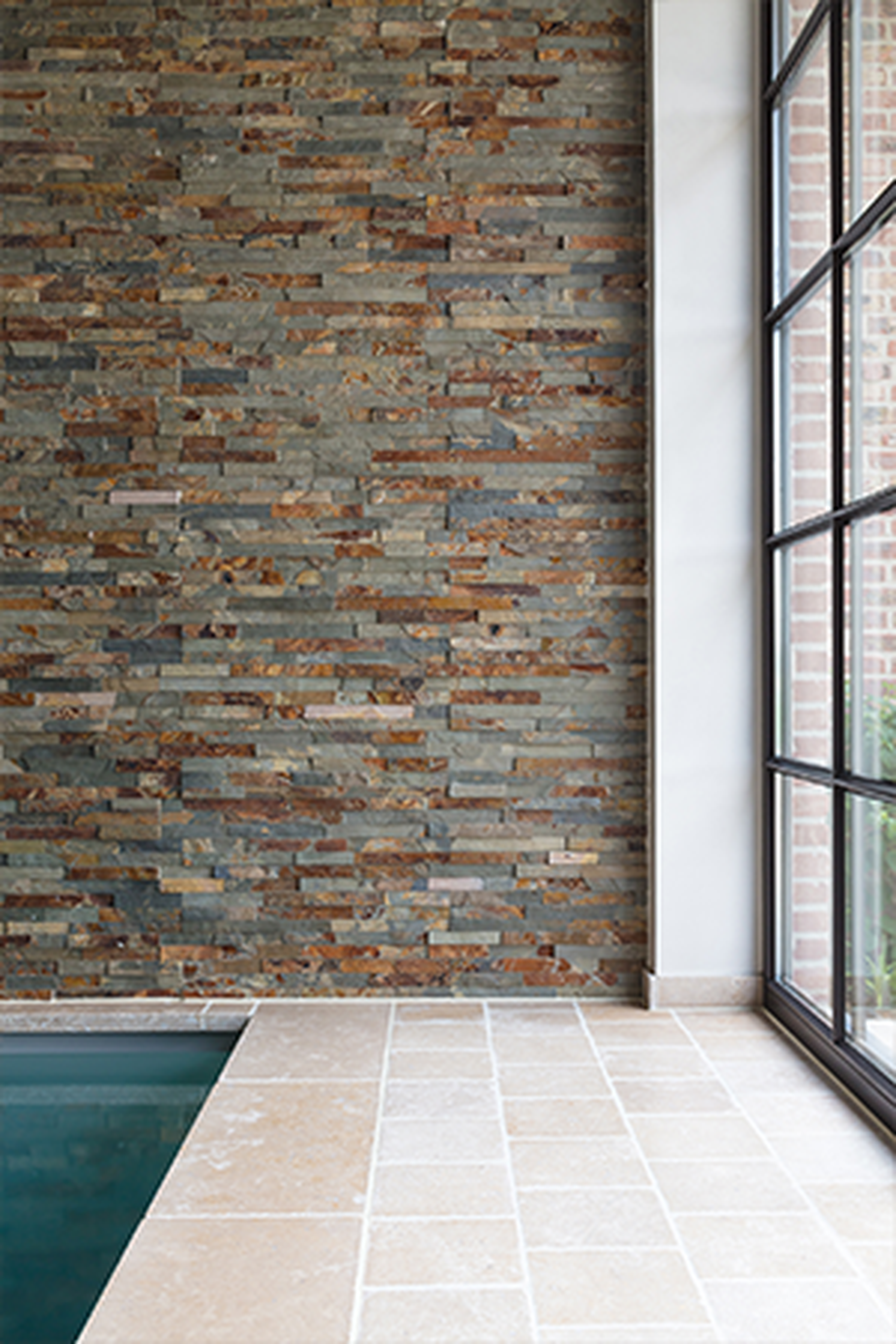
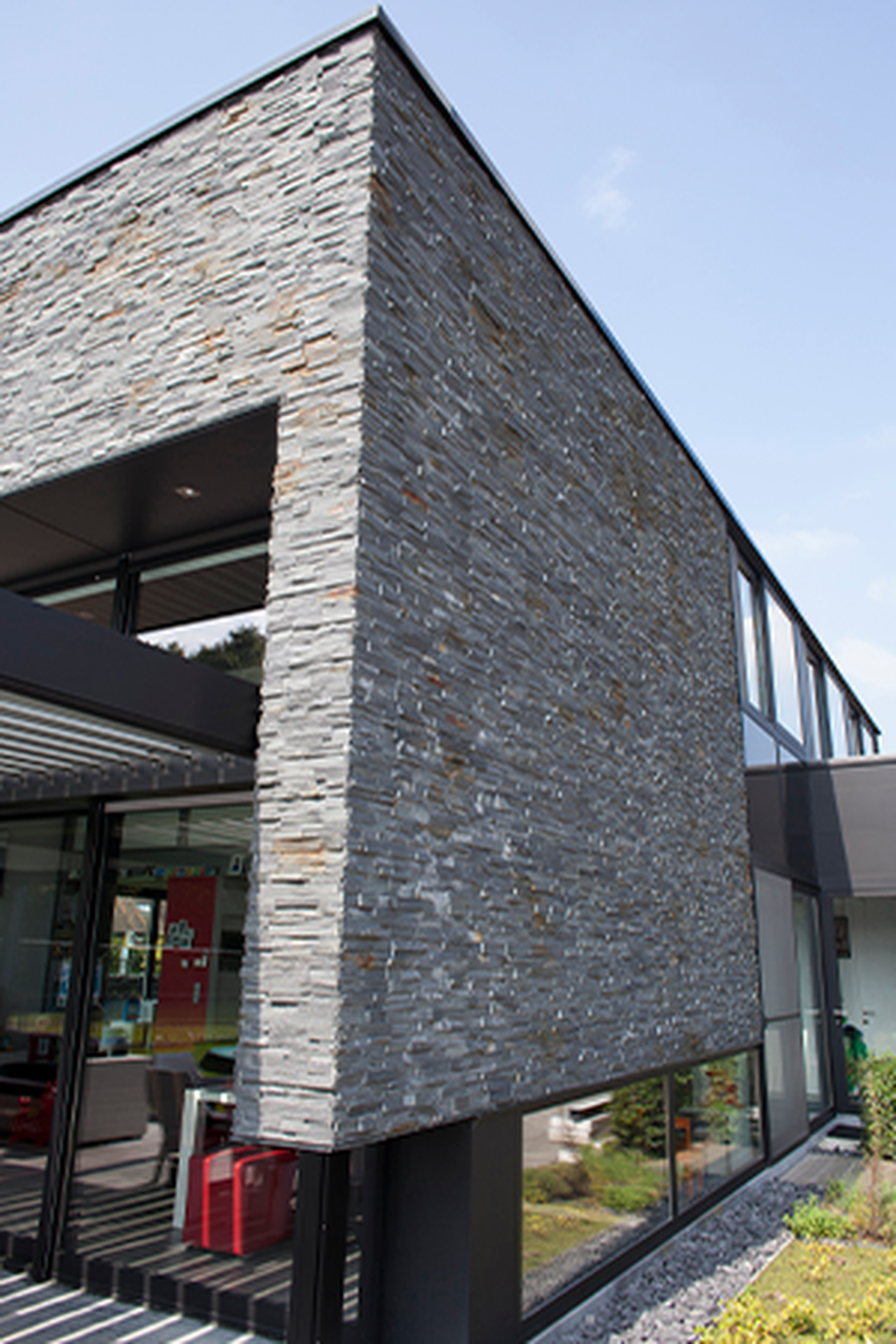
Slate finishes: riven or honed
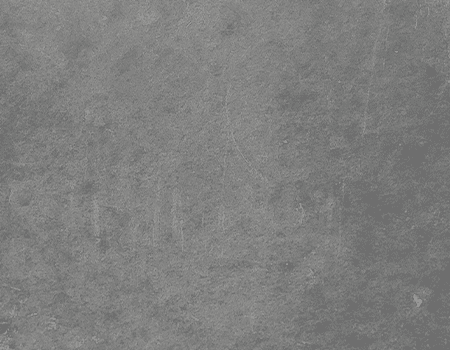
Riven (natural cleft)
The stone is split along its natural layers and left unpolished. The surface keeps the slight relief and texture of the cleavage planes, which gives grip outdoors and a natural, characterful look indoors. This is the most common finish for patios, crazy paving, pool copings and rustic interiors.
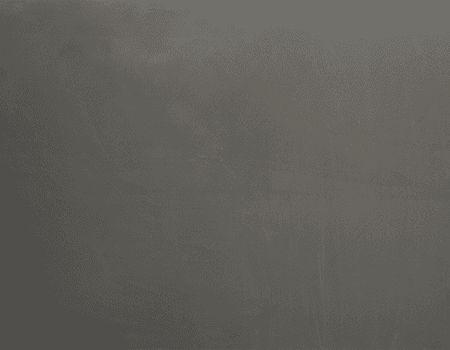
Honed
The riven surface is ground flat to a smooth, matt finish. Honed slate has an even thickness and a calmer appearance, suited to contemporary interiors, kitchens and wall cladding. The colour usually looks slightly lighter than on a riven surface.
Get inspired

Contact us for more information regarding slate.