Rose de la Clarté Granite: A High-Performance Alternative to Porphyry for Red-Pink Public Space Paving
Consistent colour, low porosity, built to last 50 years.
Quarried in Brittany, France, Rose de la Clarté is a coarse-grained pink-red granite with measured porosity of ≤ 0.7%, frost resistance exceeding 240 freeze-thaw cycles, and geological colour consistency that holds across batches, years and repair works. For public space paving in northwest European climates, those three properties are not secondary specifications, they are the ones that determine whether a pavement still performs as intended after twenty winters.
Why The Comparison With Porphyry Matters
Italian porphyry has a legitimate track record in European public spaces. Its warm red tone and natural cleft surface are well-established. But familiarity is not the same as technical superiority, and when the full set of performance requirements is laid out, Rose de la Clarté has measurable advantages on the properties that matter most.
Published technical data for Trentino porphyry, the most widely used Italian porphyry for public paving, shows an open porosity of around 2.2% and water absorption of approximately 0.9% (EN 1936 / EN 13755). Rose de la Clarté has a measured porosity of ≤ 0.7%. In a climate with regular freeze-thaw cycles and de-icing salt use, that difference is not marginal. Salt penetrates the pores. Water freezes and expands. Over years, the surface scales and starts generating maintenance costs rather than adding value to the public space.
Dimensional tolerances are a second practical difference. Traditional porphyry setts are produced by splitting, an inherently imprecise process that complicates laying, affects joint consistency, and creates challenges for accessibility compliance. As a sawn granite, Rose de la Clarté can be produced to tight tolerances across all formats: setts and cobbles, slabs and tiles, kerbstones, tactile paving and custom street furniture elements.
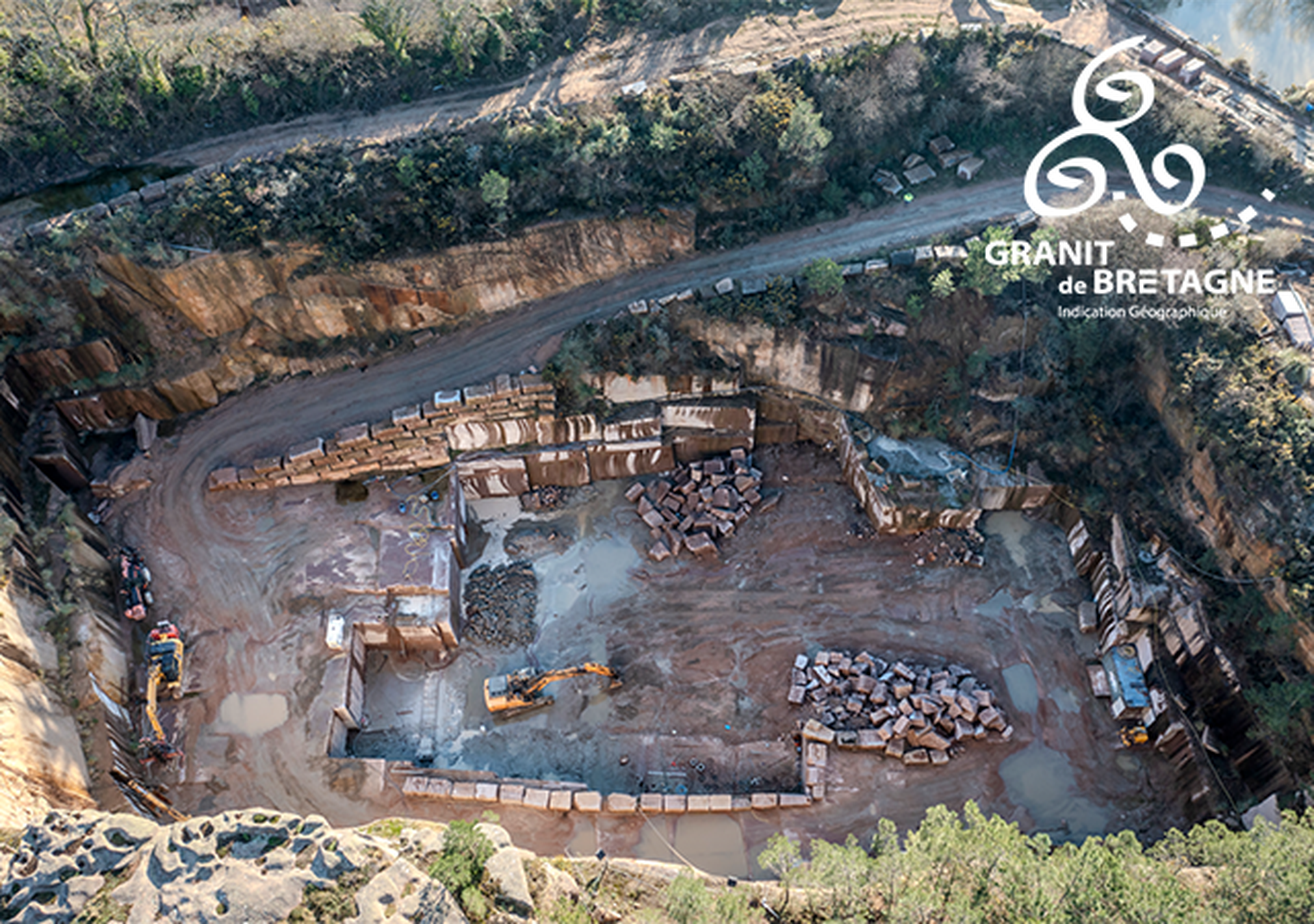
Quarry Rose de la Clarté Ploumanac'h
The Geology Behind The Performance
Rose de la Clarté is petrographically classified as a monzogranite / syenogranite type (EN 12407 / EN 12670), quarried from the Ploumanac'h basin along the Côtes d'Armor. Its pink-red colour comes from the natural feldspar mineralogy of the Breton bedrock. Because the geological source is exceptionally uniform, colour consistency across production batches is a structural characteristic of the material, not a quality control achievement that varies from order to order.
The stone carries the IG Granit de Bretagne certification from independent body Certipaq, a legally protected designation of geographic origin equivalent to a protected appellation, independently verified and not self-declared.
240 Freeze-Thaw Cycles: Not a Norm, but a Standard Worth Demanding
Rose de la Clarté's frost resistance exceeds 240 freeze-thaw cycles (EN 12371), a direct consequence of its dense granite structure, intrinsic to the material and independent of surface treatment. We consider this threshold the responsible minimum for public paving in frost-exposed climates with structural de-icing salt use. Any stone that falls consistently short of it carries a meaningful risk of premature surface degradation in intensively used public spaces.
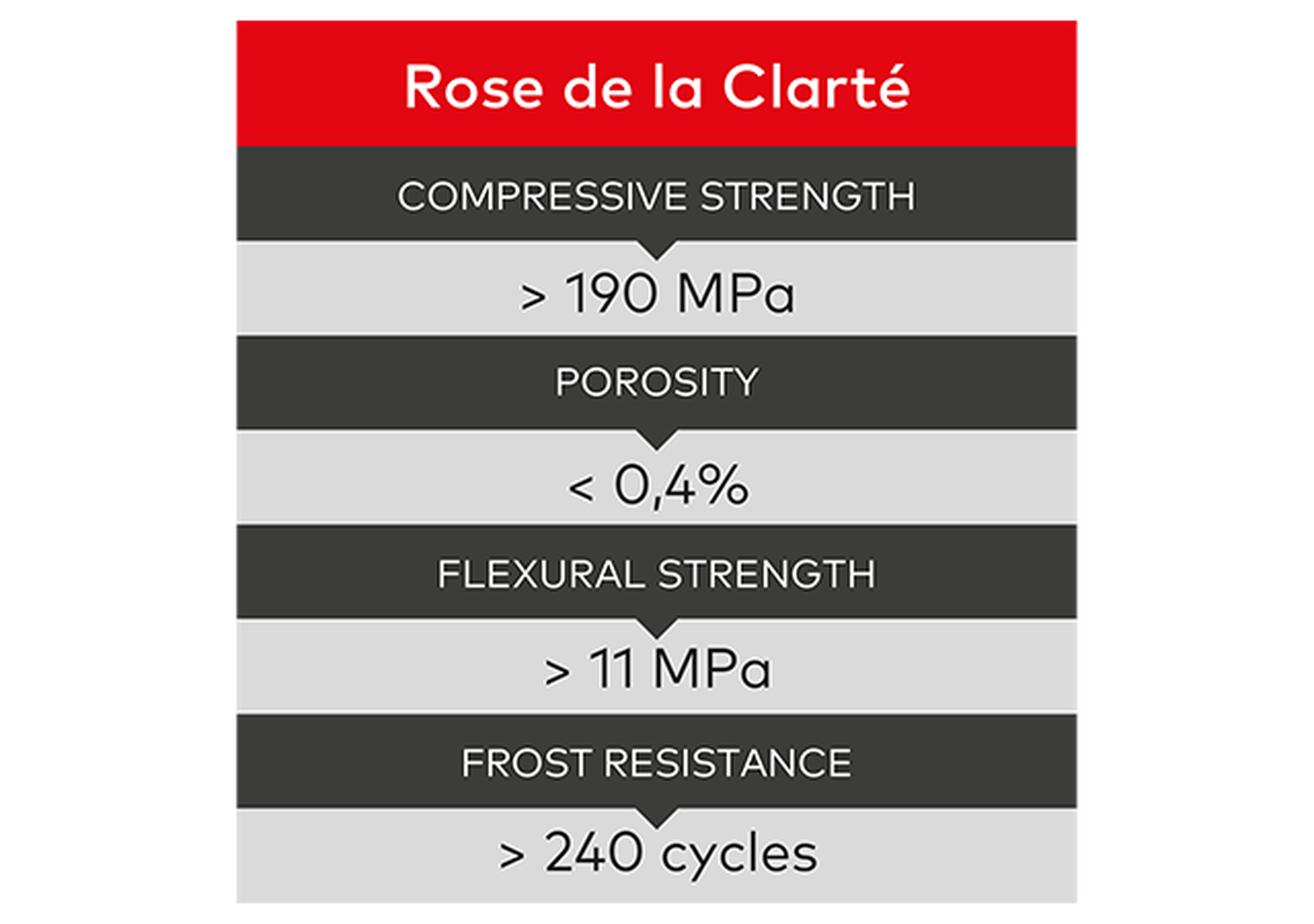
Its broader mechanical performance places it in the highest user class for natural stone setts and cobbles (EN 1342):
Mechanical Performance
 Compressive Strength
> 190 MPa average (minimum expected > 175 MPa, EN 1926)
 Flexural Strength
≥ 11 MPa average (minimum expected ≥ 10 MPa, EN 12372)
 Abrasion Resistance
< 17.5 mm average (Böhme method, EN 14157)
 Frost Resistance
>240 freeze-thaw cycles (EN 12371)
On raw compressive strength, high-quality Trentino porphyry can reach comparable values. But compressive strength alone does not determine pavement lifespan. Porosity, frost resistance and dimensional consistency do.
Dimensional precision, formats and finishes
Porphyry setts are produced by splitting, an inherently imprecise process that results in wide thickness tolerances, typically ±10 mm or more. That variation complicates laying, makes consistent joint widths difficult to control, and creates real challenges for accessibility compliance: flush kerb details, level transitions and tactile strip integration all depend on predictable stone dimensions.
Rose de la Clarté is sawn, not split. That distinction matters. Sawn granite can be produced to tight tolerances across all formats, which translates directly into faster laying, tighter joints and easier integration with accessibility requirements such as tactile paving strips and flush kerb transitions.
Available formats cover the full spectrum of public space paving: setts and cobbles, slabs and tiles, straight and curved kerbstones, tactile paving slabs and custom street furniture elements. Surface finishes — flamed, shotblasted or bush-hammered — provide the required non-slip properties while retaining the stone's characteristic warm tone.
Colour As a Design And Functional Tool In Public Space
The consistent pink-red tone of Rose de la Clarté has both aesthetic and practical applications. Where municipalities use pink or red surfaces to signal priority cycle lanes, shared zones or pedestrian-priority areas, Rose de la Clarté offers a natural stone option with proven colour stability. Its very low porosity substantially reduces the risk of iron migration and discolouration. The tone is intrinsic to the mineralogy, it does not fade or require periodic reapplication.
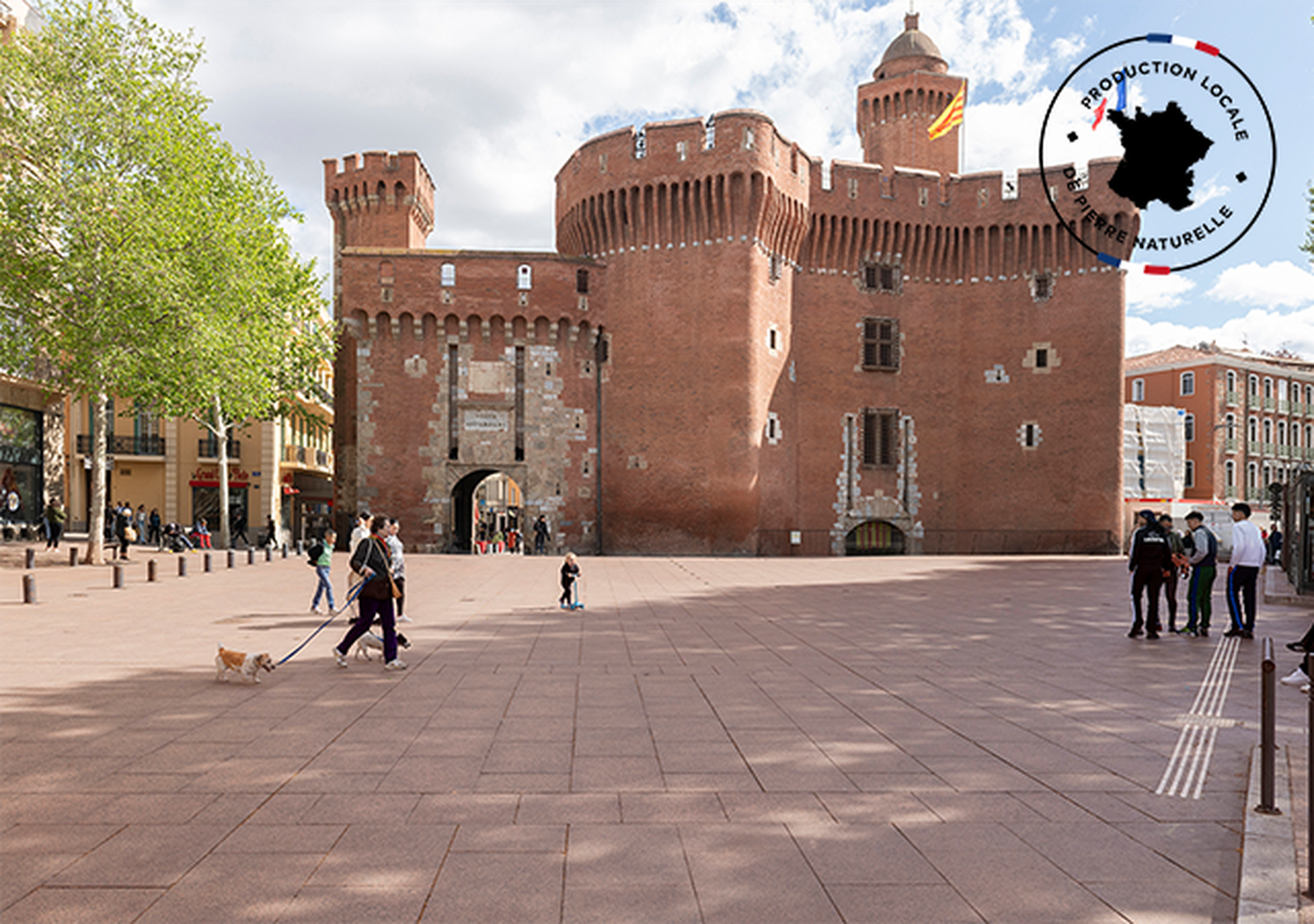
Rose de la Clarté, Place de la Victoire, Perpignan
In mixed-palette streetscape design, the stone works as a strong accent material. At the Place de l'Hôtel de Ville in Paris, Rose de la Clarté was combined with Tarn granite across multiple finishes, flamed, bush-hammered and sawn, demonstrating how both stones compose into a structured, coherent public space at the scale of a major urban square. At Place Rigaud in Perpignan, the stone was applied for both paving and kerbstones across a large-scale urban renewal project.
Supply Continuity: A Granite You Can Reorder in Ten Years
Material performance on paper means little if the stone cannot be reordered five years later in the same colour and quality. For public space projects, delivered in phases, maintained over decades, subject to utility works and localised damage, supply continuity is a specification argument in its own right.
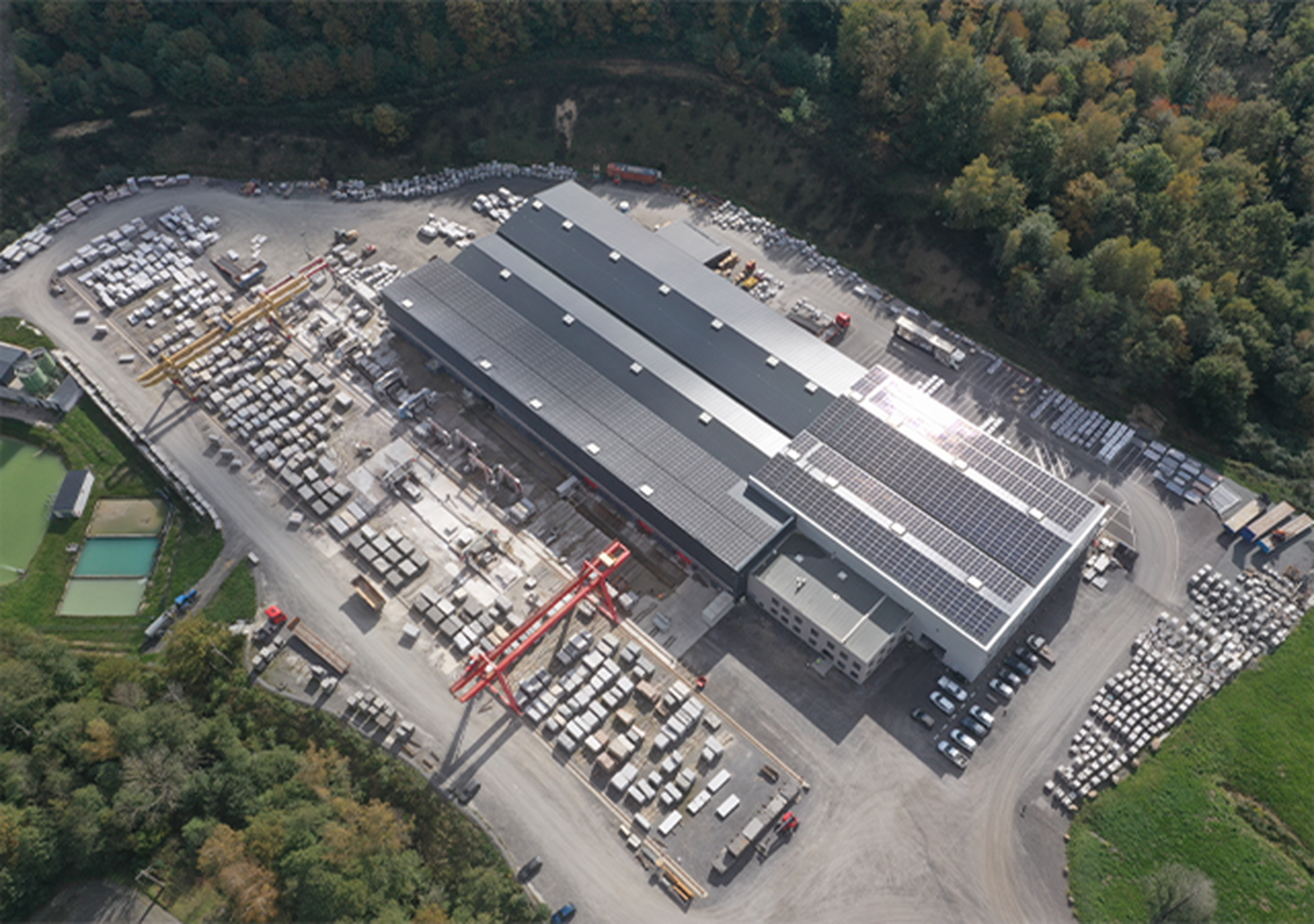
The Ploumanac'h quarry has been in continuous operation since 1976. Rose de la Clarté is not a boutique material with limited annual output. It is a production stone available in the volumes that public works projects require, with documented extraction continuity and no dependency on a single operator or import chain.
That continuity has a direct practical consequence that is easy to underestimate. Because the geological source is stable and the colour consistent across batches, stone reordered two, five or ten years after the original installation will match the existing paving closely. The natural patina that develops over time helps new and existing material blend together, particularly for contained repairs such as damaged setts or utility trench reinstatements. For larger replacement areas, some visual transition between old and new stone in the first years is a characteristic shared by every natural stone material, and one that diminishes reliably as the new stone develops its own patina.
For municipalities managing public space across multiple phases and maintenance cycles, that is not a secondary consideration. A pavement is only as good as the supply chain behind it. Rose de la Clarté has both.
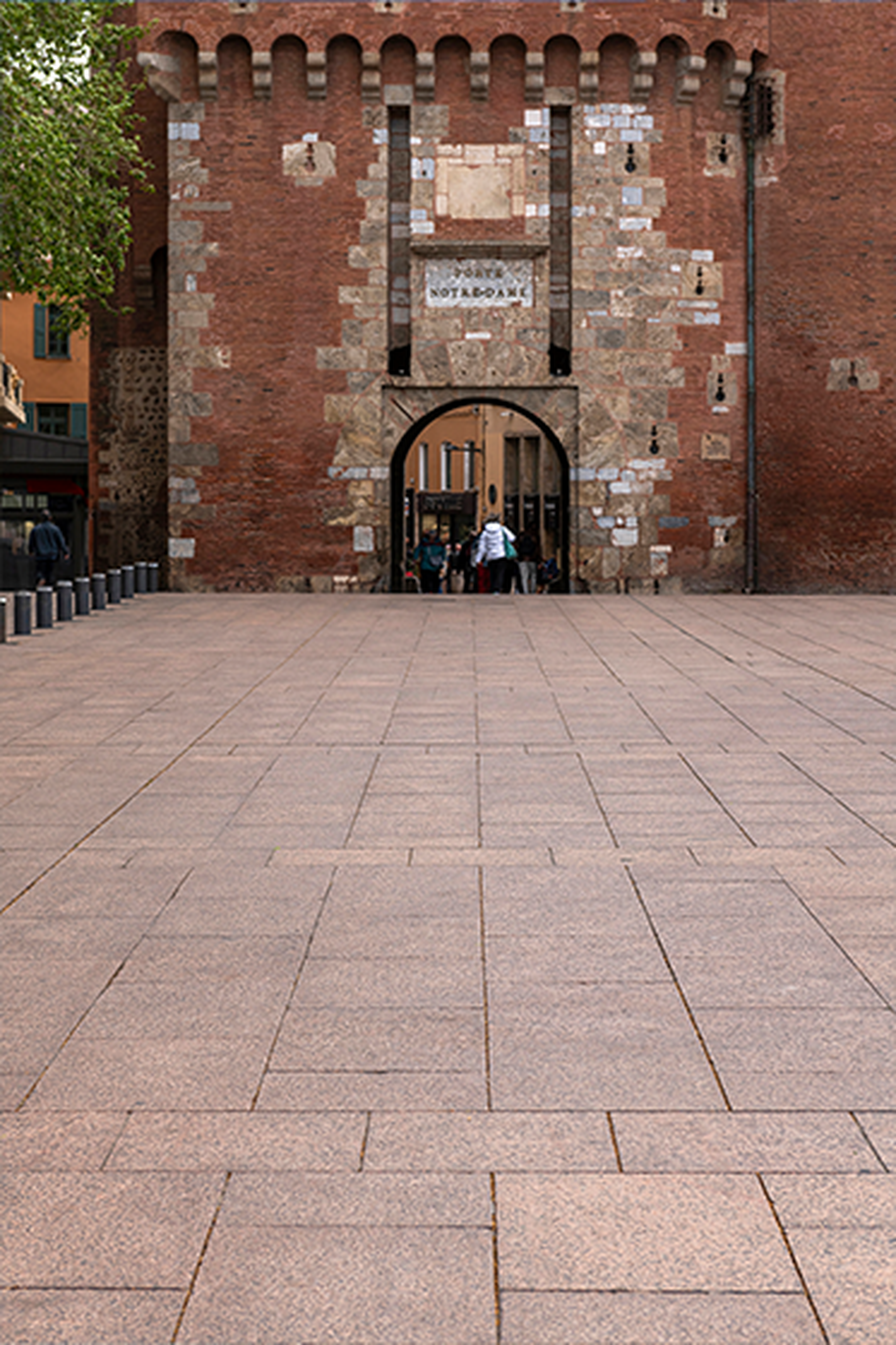
Paving in Rose de la Clarté
Place de la Victoire, Perpignan
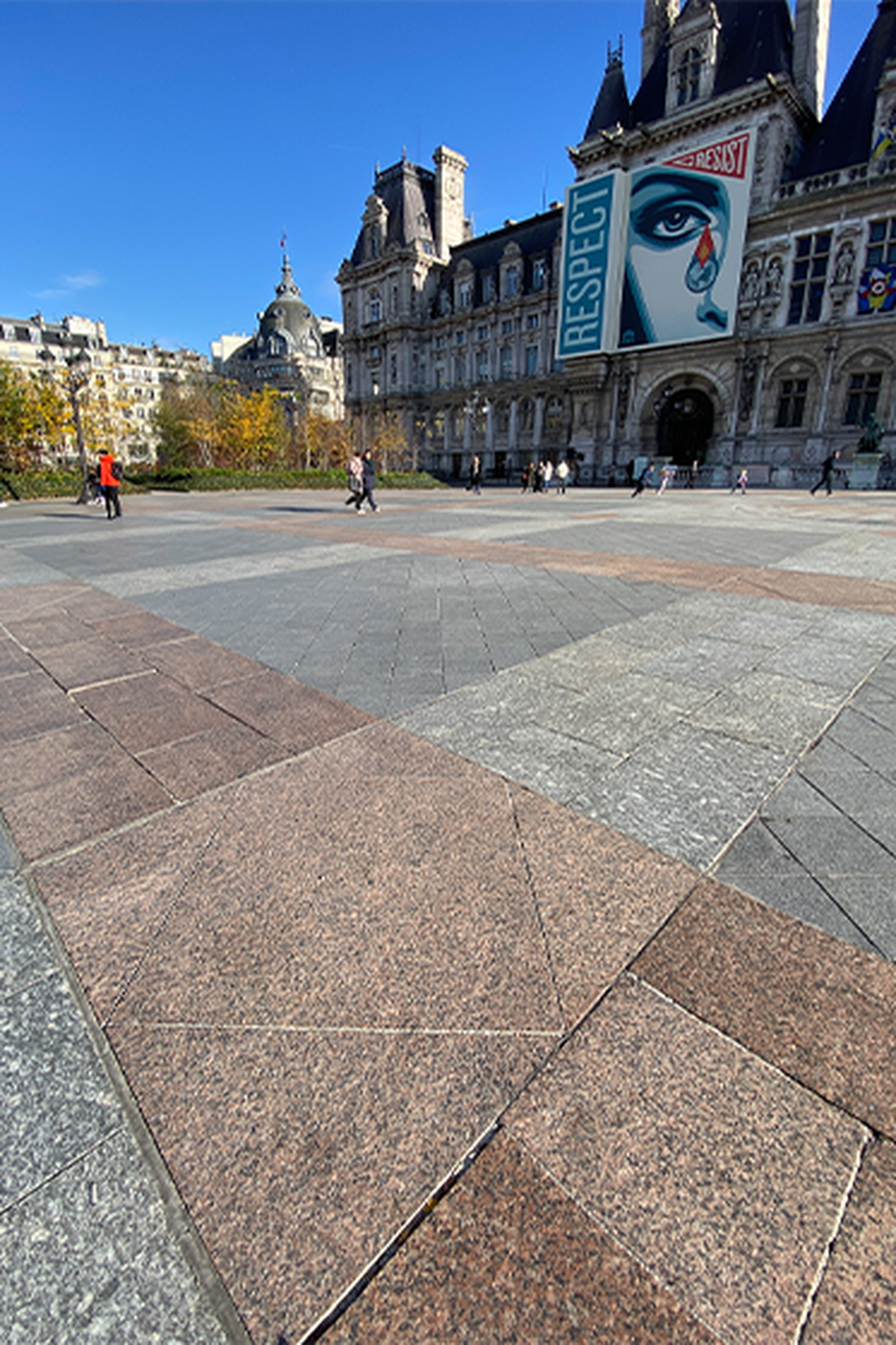
City Hall Square in Rose de la Clarté, Paris
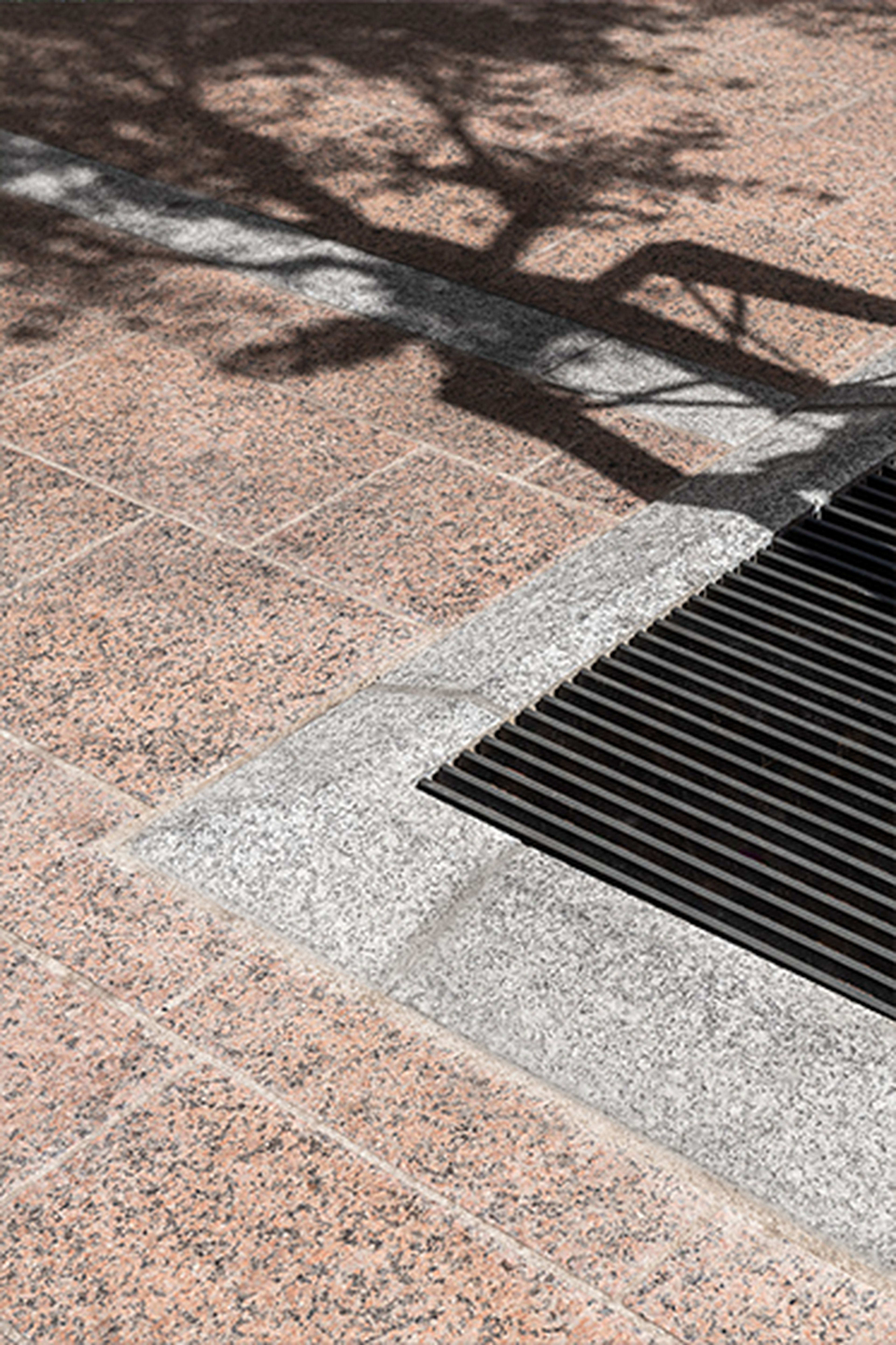
Paving in Rose de la Clarté
Place Rigaud, Perpignan
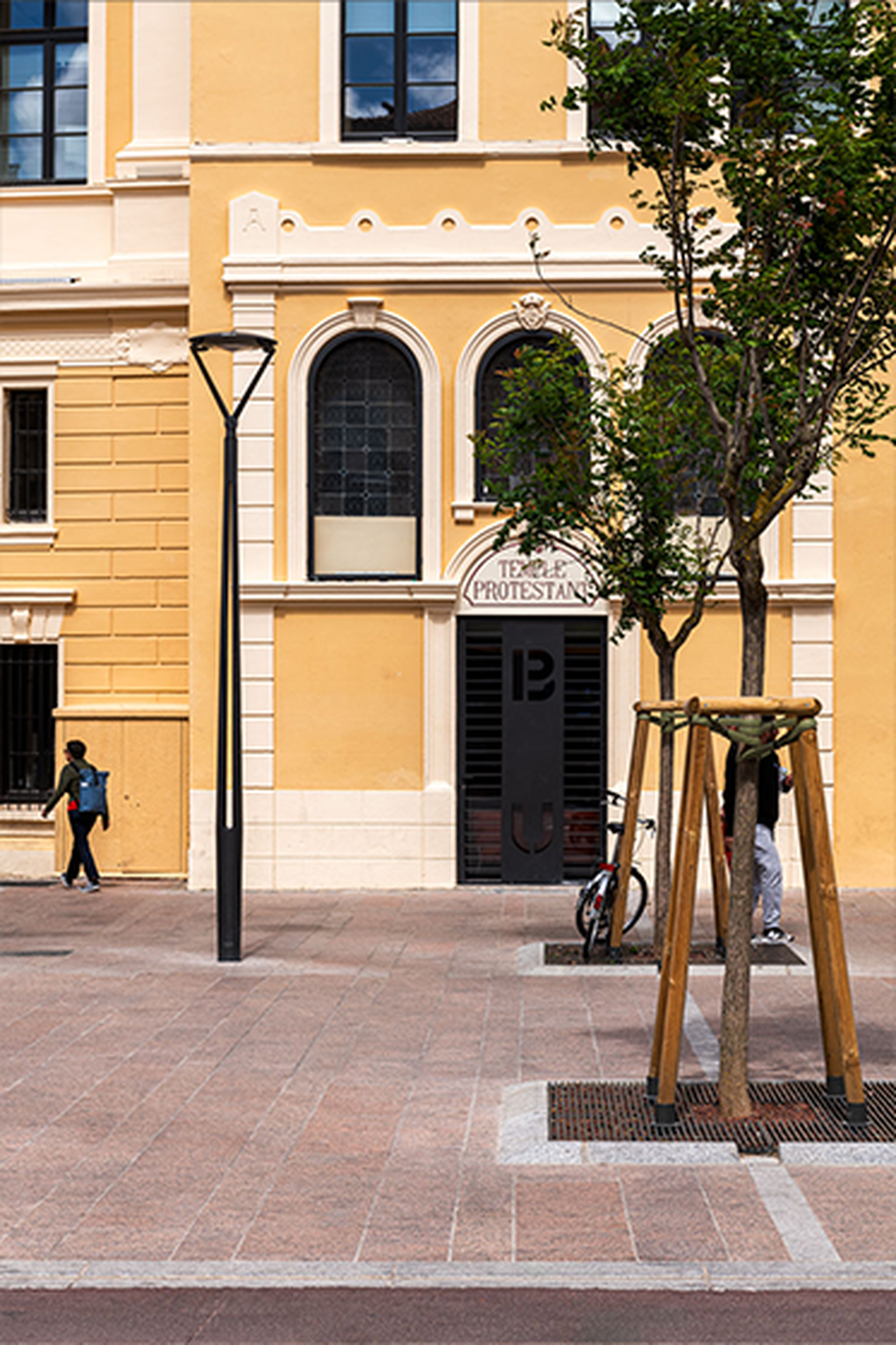
Paving in Rose de la Clarté
Place Rigaud, Perpignan
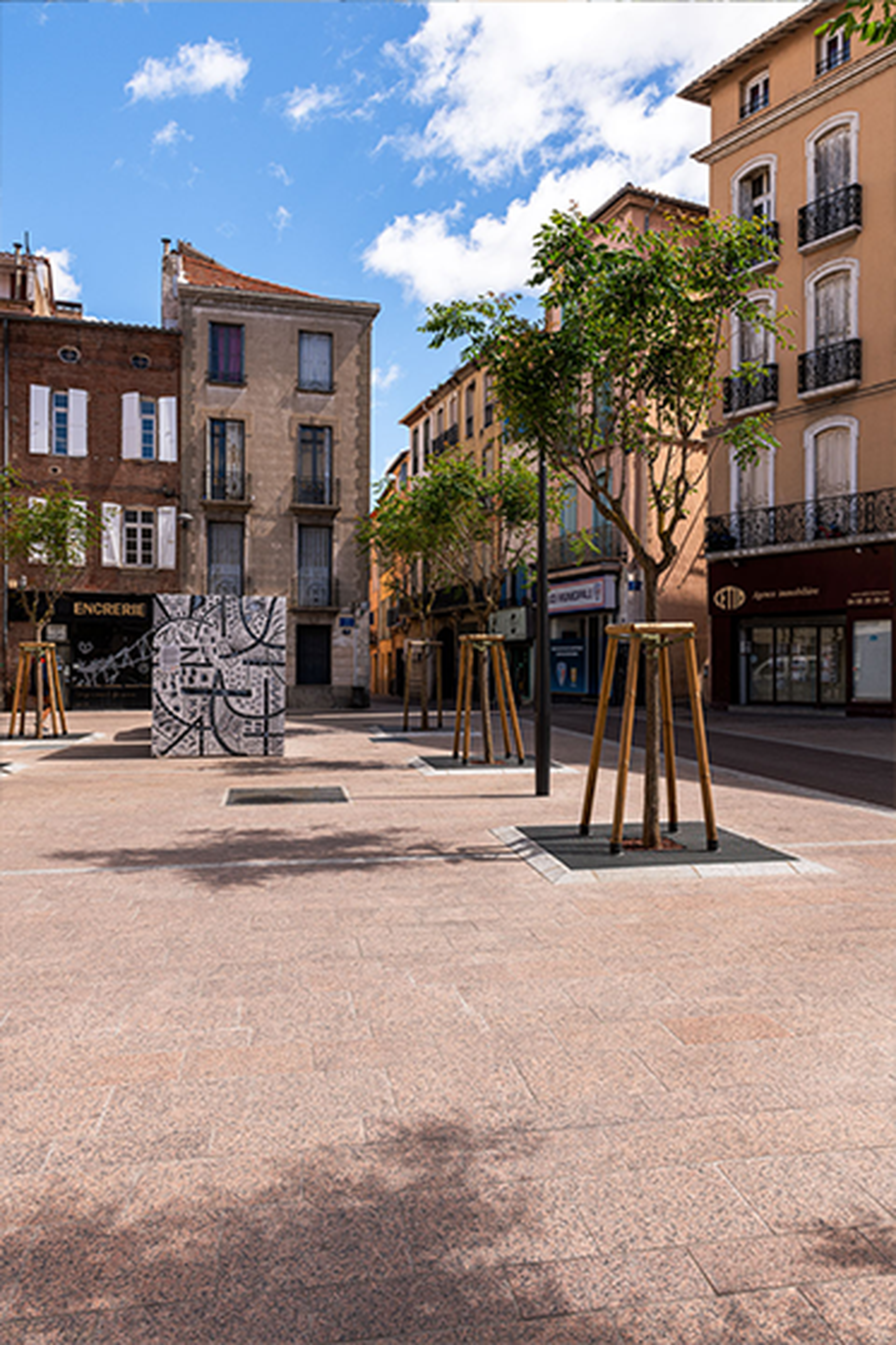
Paving in Rose de la Clarté
Place Rigaud, Perpignan
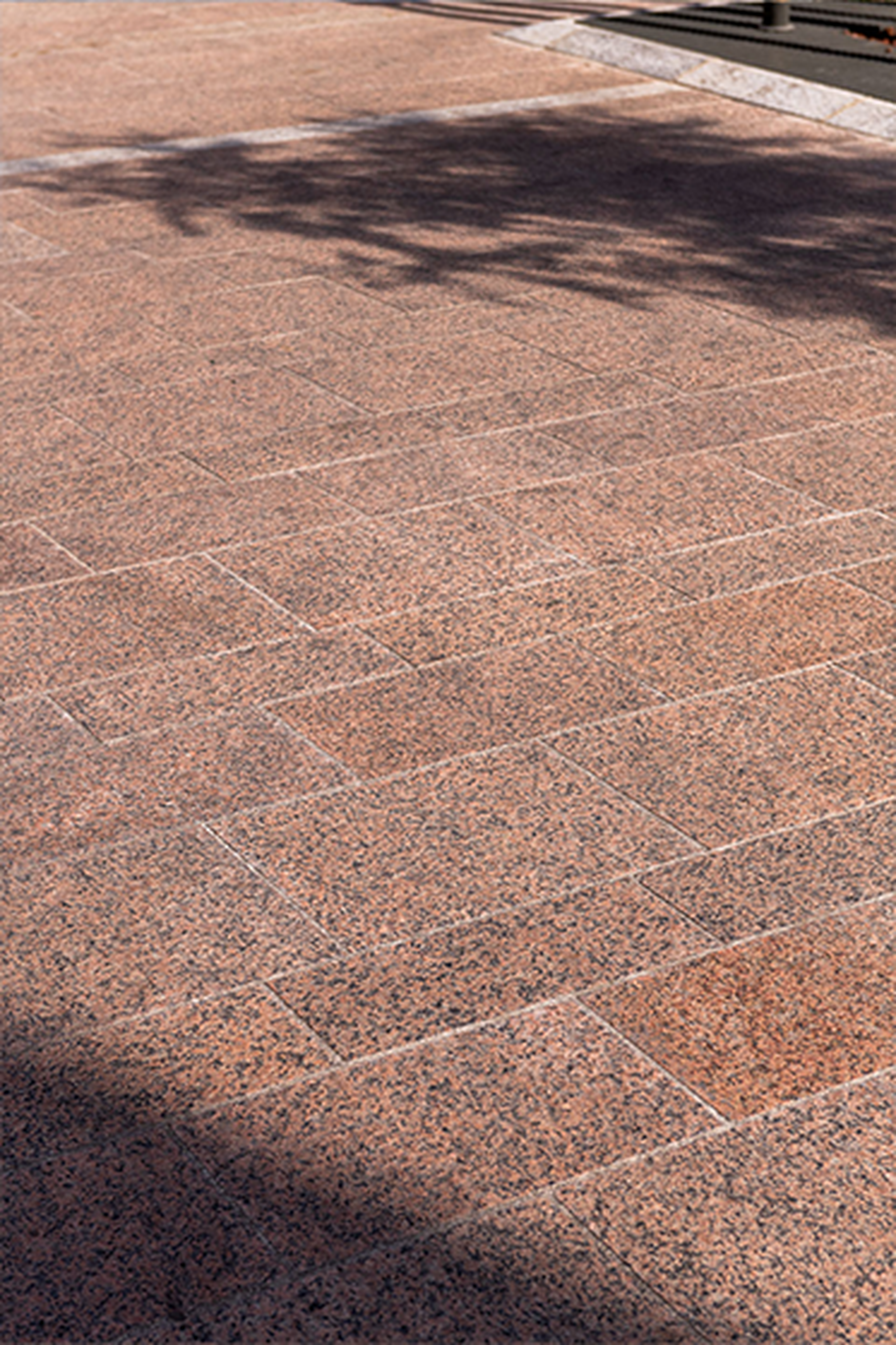
Paving in Rose de la Clarté
Place Rigaud, Perpignan
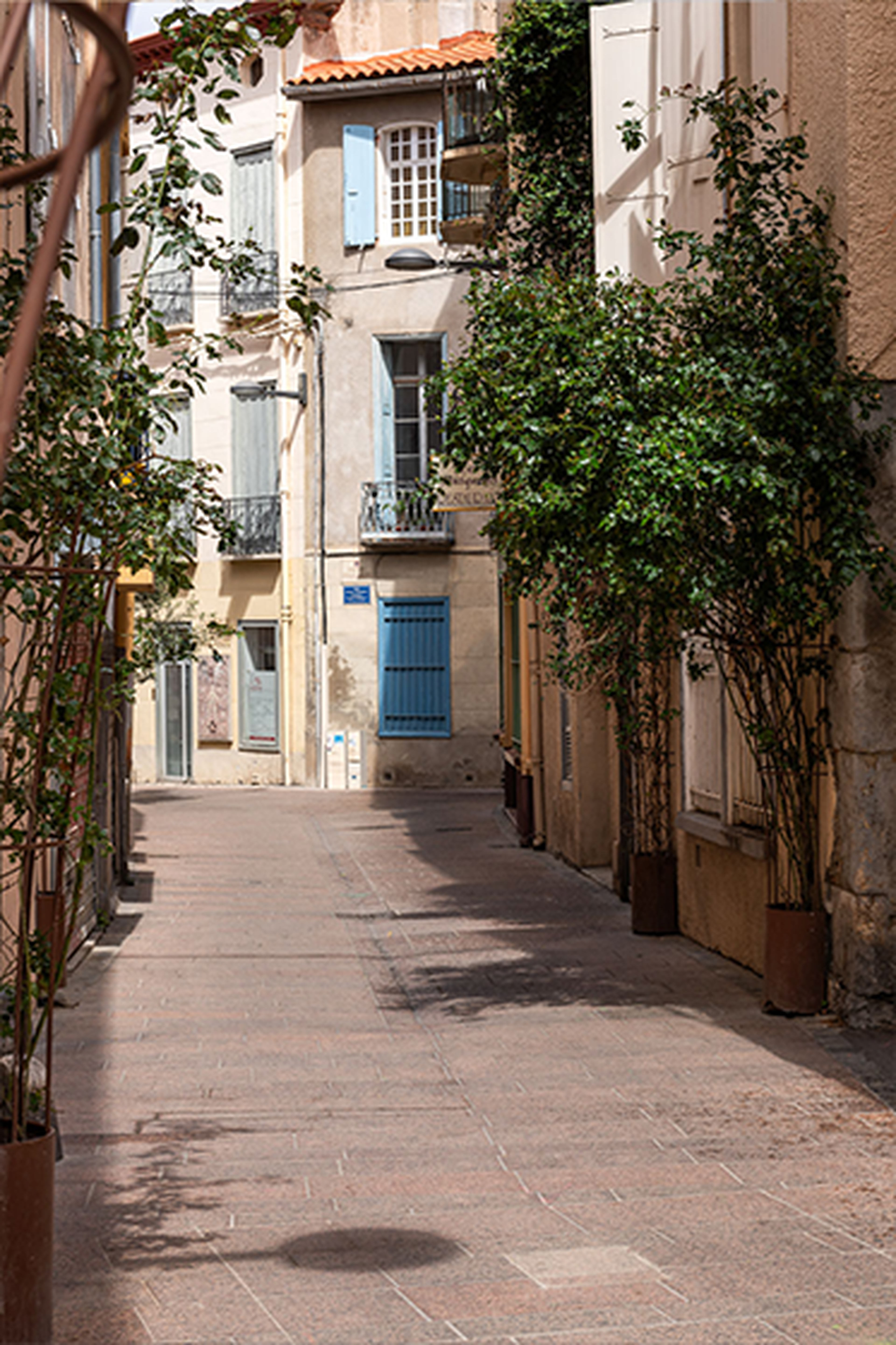
Paving in Rose de la Clarté
Place Rigaud, Perpignan
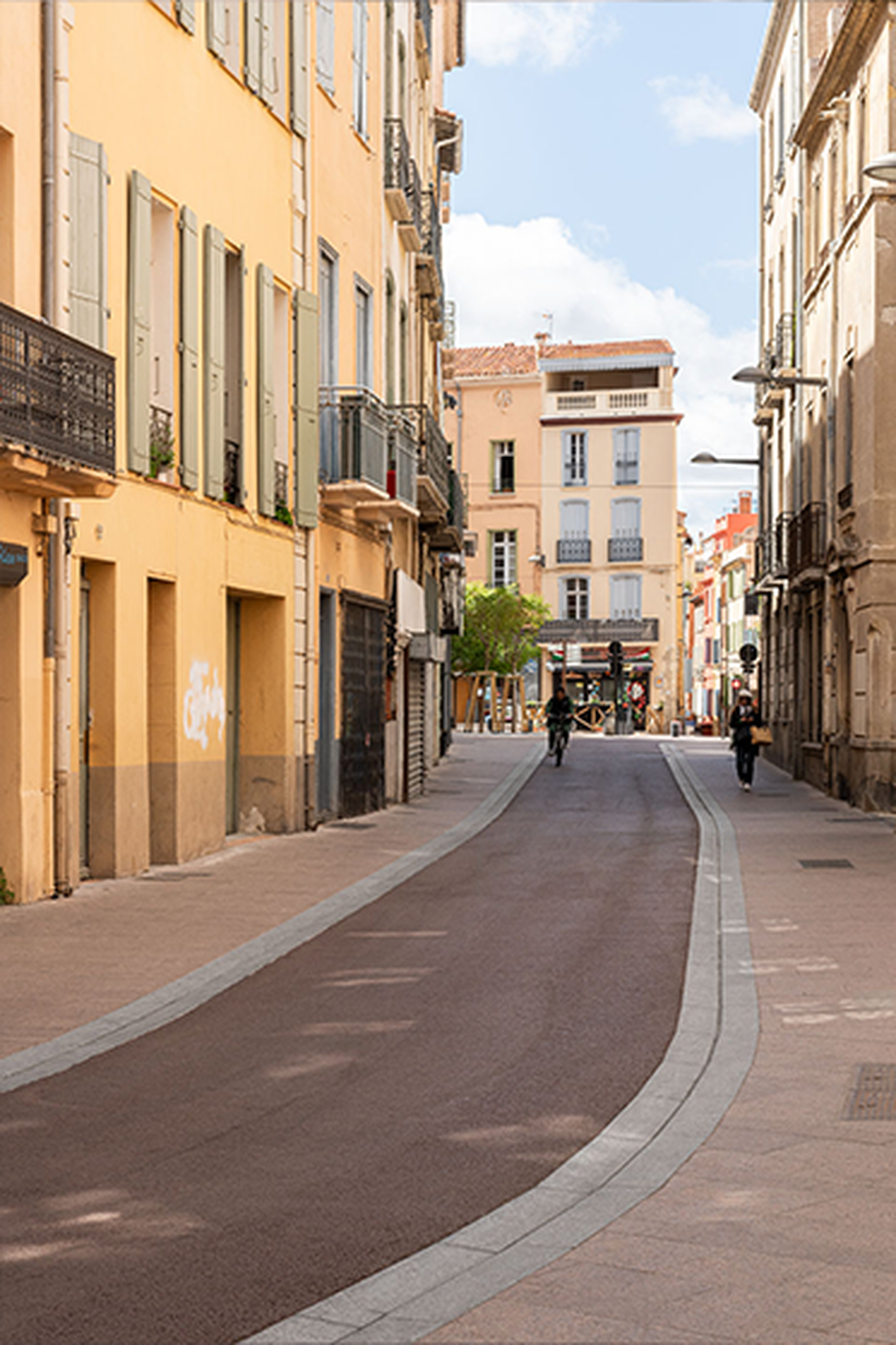
Paving in Rose de la Clarté
Rue Emile Zola, Perpignan
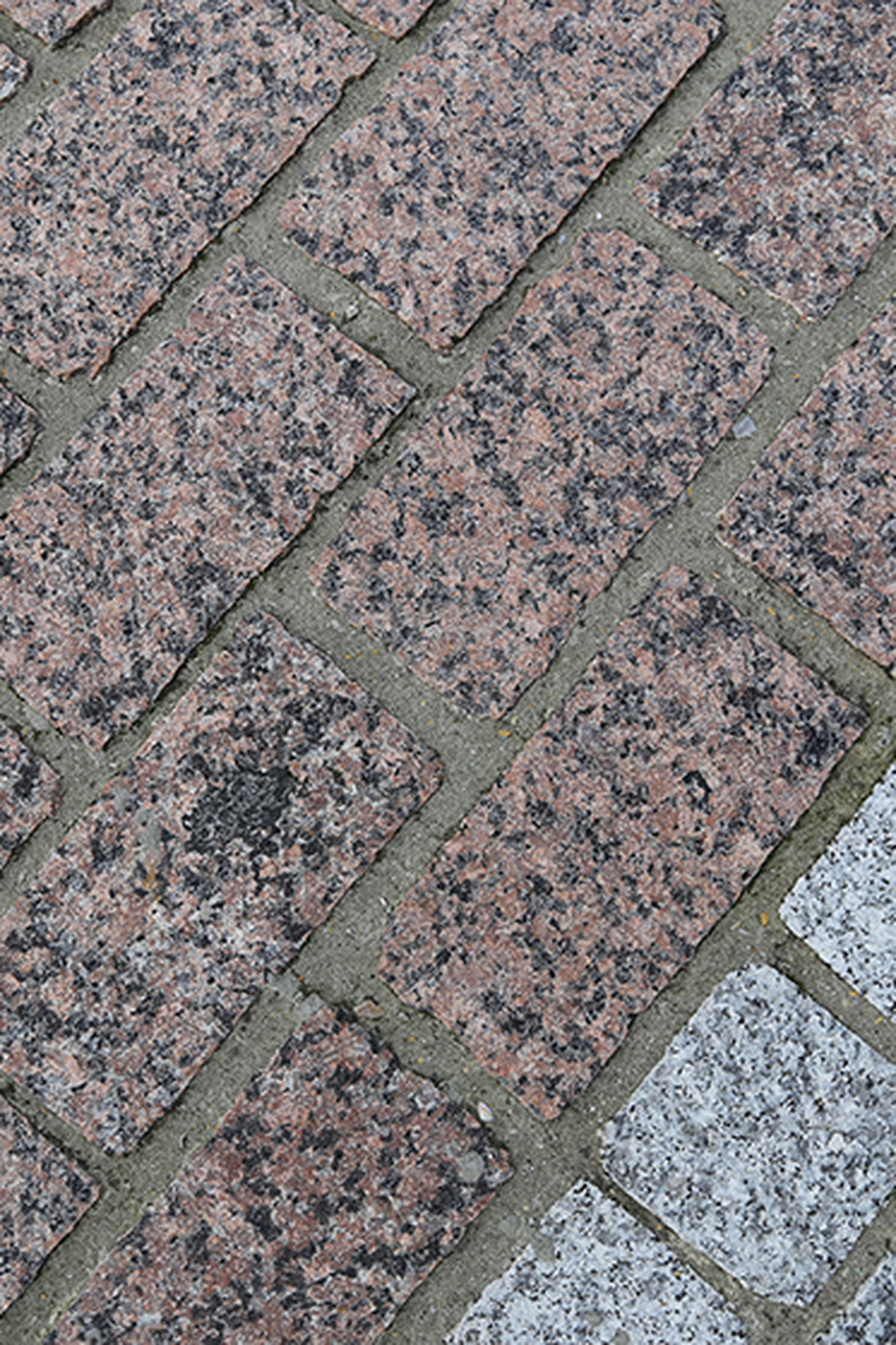
French pink-red granite with ≤ 0.7% porosity and 240+ freeze-thaw cycles. Consistent colour, tight tolerances and EPDs available. Specified at Place de l'Hôtel de Ville, Paris.
Procurement and Sustainability
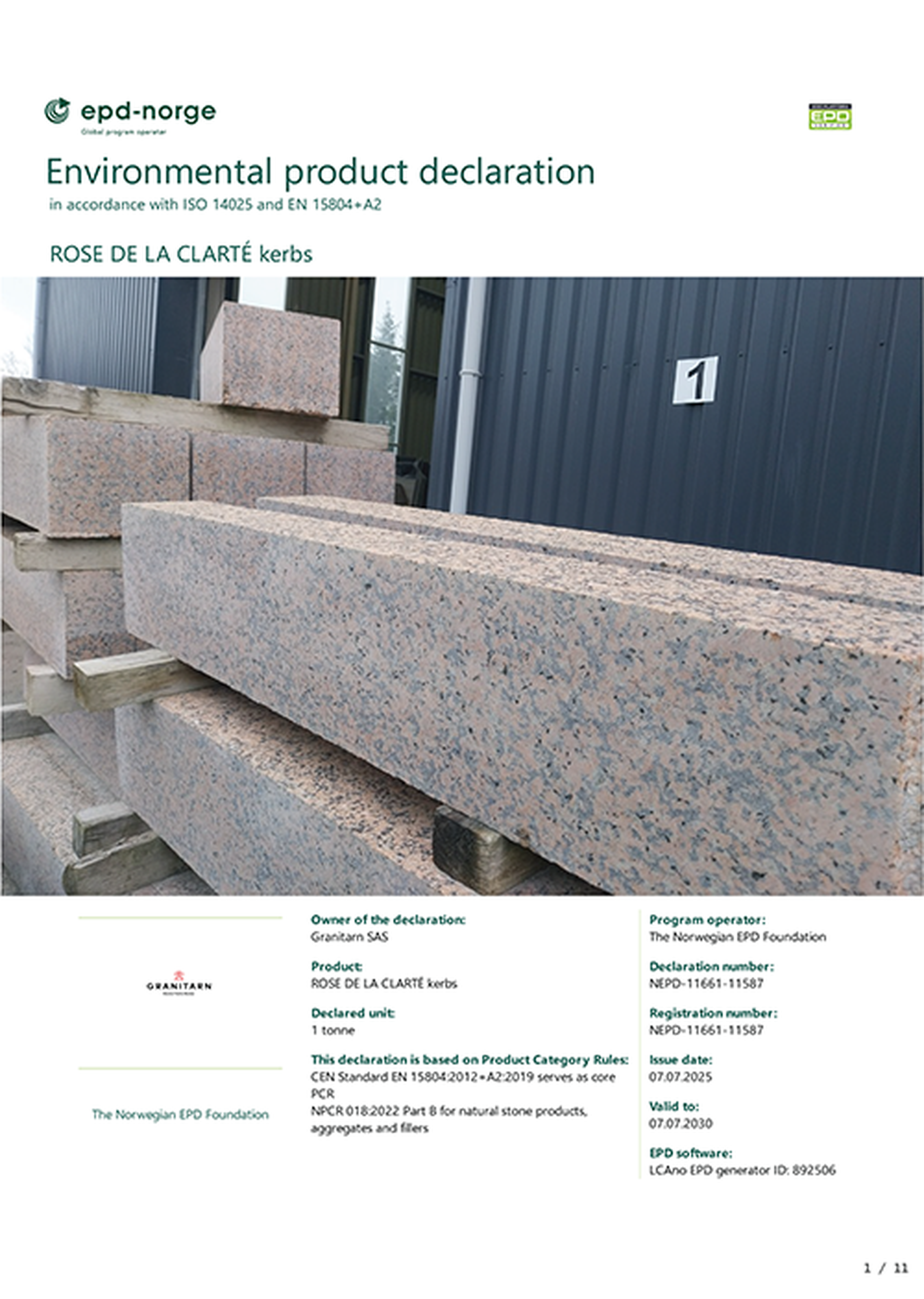
Rose de la Clarté is quarried and processed entirely in France: shorter supply chain, lower transport emissions, and no exposure to the container price volatility that has made non-European sourcing increasingly unpredictable. Environmental Product Declarations (EPDs) are available for all major product categories — blocks, setts, pavers and kerbs — and ready to integrate into project documentation.
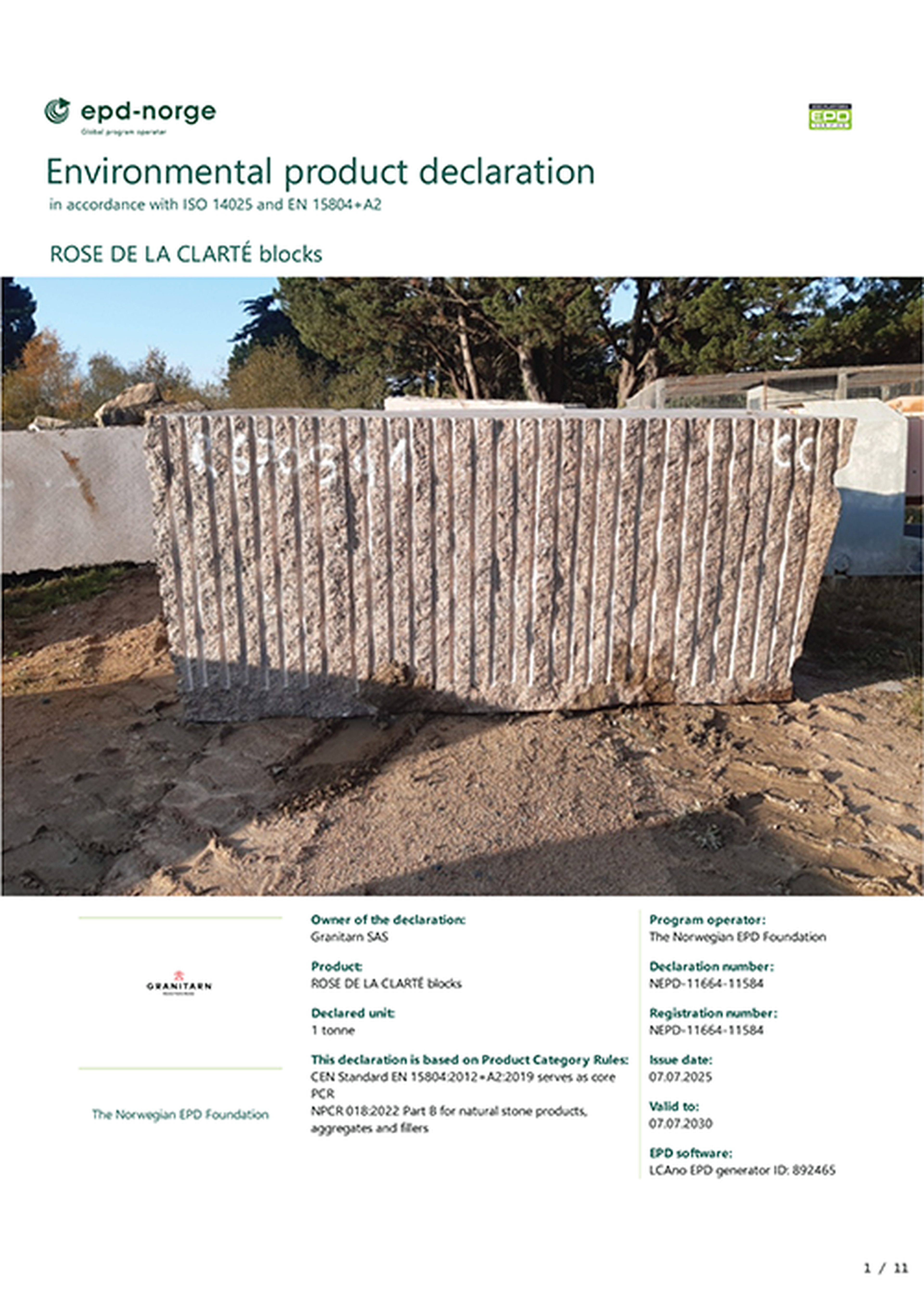
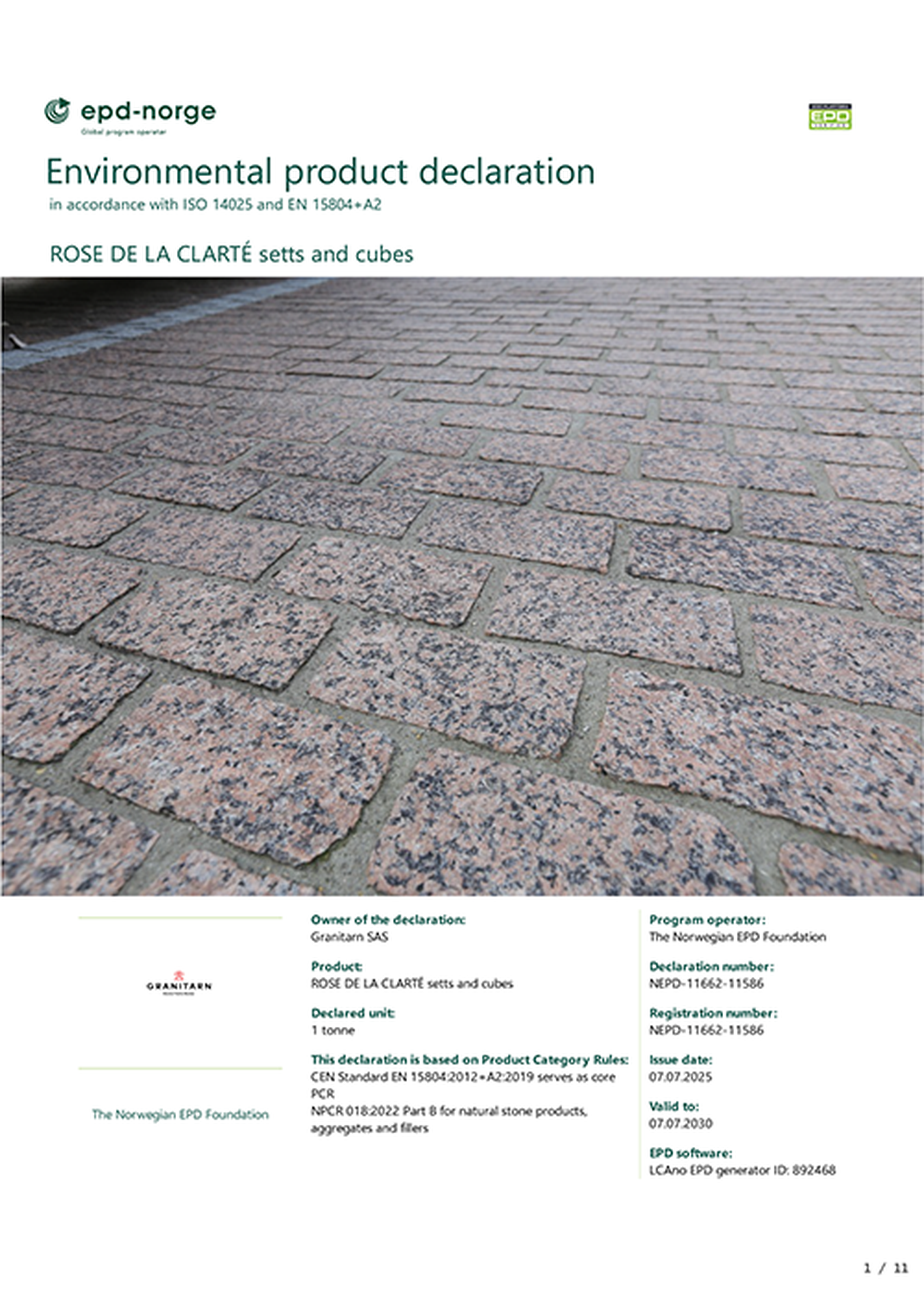
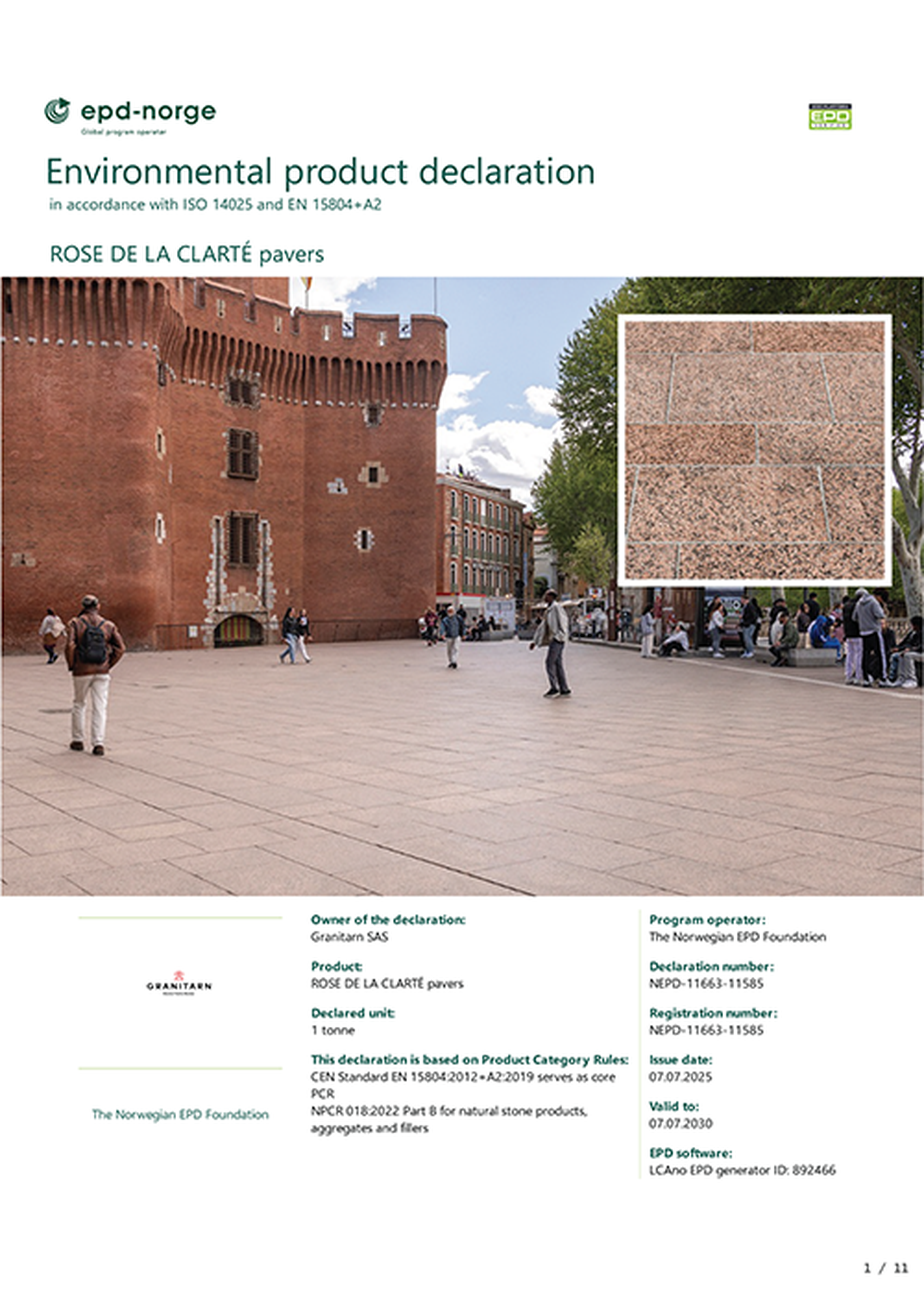
Specify Rose de la Clarté
Full specification texts and EPDs are available to download directly on brachot.com. Brachot also offers technical presentations for design teams, urban engineers and public authorities covering natural stone performance classes, European standards, correct specification practice and comparative carbon footprint. Contact us to schedule a session for your team.