Irish Blue Limestone and Belgian Bluestone: One Origin, Two Characters
Shared geological setting, two distinct characters: colour, fossils and performance compared.
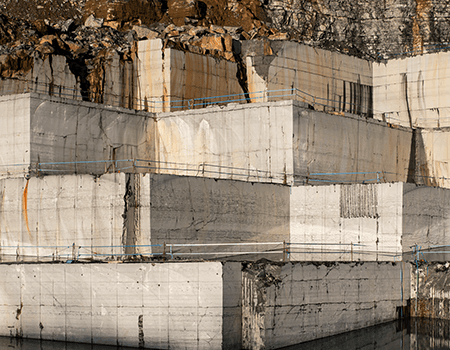
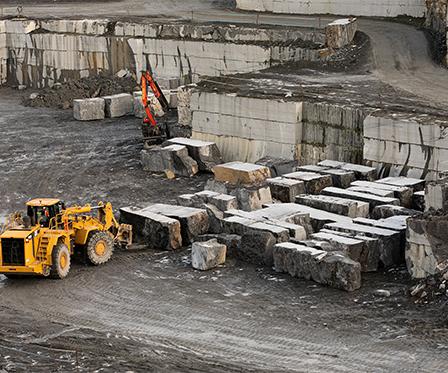
Irish blue limestone is a dense, fine-grained sedimentary rock formed around 340 million years ago. Quarried today in Co. Carlow and Co. Kilkenny, it is used across Ireland and the UK for paving, cladding, building products and interior finishes. Its geological origin is shared with Belgian bluestone, yet both materials have developed distinct characteristics suited to different projects.
Geological Formation
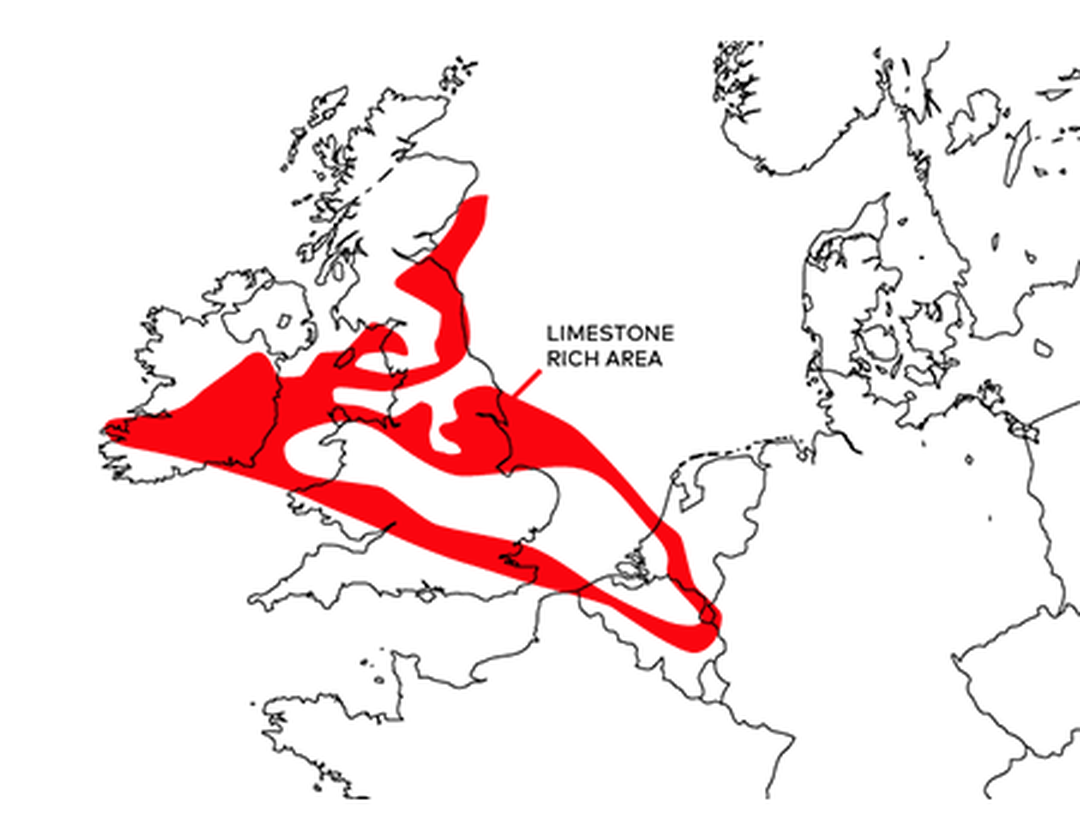
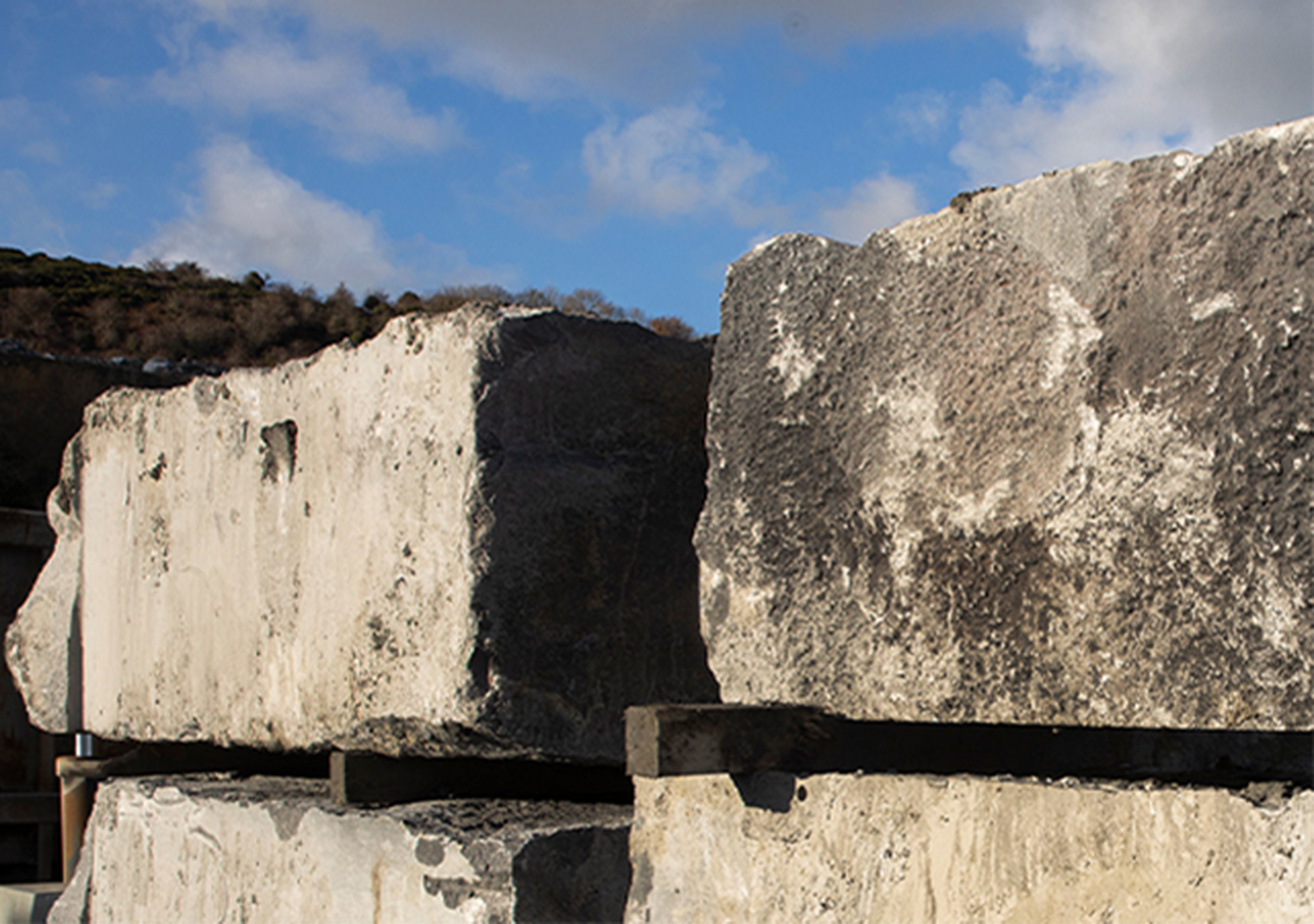
During the Carboniferous period, much of what is now north-western Europe lay beneath warm, shallow tropical seas. Over millions of years, marine organisms and calcium carbonate precipitated on the seafloor and compacted into dense limestone formations. These Lower Carboniferous tropical seas produced the blue limestone deposits found today in Ireland (Carlow and Kilkenny), Belgium (Hainaut, Namur, Liège), and parts of northern France and southern England, though the deposits formed in separate basins and at slightly different stages.
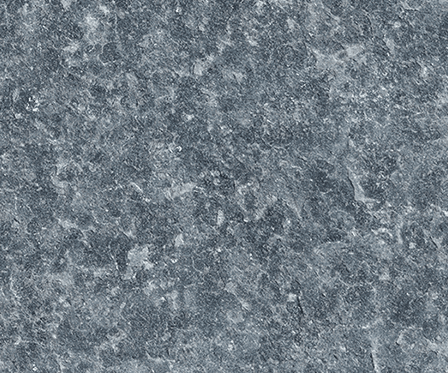
The resulting stone is classified petrographically as a bioclastic grainstone (Dunham classification) or biosparite (Folk, EN 12670), meaning a carbonate rock built up from the fragmented remains of marine organisms cemented together by calcite. Its characteristic blue-grey colour comes from small amounts of carbon and organic material trapped during sedimentation. On freshly cut or broken surfaces, this gives the stone its recognisable deep tone, lightening slightly as it weathers.
Blue Tone and Fossils
Because Irish blue limestone formed from marine sediment, fossils of the organisms that lived in those ancient seas remain visible in the finished product. The most common are crinoids (stalked marine animals related to starfish), brachiopods (shelled filter-feeders), gastropods (early sea snails) and occasional coral fragments. They appear as pale circles, curves and shell shapes set against the deep blue-grey of the stone, and the contrast between fossil and colour is part of what gives the material its character.
That blue-grey tone is itself a defining asset. Depending on the finish, the colour shifts from a soft, matte grey-blue in honed and flamed surfaces to a richer, darker blue when the stone is polished or wet, giving designers a consistent yet versatile base for paving, wall cladding and interior tiles.
For designers, the fossils function as a visual feature rather than a defect. They are particularly prominent in the Fossil Stone variety of Kilkenny Limestone, where they become a deliberate design element. This Fossil Stone is quarried from a specific geological layer where fossil density is naturally at its highest, while the standard Kilkenny Blue Limestone foregrounds the even, blue-grey colour itself.
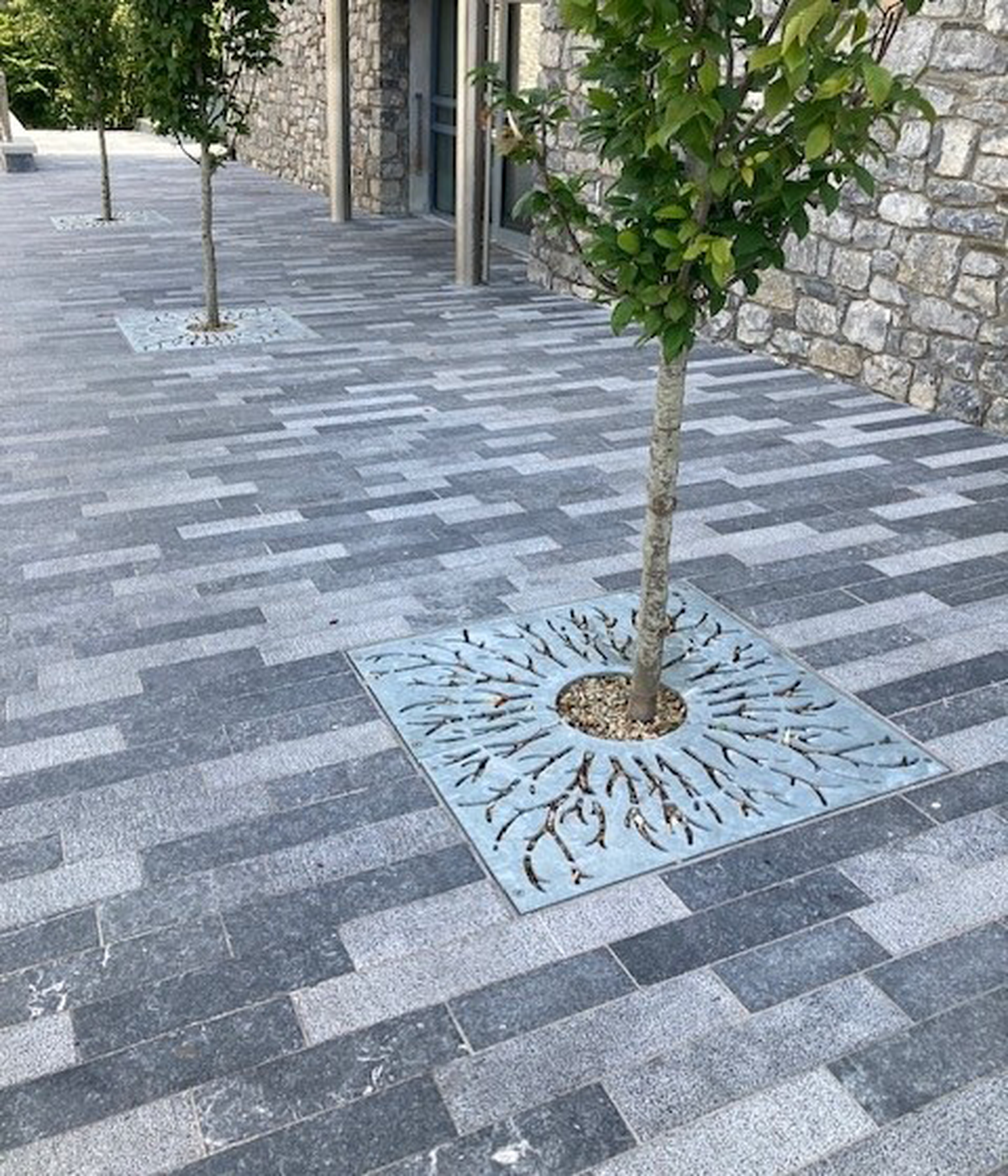
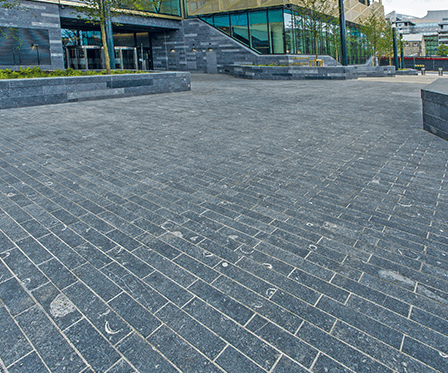
Bush hammered and flamed finishes were used for the paving, bringing out the depth of the blue while adding grip underfoot. For the kerb stones, an old mechanical chisel finish was chosen instead, adding extra contrast and character.
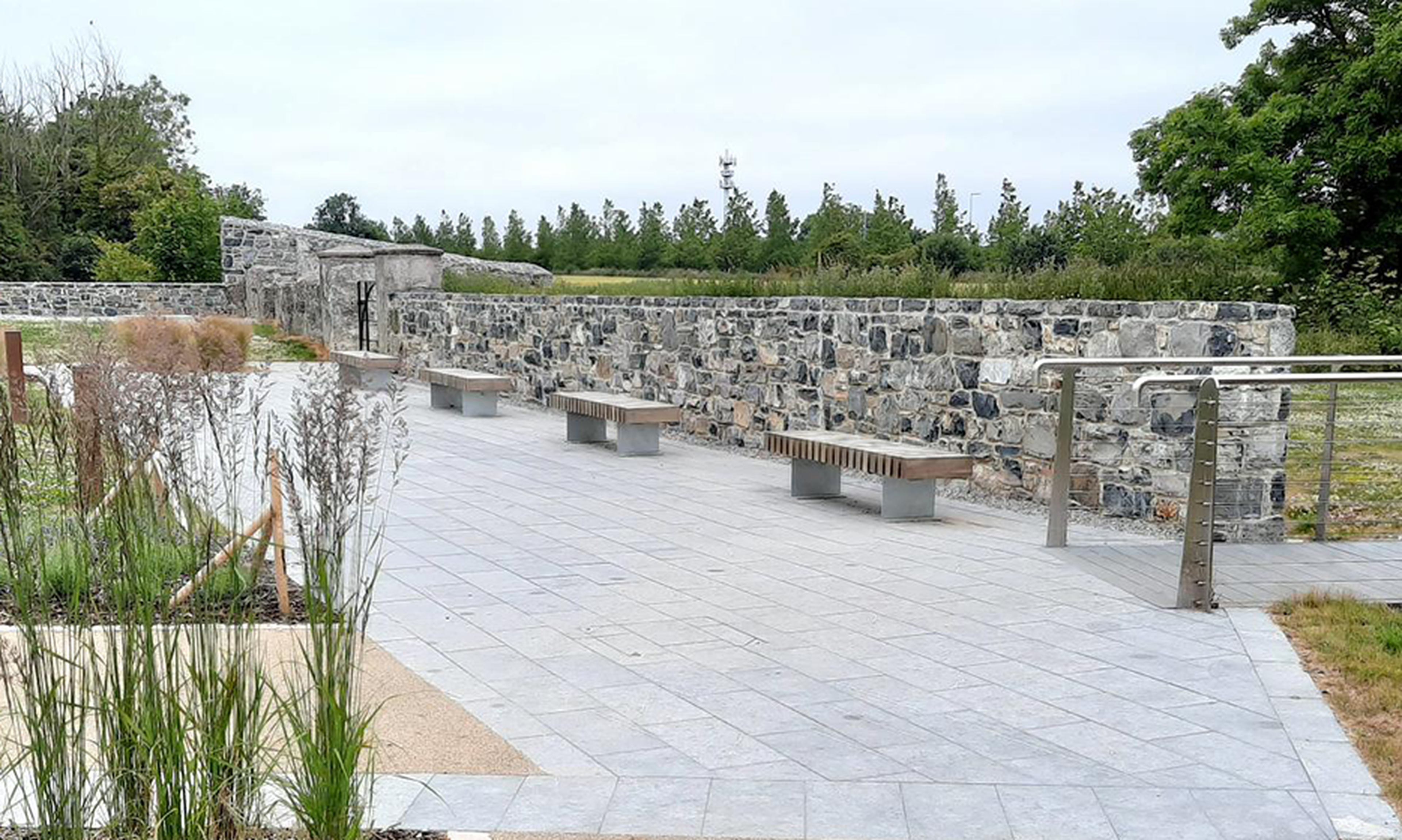
Laid in bands at Grange Castle, blending naturally into planting, dry-stone walling and historic surroundings
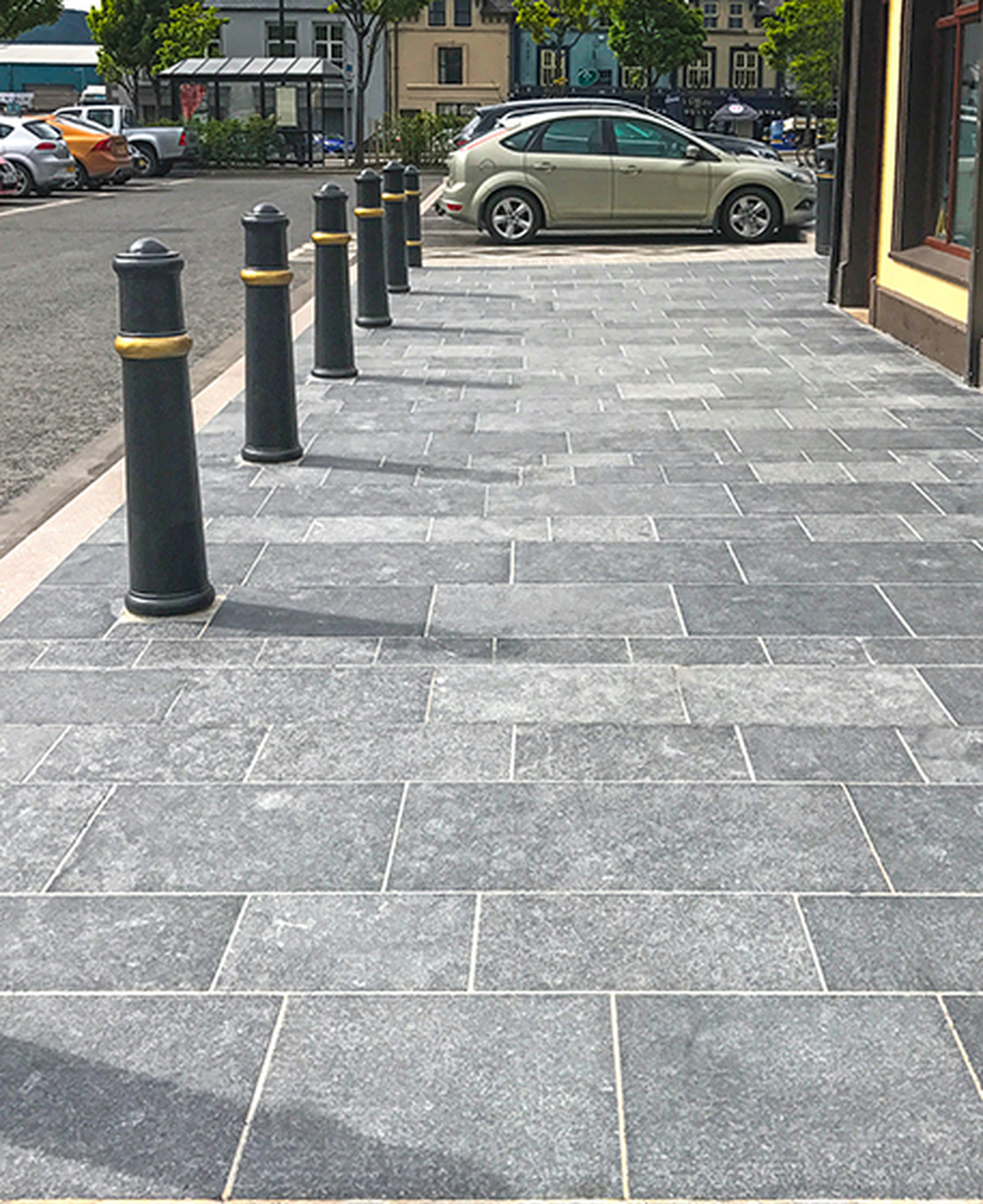
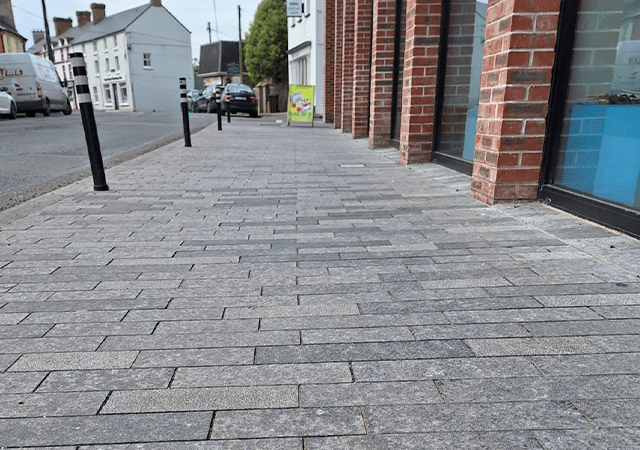
Blue-grey paving in Warrenpoint, improving accessibility while preserving the town's character.
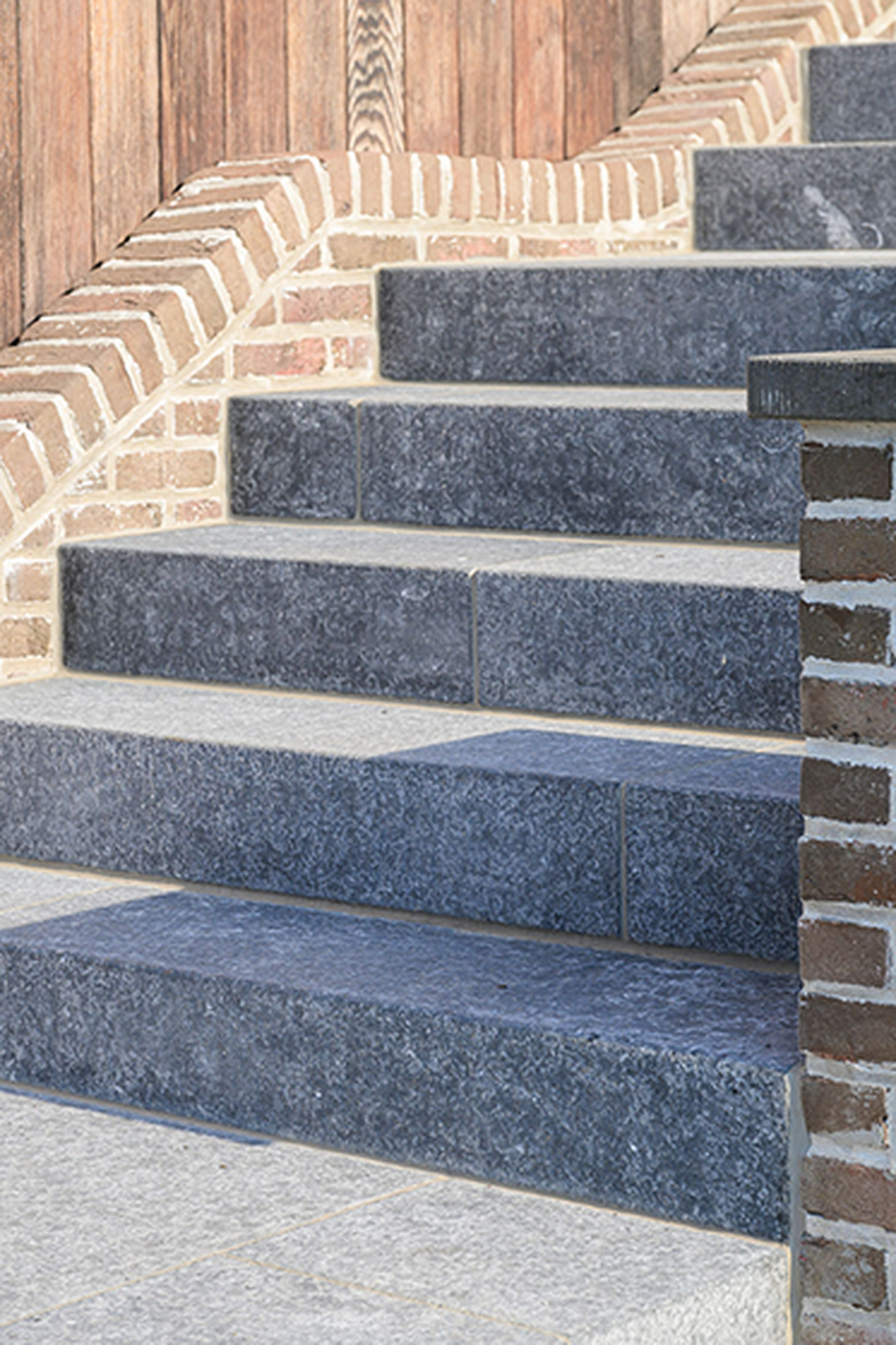
Flamed outdoor stairs that shift in character as sunlight and shadow move across the surface.
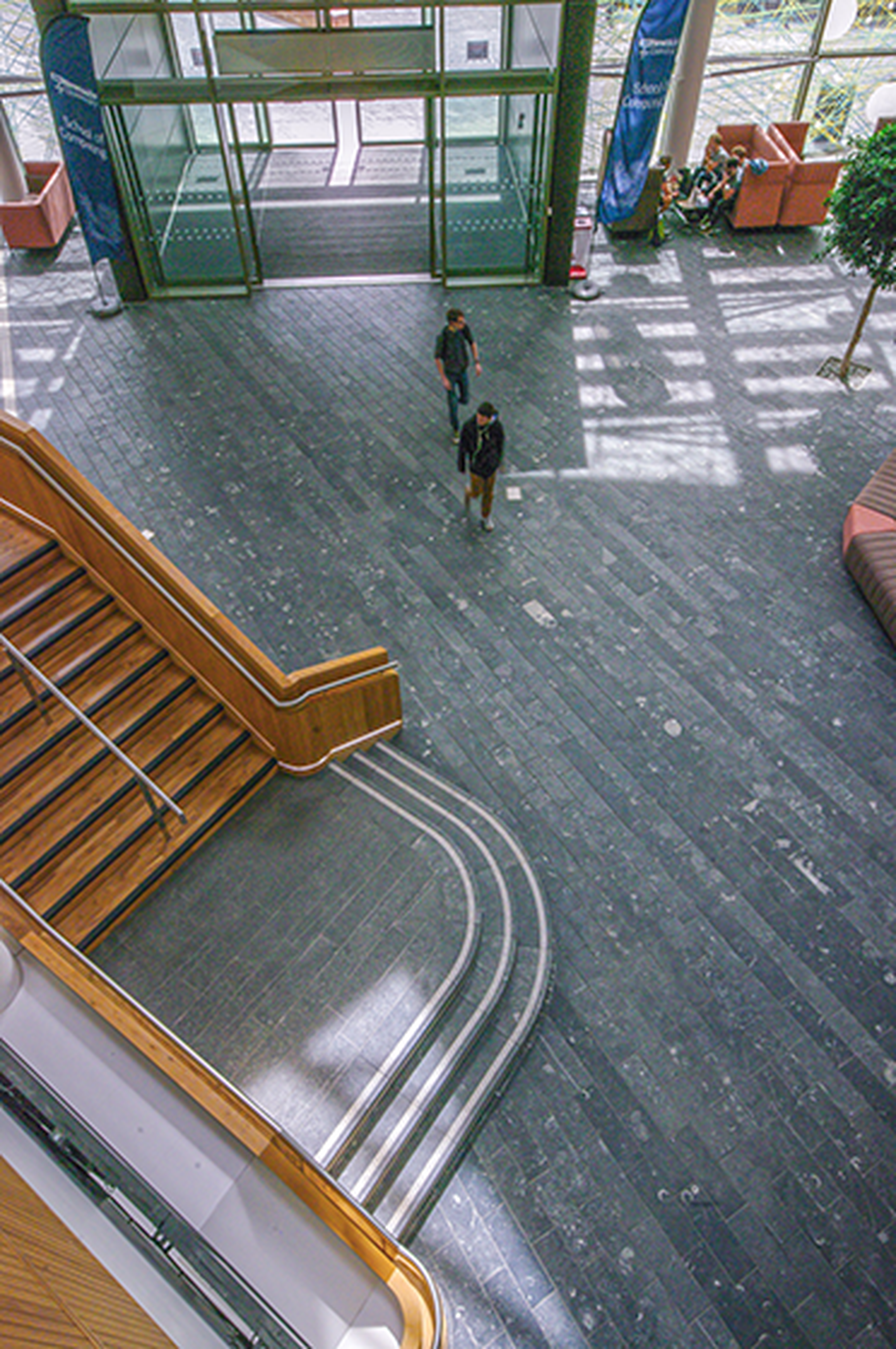
Scattered fossils give a large floor depth and character no uniform material can match.
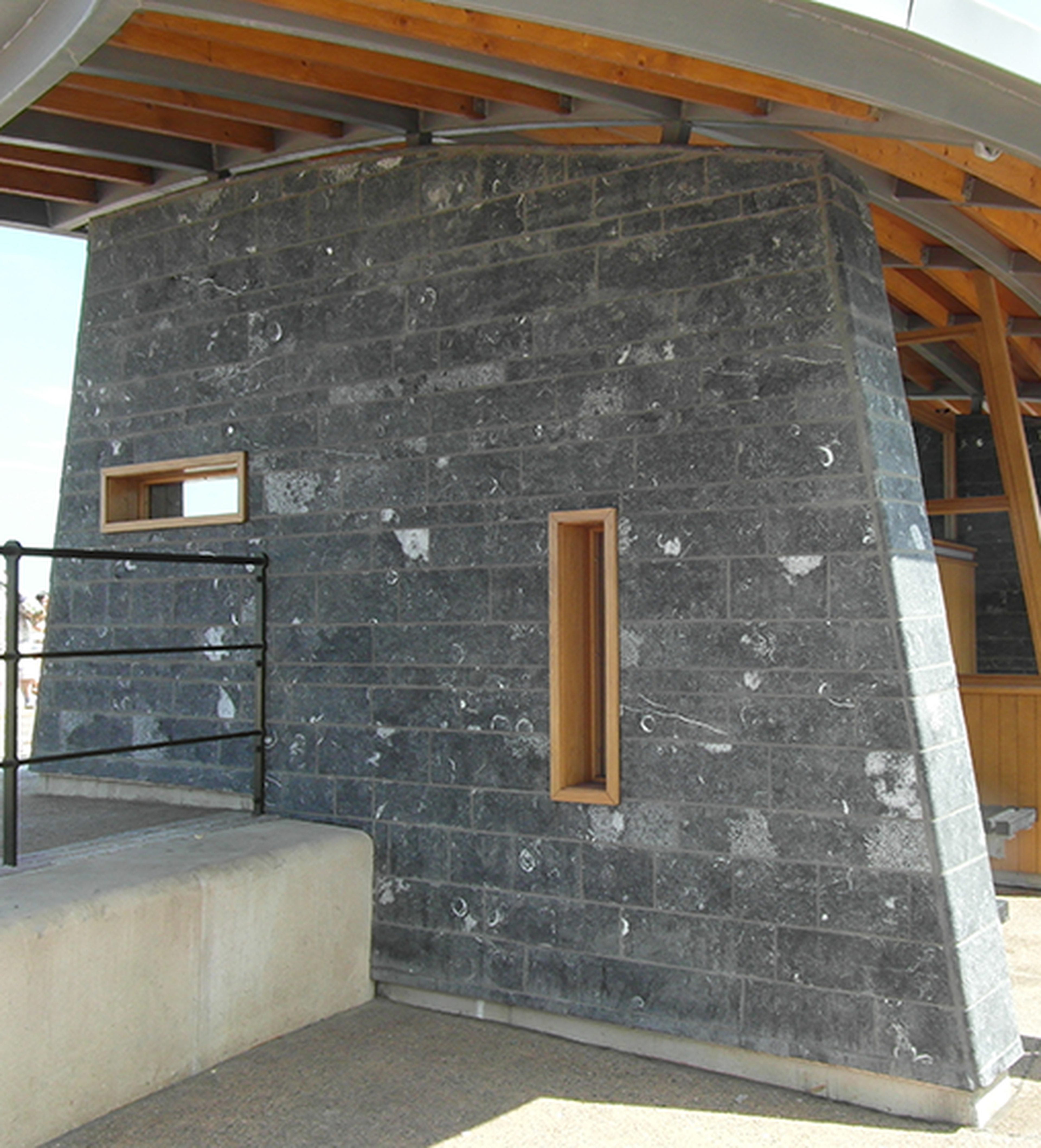
Fossil Stone brings dense layers of ancient corals and shells to flamed paving and cladding.
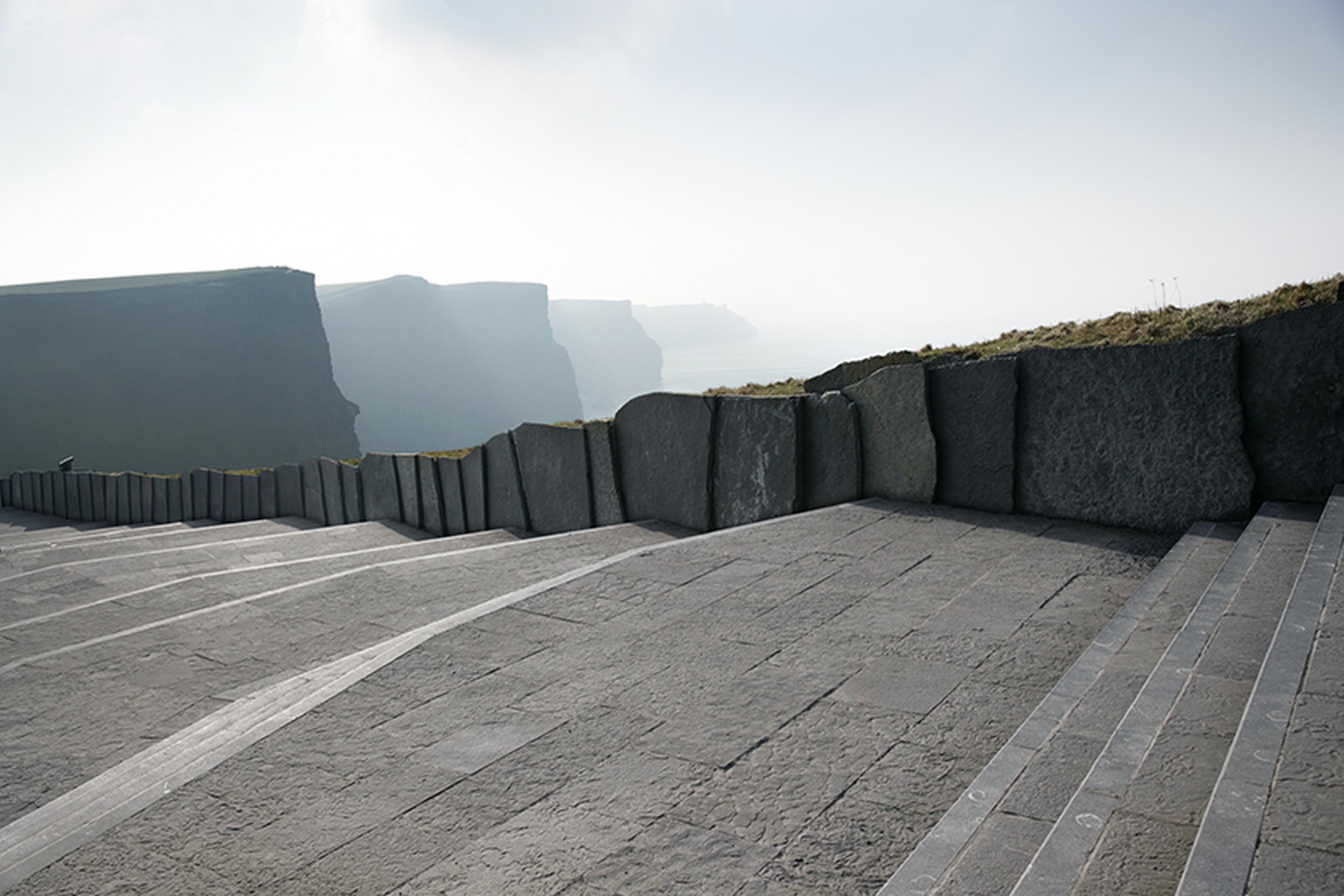
Fossil Stone stairs at the Cliffs of Moher, carrying corals and shells over 330 million years old.
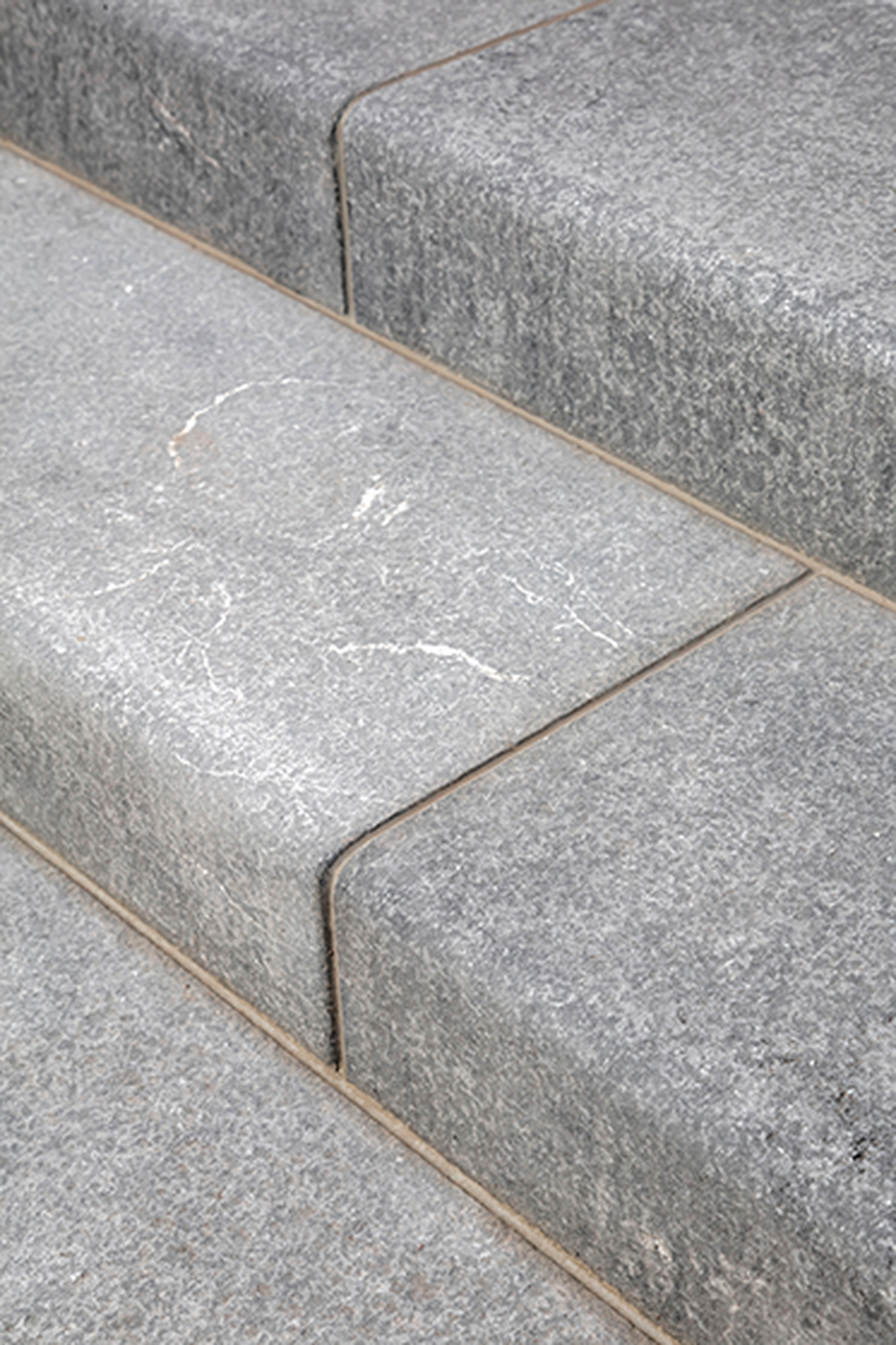
Flamed block steps and flamewashed tiles combine texture with subtle, refined contrast.
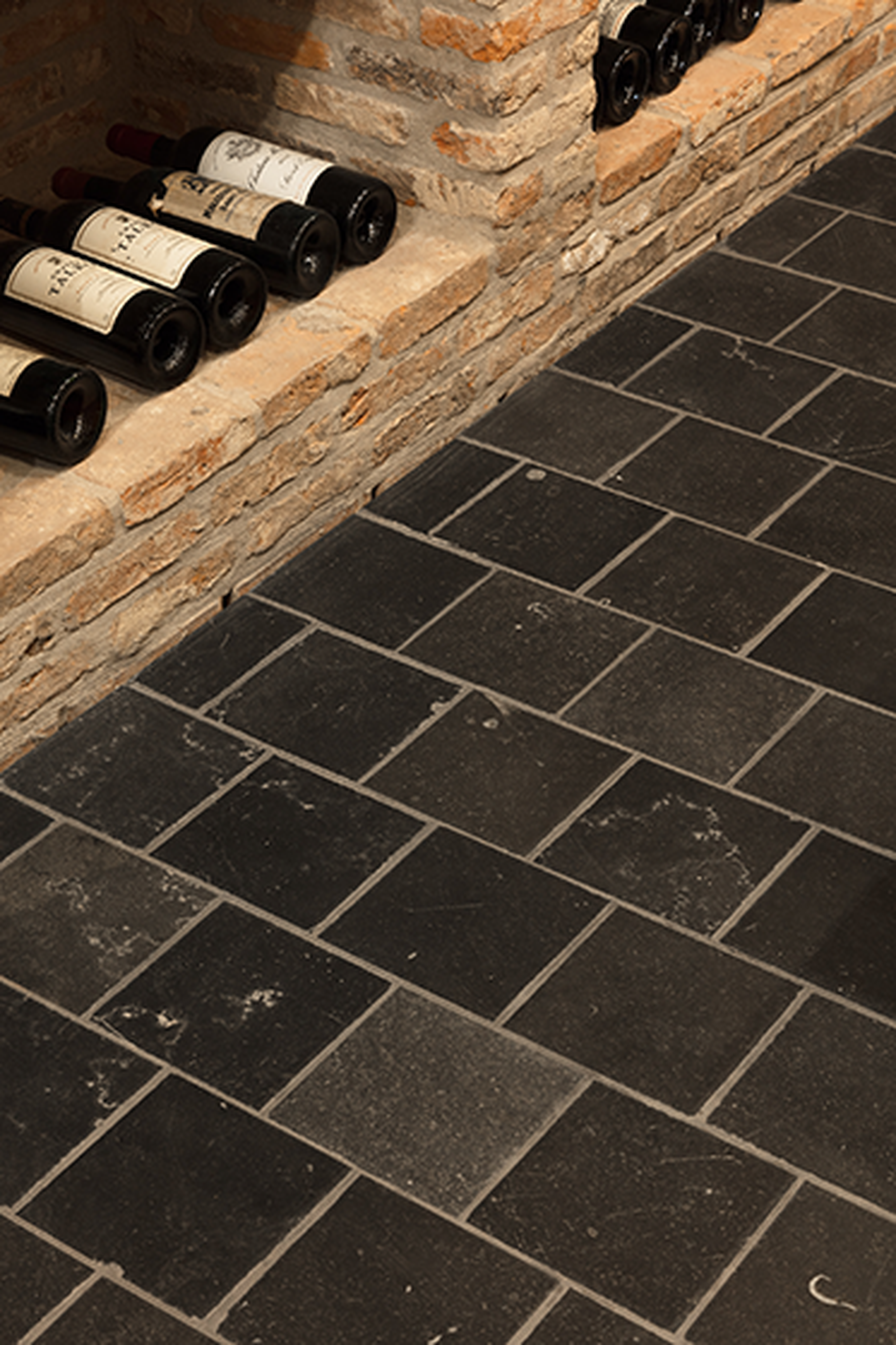
A darkened, aged finish with worn surface and softened edges for warm, characterful depth.
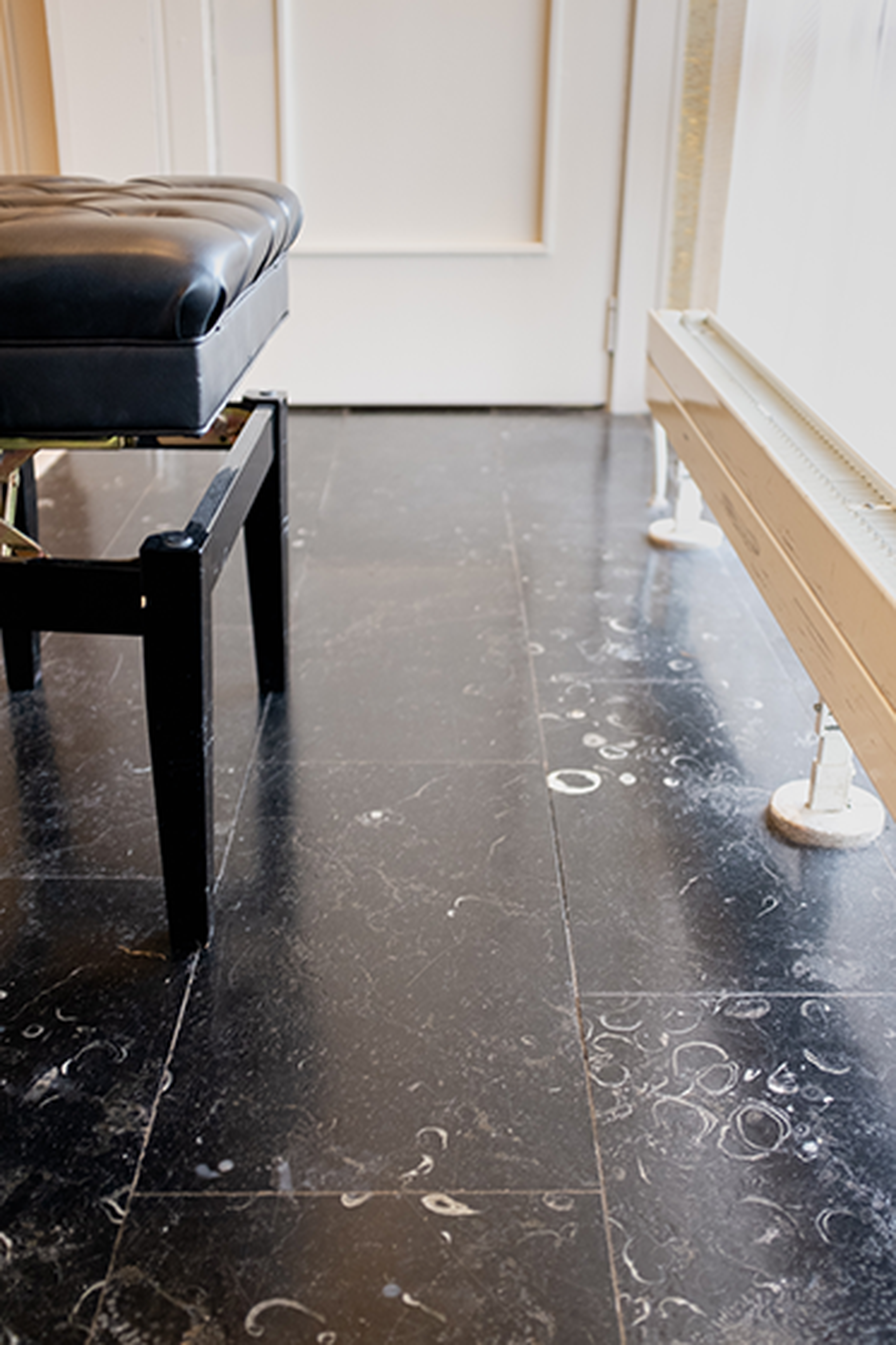
Dark honed Fossil Stone, where the smooth surface brings out the pale shells within the stone.
The Belgian Parallel
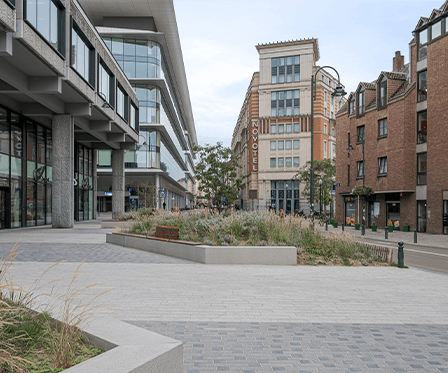
Irish blue limestone and Belgian bluestone (Pierre Bleue de Belgique / petit granit) share the same geological setting. Both are bioclastic grainstones that formed in the Lower Carboniferous tropical seas of north-western Europe, though Belgian bluestone is somewhat older than the Irish stone and the two formed in separate basins.
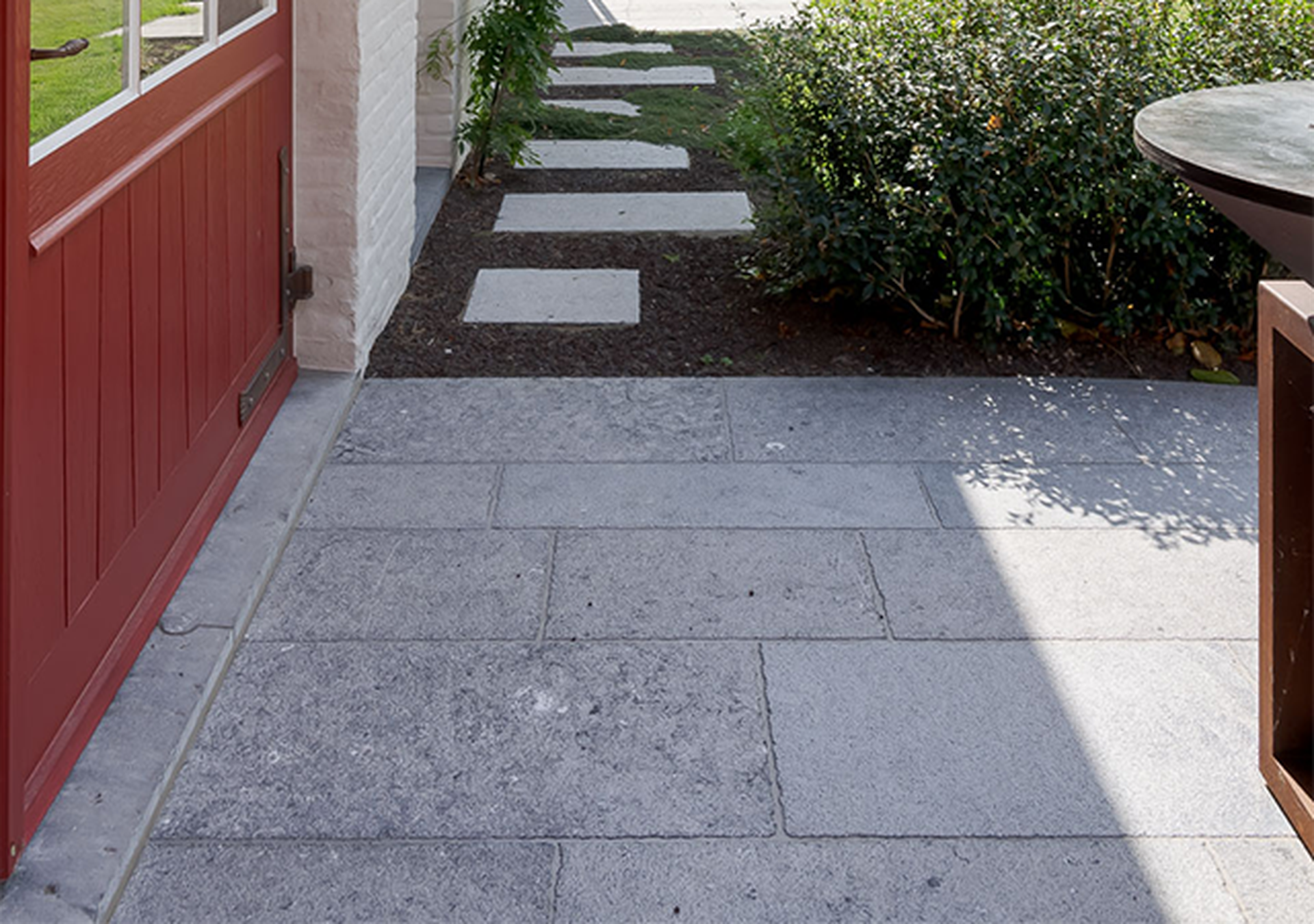
Patio in Belgian Bluestone ruvido
Despite the shared origin, the two materials have developed distinct characters through geography and quarrying tradition. Irish blue limestone tends to read as slightly darker and more uniformly blue-grey, while Belgian bluestone often shows the broader fossil content that gave it the "petit granit" nickname. In practice, performance is comparable: both are dense, frost-resistant bioclastic limestones well suited to external paving, cladding and construction elements in the Irish and British climate.
The choice between them typically comes down to project context: availability, local sourcing preferences, fossil content and the specific tonal range an architect is looking for. For projects in Ireland and the UK, Irish blue limestone offers the additional benefit of short transport distances and traceable sourcing from three quarries in Co. Carlow and Co. Kilkenny, which supports lower embodied carbon for BREEAM-referenced projects.
A Note on The "Bluestone" Name
The term "bluestone" is a commercial name, not a precise geological one. Stones marketed under similar names include Asian blue limestone from Vietnam (a fine-grained limestone, geologically similar in appearance) and Chinese bluestone (a dolomitic or oolitic limestone with different composition). These materials can look comparable on first inspection but differ in density, porosity, weathering behaviour and long-term performance. When specifying bluestone for a project, it is worth confirming the geological origin and technical data sheet, not just the commercial name.
Historical Use In Ireland
Irish limestone has been worked in Ireland for millennia. Early uses include Neolithic monuments and stone carving. During the medieval era the stone was used extensively in abbeys, monasteries and the great houses of Irish chieftains and landowners. From the twentieth century onwards, its use shifted from primarily ornamental carving to functional applications such as cladding, paving and contemporary architecture, a transition that continues today.
Modern Applications
Today, Irish blue limestone is specified across a wide range of exterior and interior projects. As limestone paving it is supplied in slabs, setts, cobbles and kerbing, with bluestone paving a common choice for patios, public realm schemes and garden landscaping. Beyond paving, the stone is worked into cladding panels, pool copings, wall capping, building products (lintels, sills, door surrounds) and interior surfaces including flooring and worktops. It is available in +20 finishes, ranging from flamed and bush hammered for outdoor slip resistance to honed and stonewashed for interior use.
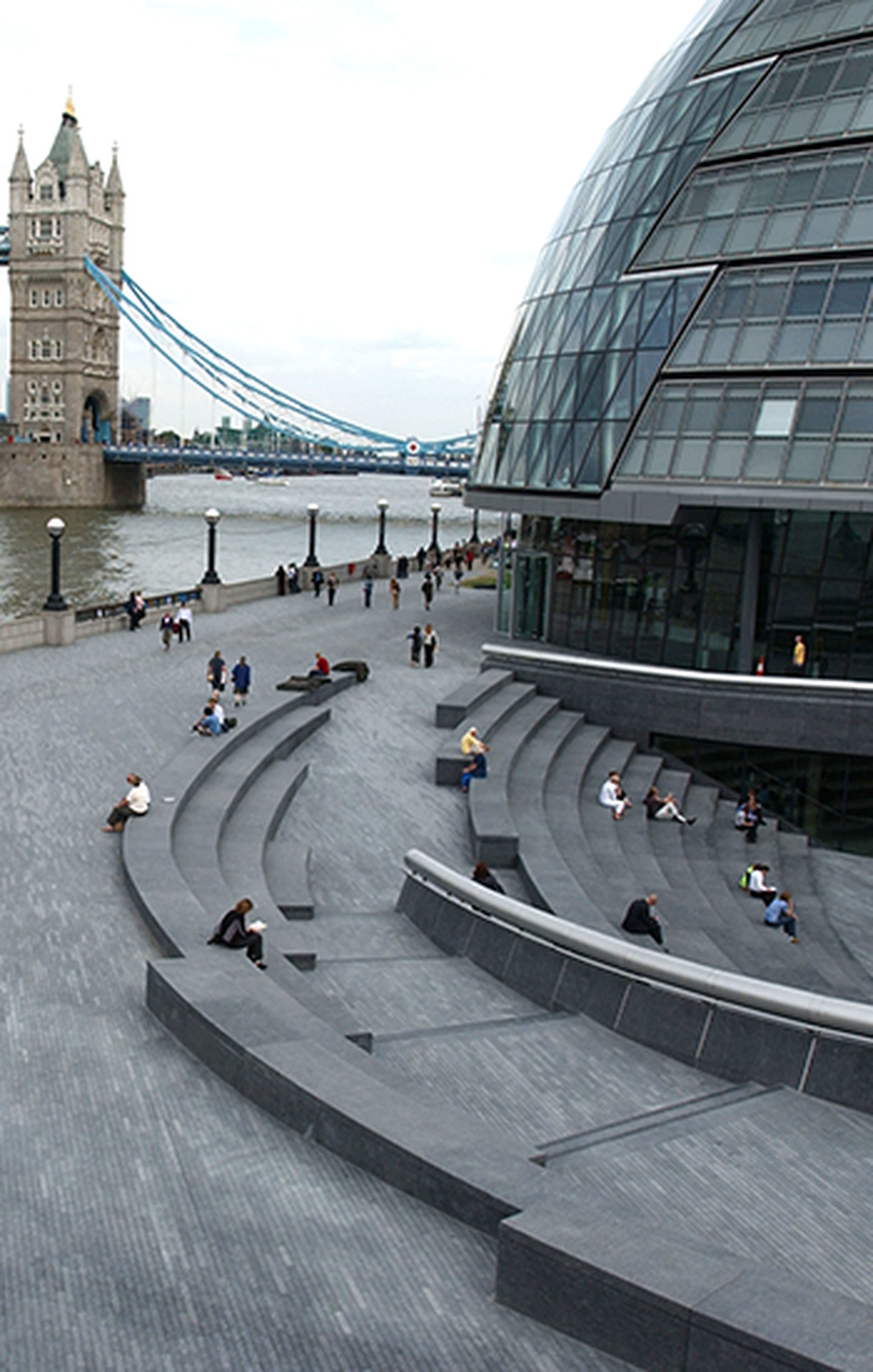
Paving and street furniture
London
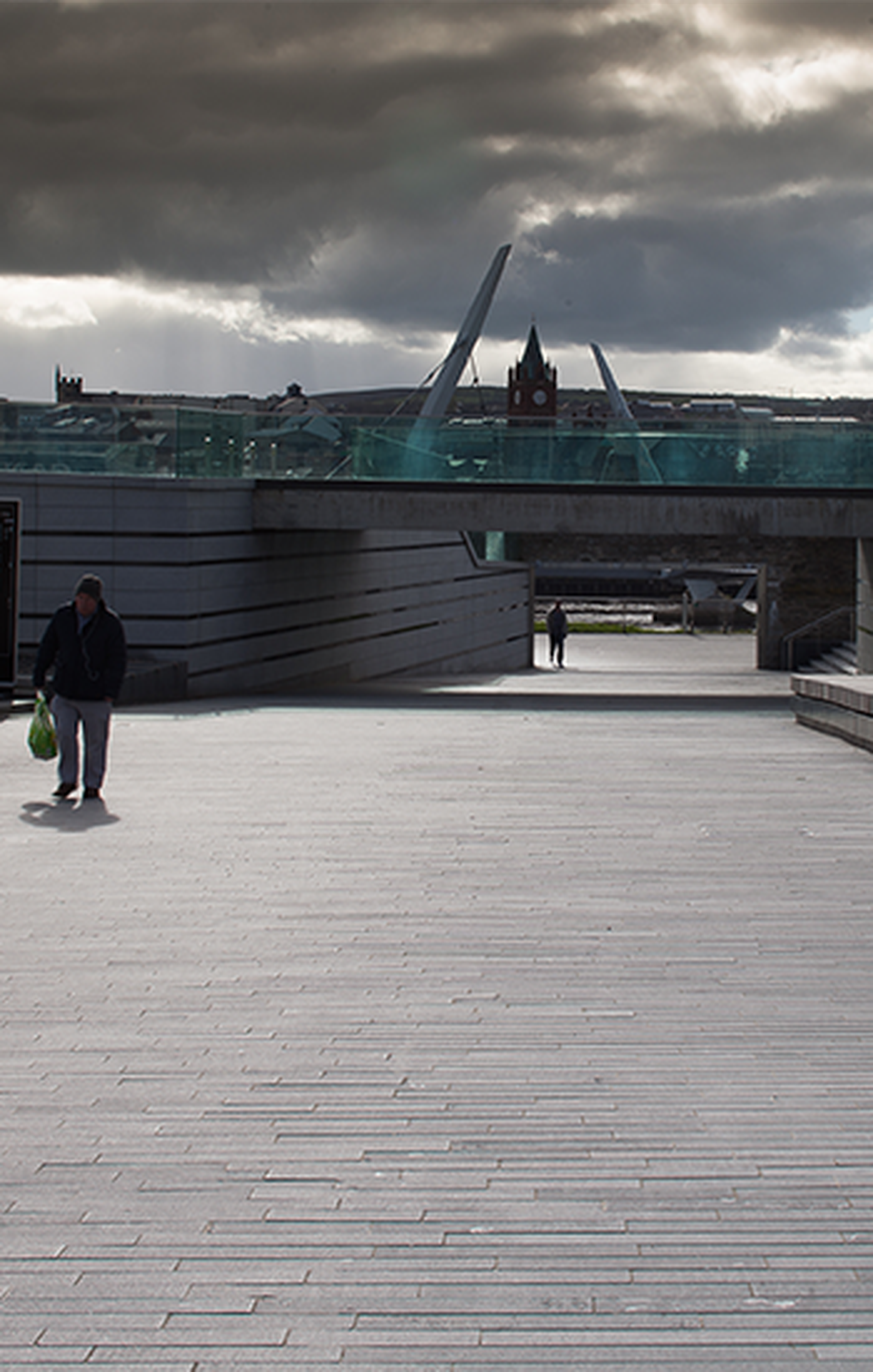
Paving strips
Erbrington
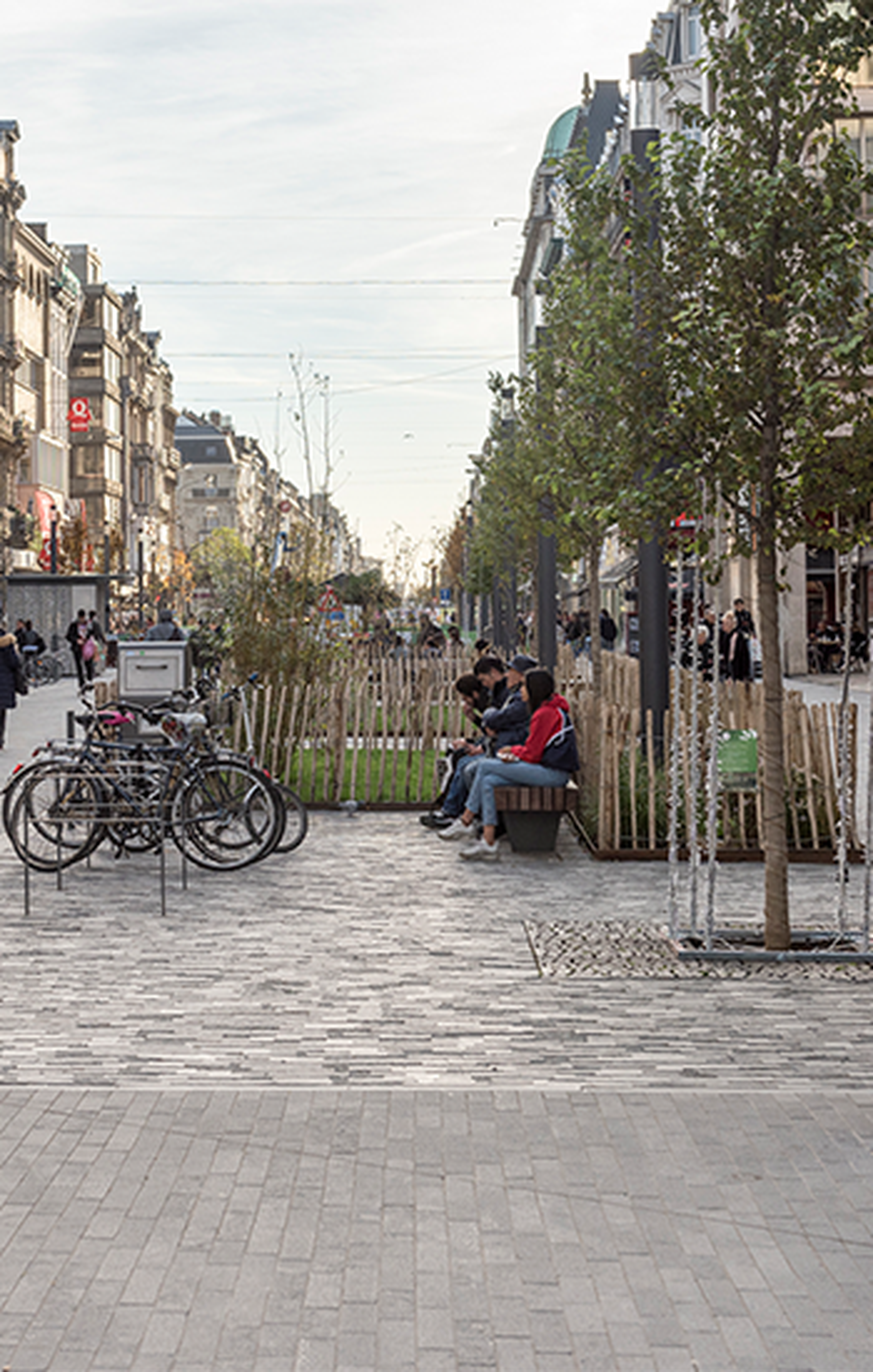
Paving setts
Brussels
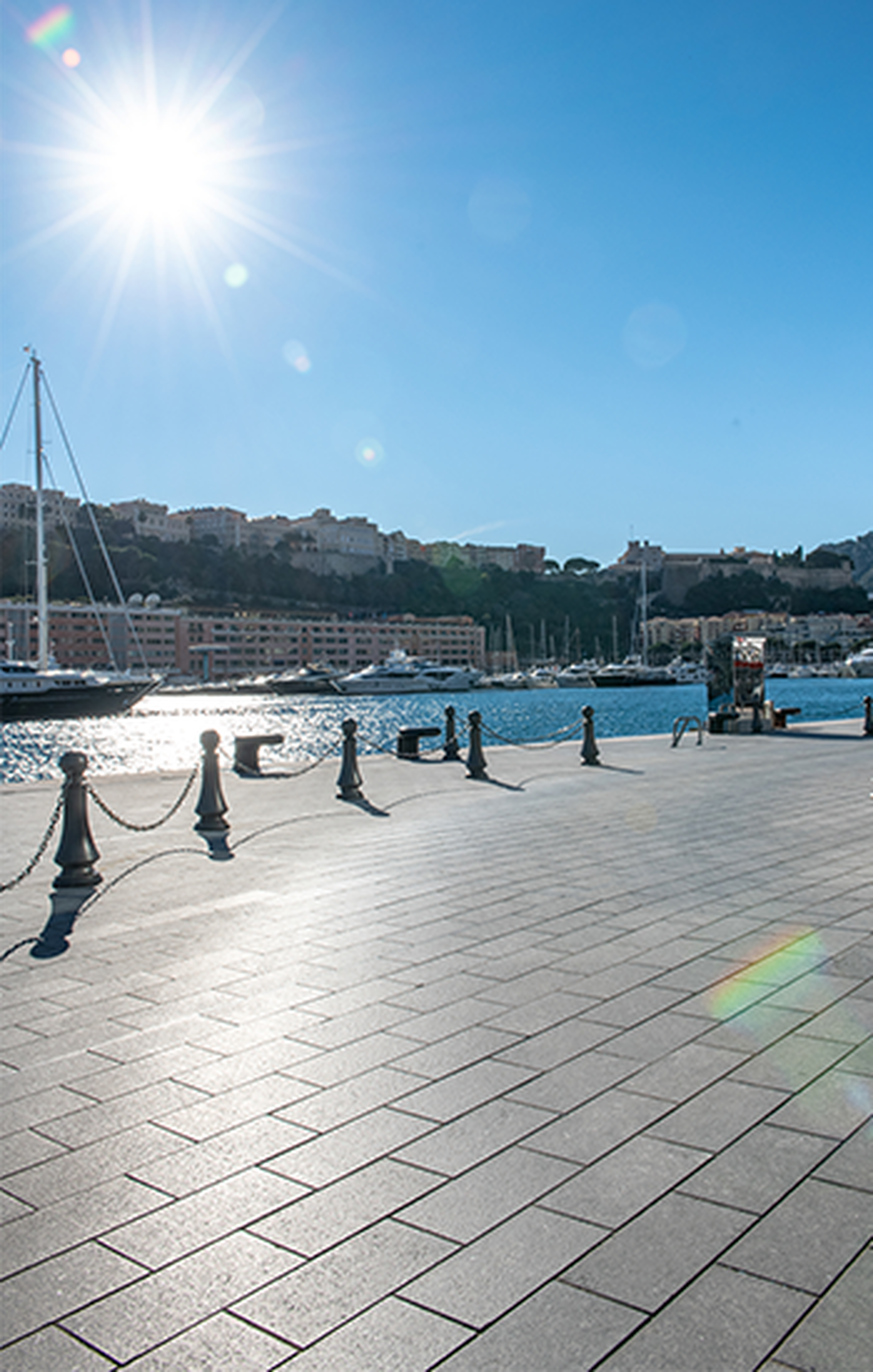
Paving slabs
Monaco
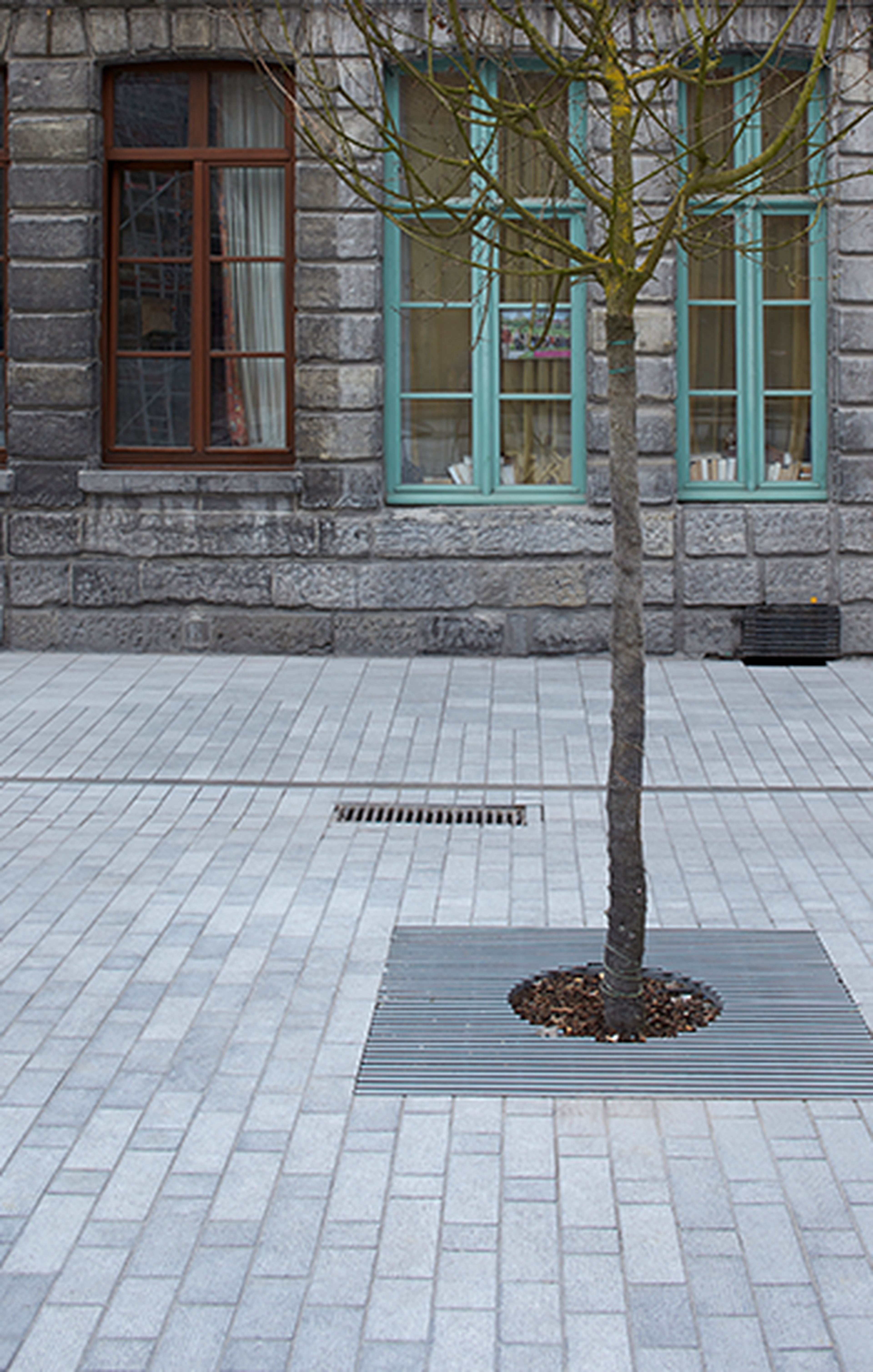
Paving setts
Tournai
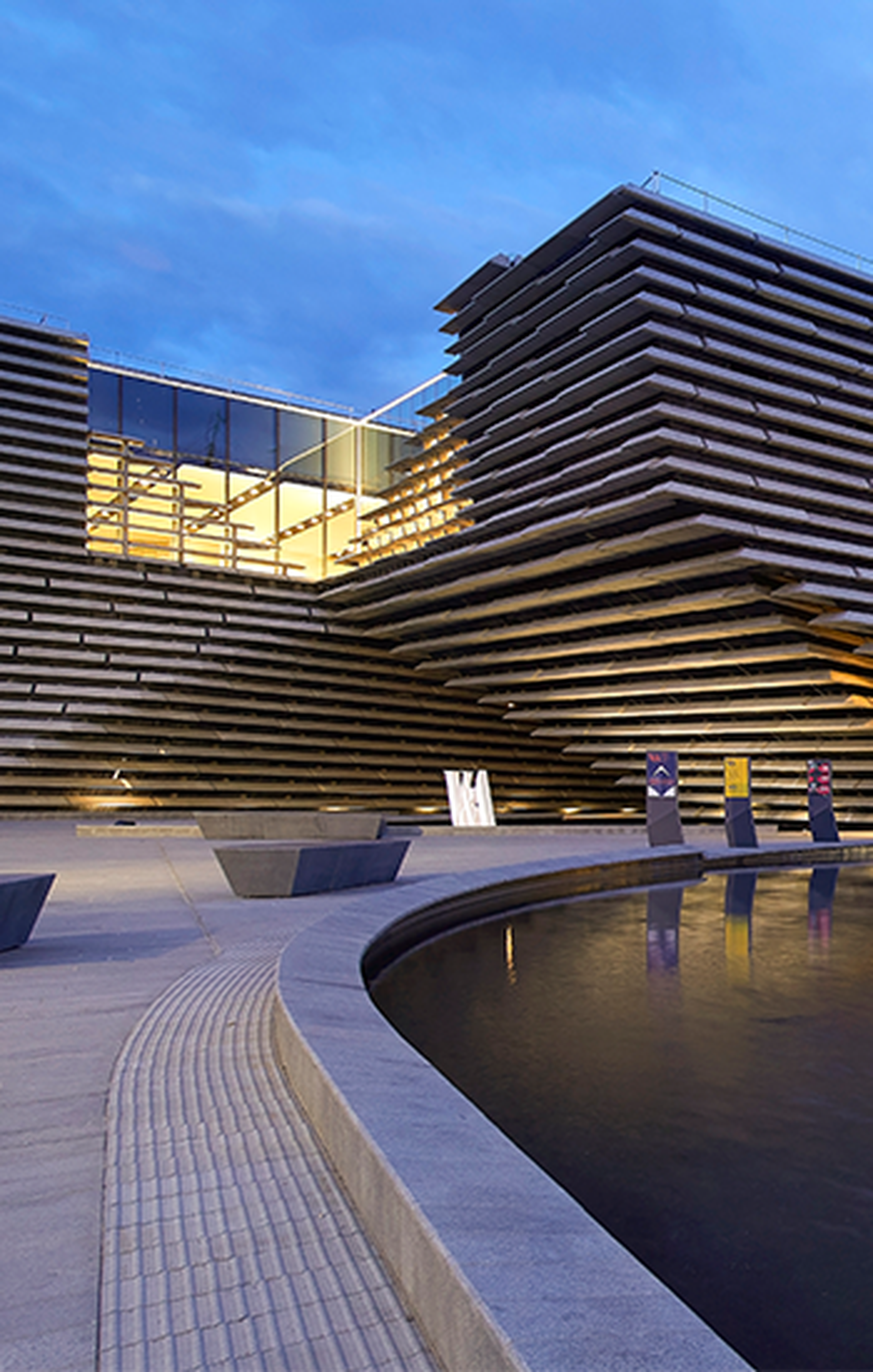
Paving slabs and borders
V&A Museum, Dundee
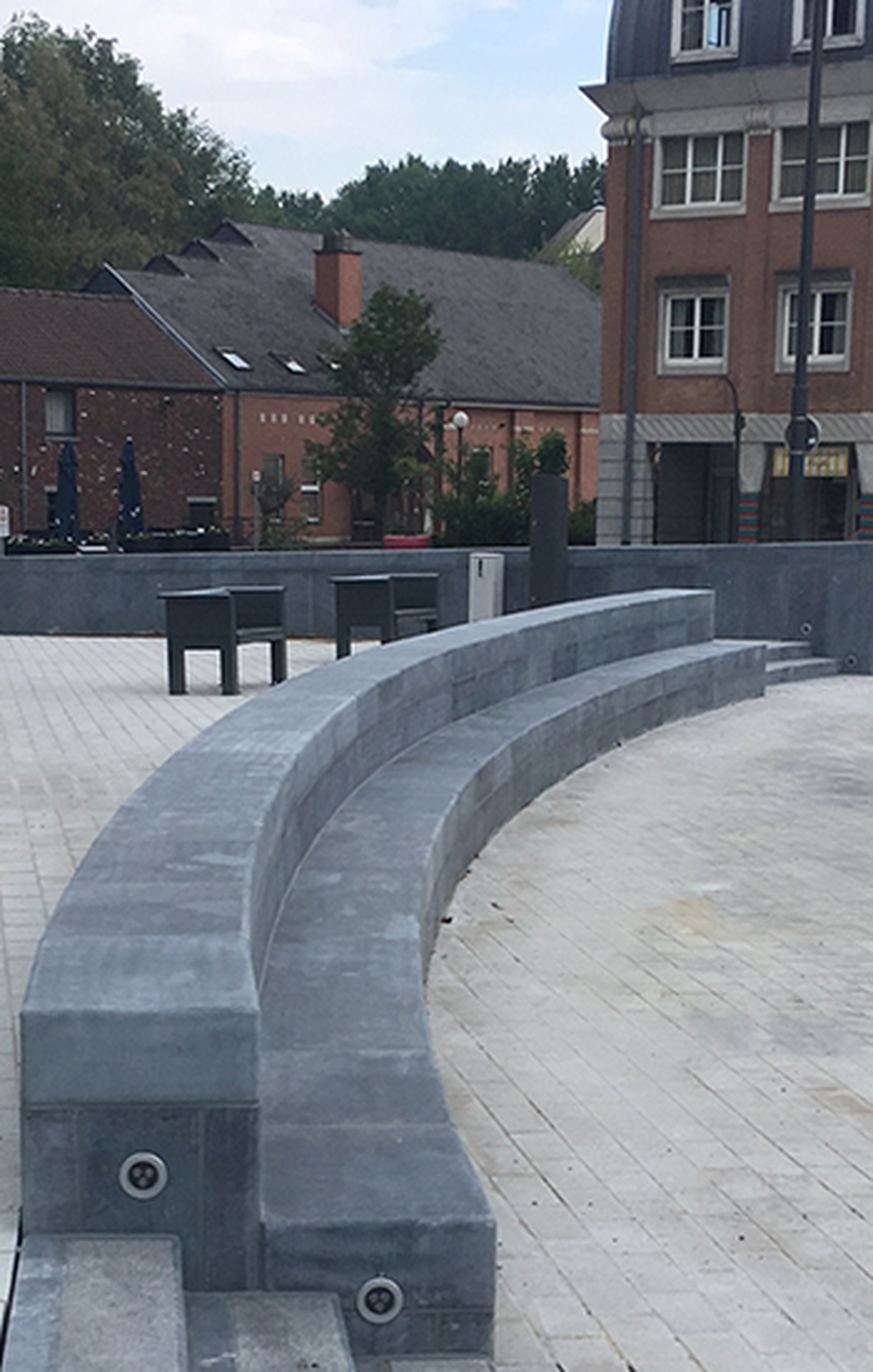
Bench
Sint-Lambrechts-Woluwe
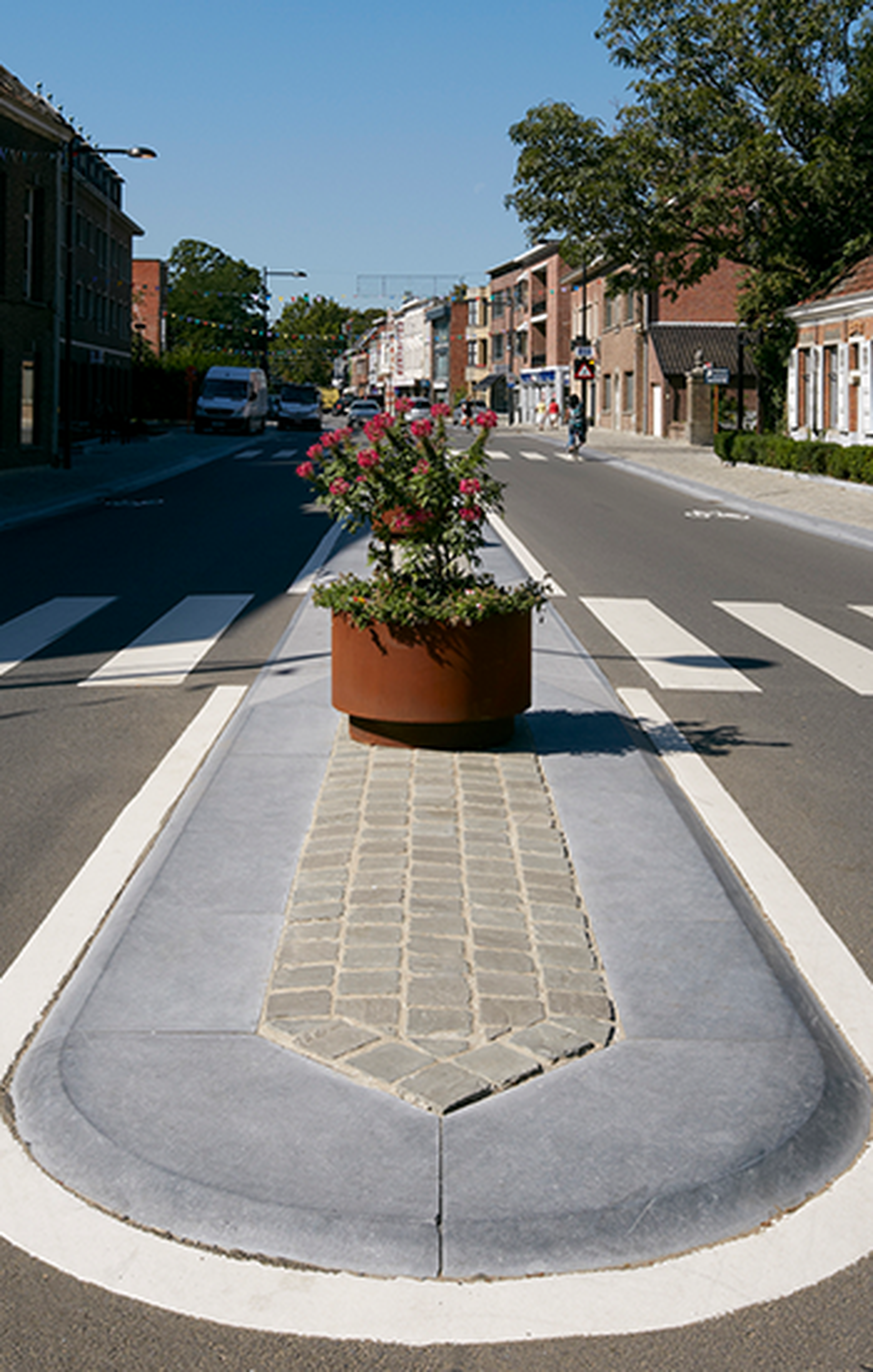
Borders
Hove
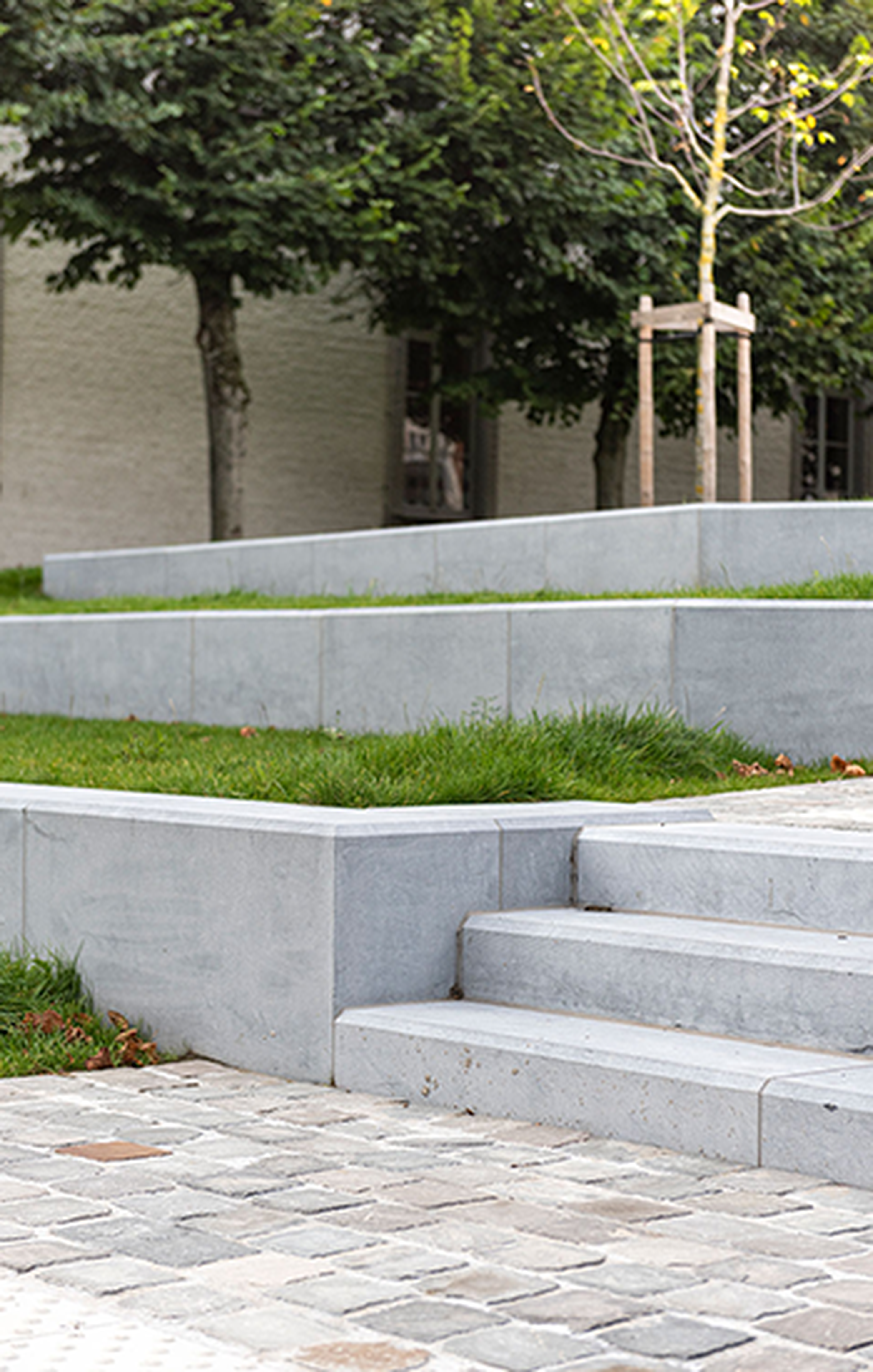
Massif, steps and wall
Ghent
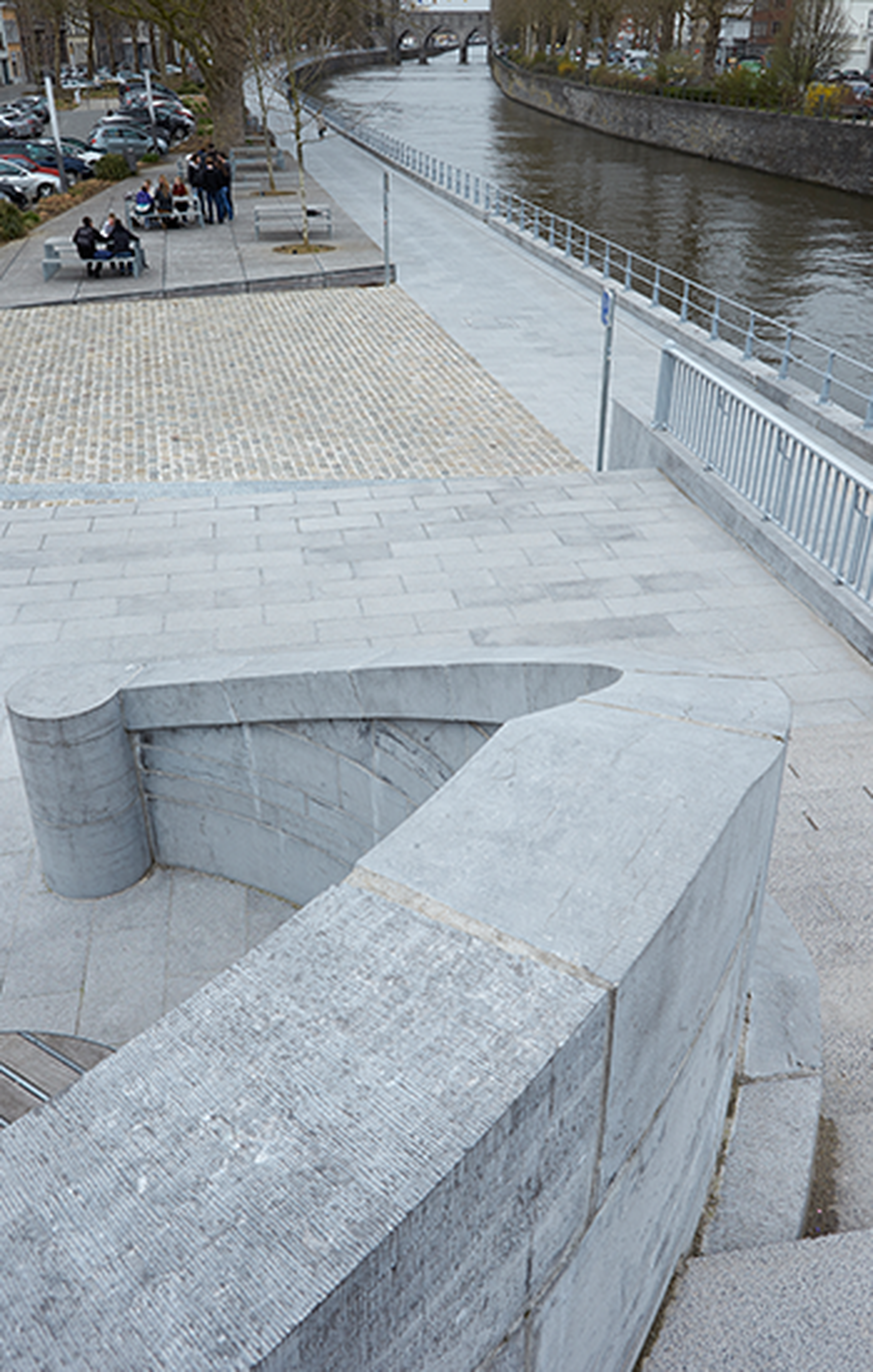
Stairs & wall
Doornik
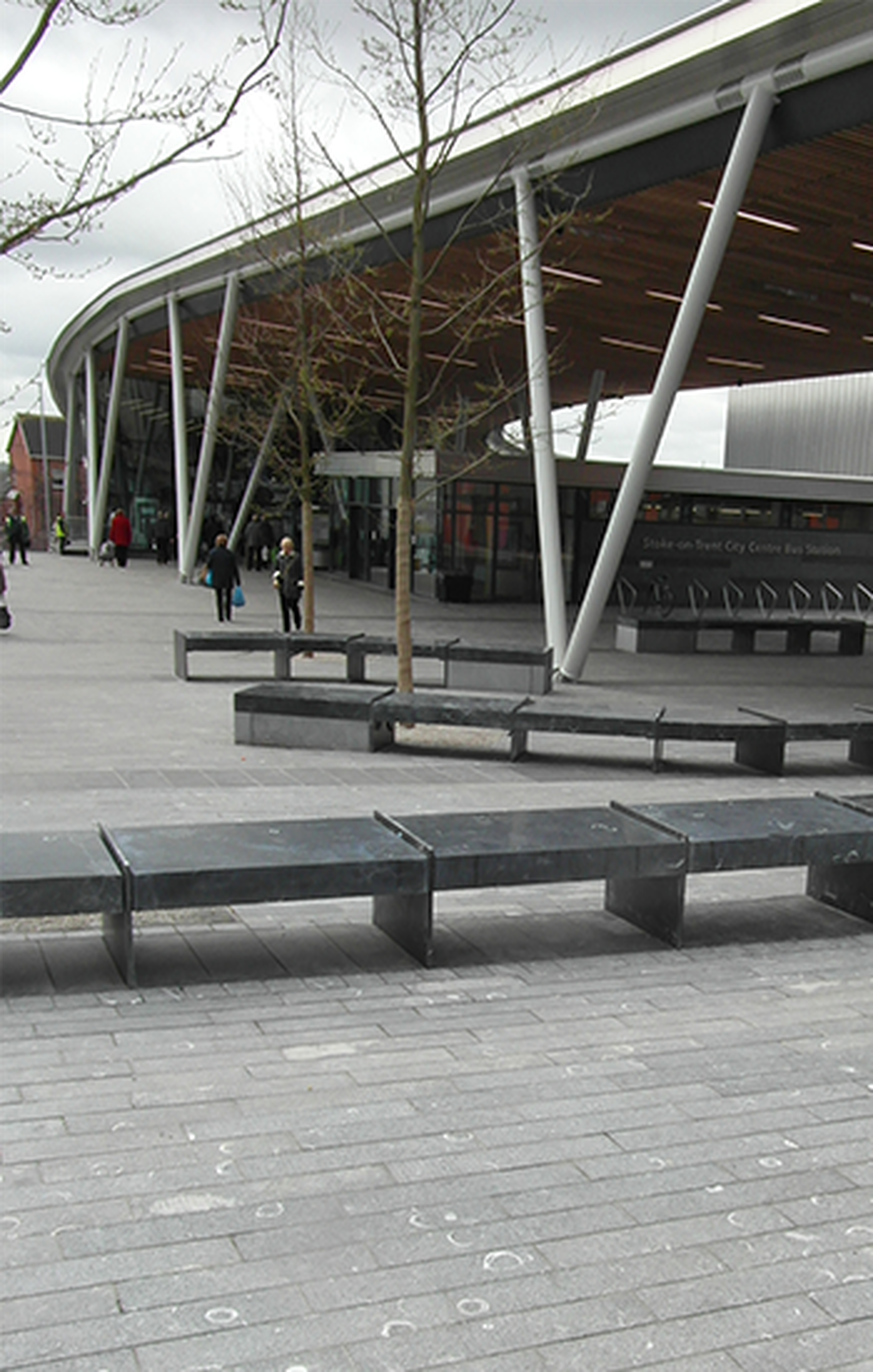
Fossil Stone - Paving and benches - Stoke on Trent
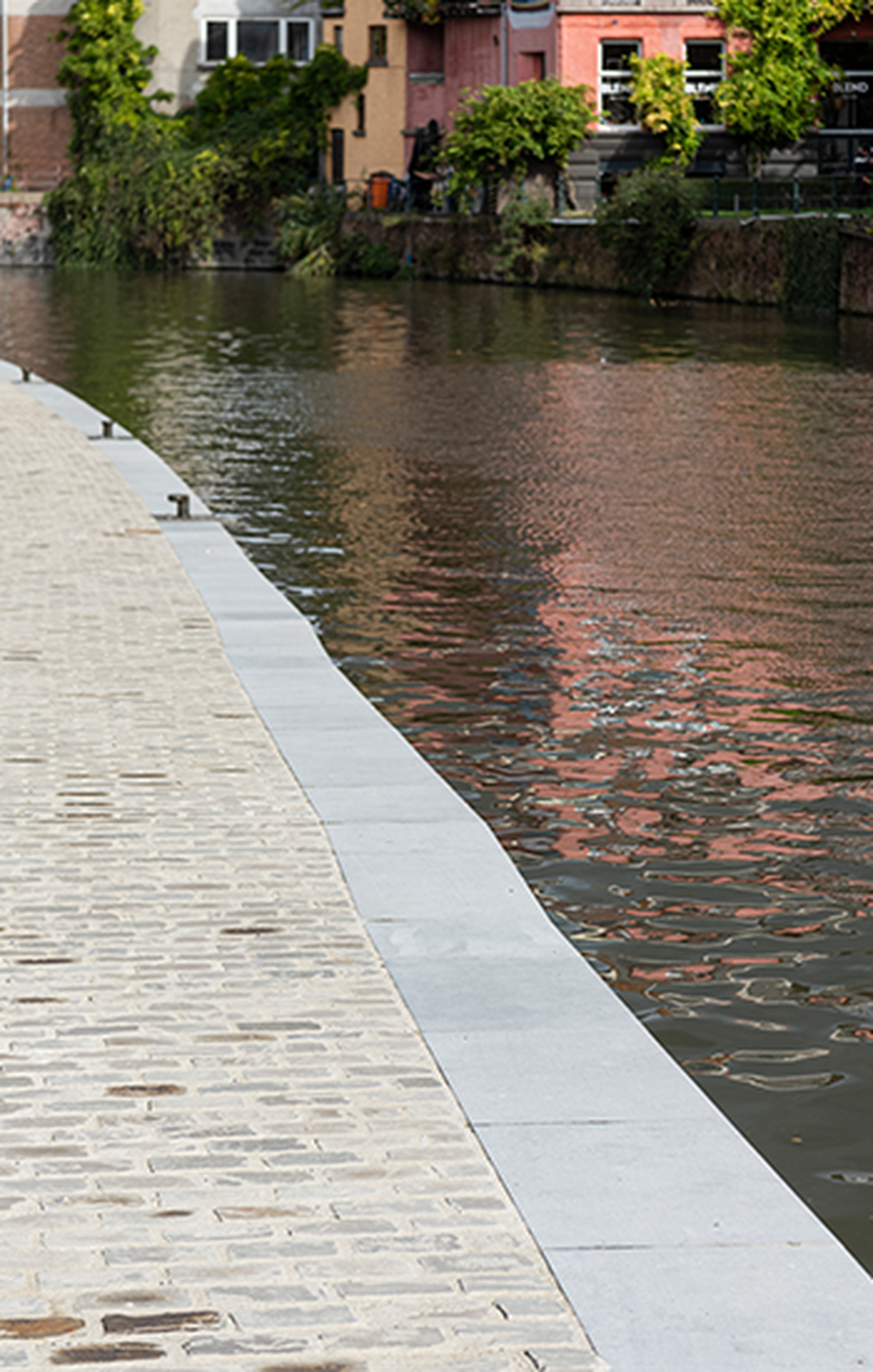
Borders
Ghent
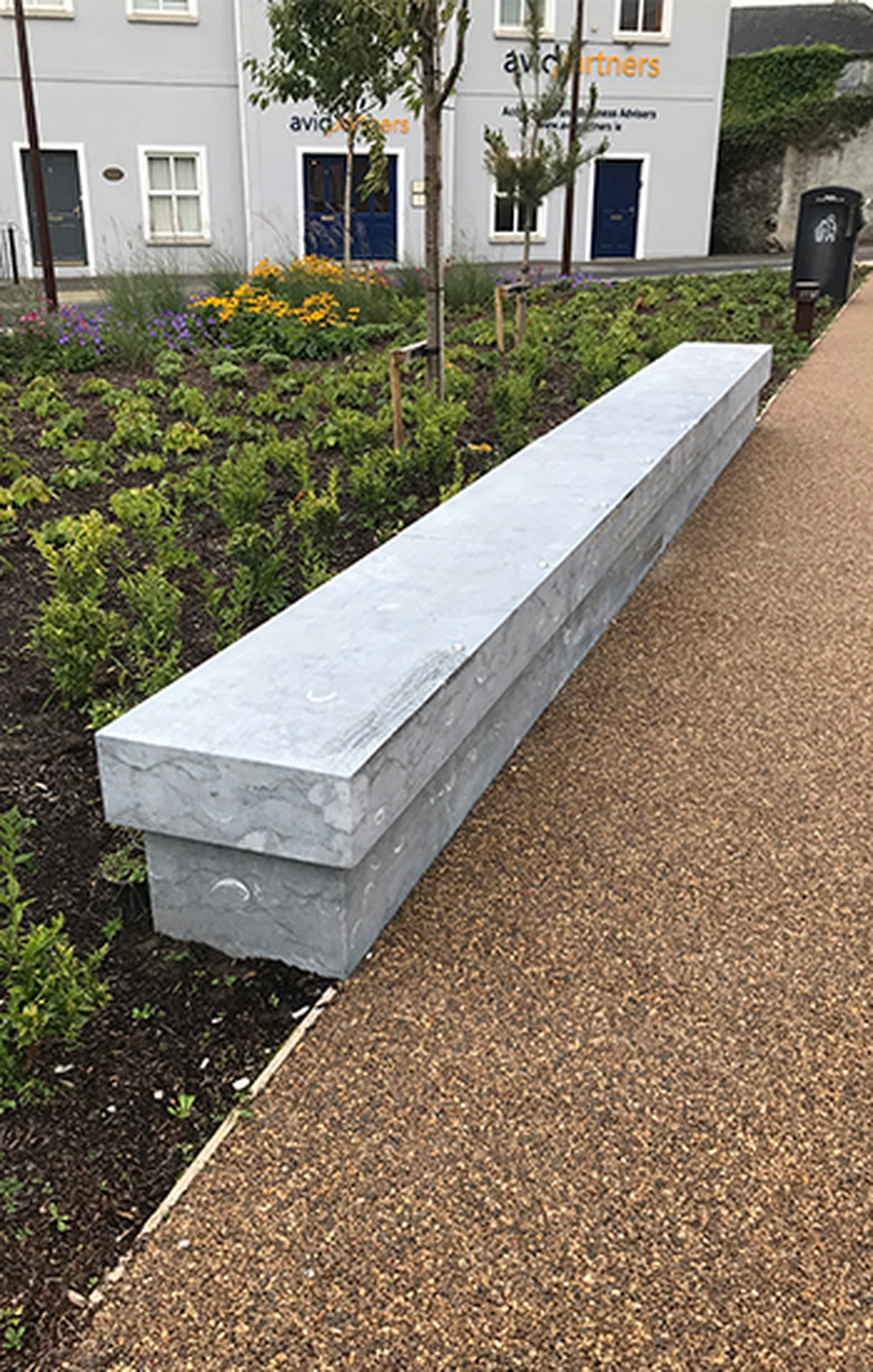
Fossil Stone
Bench
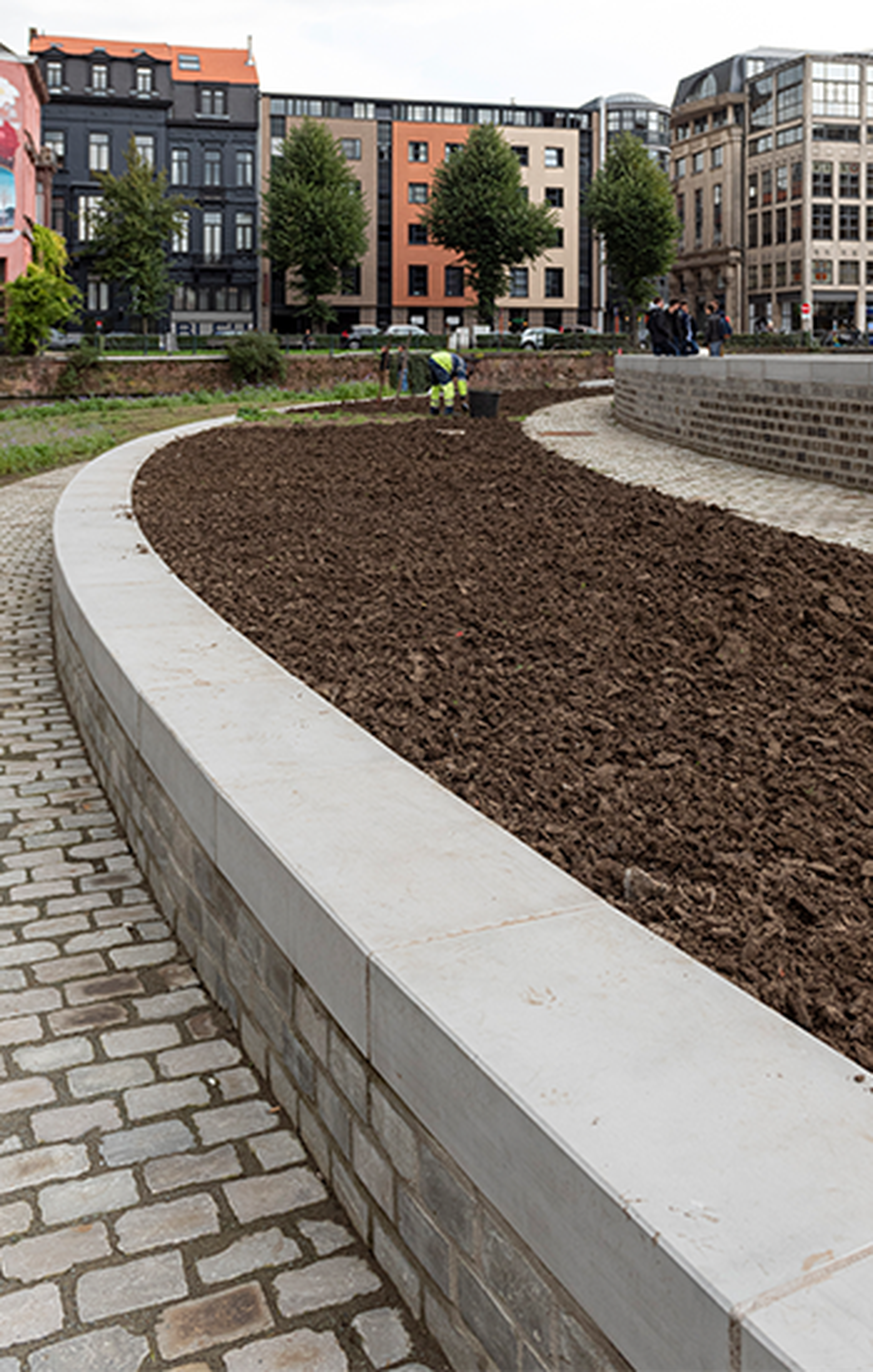
Wall capping - hand honed
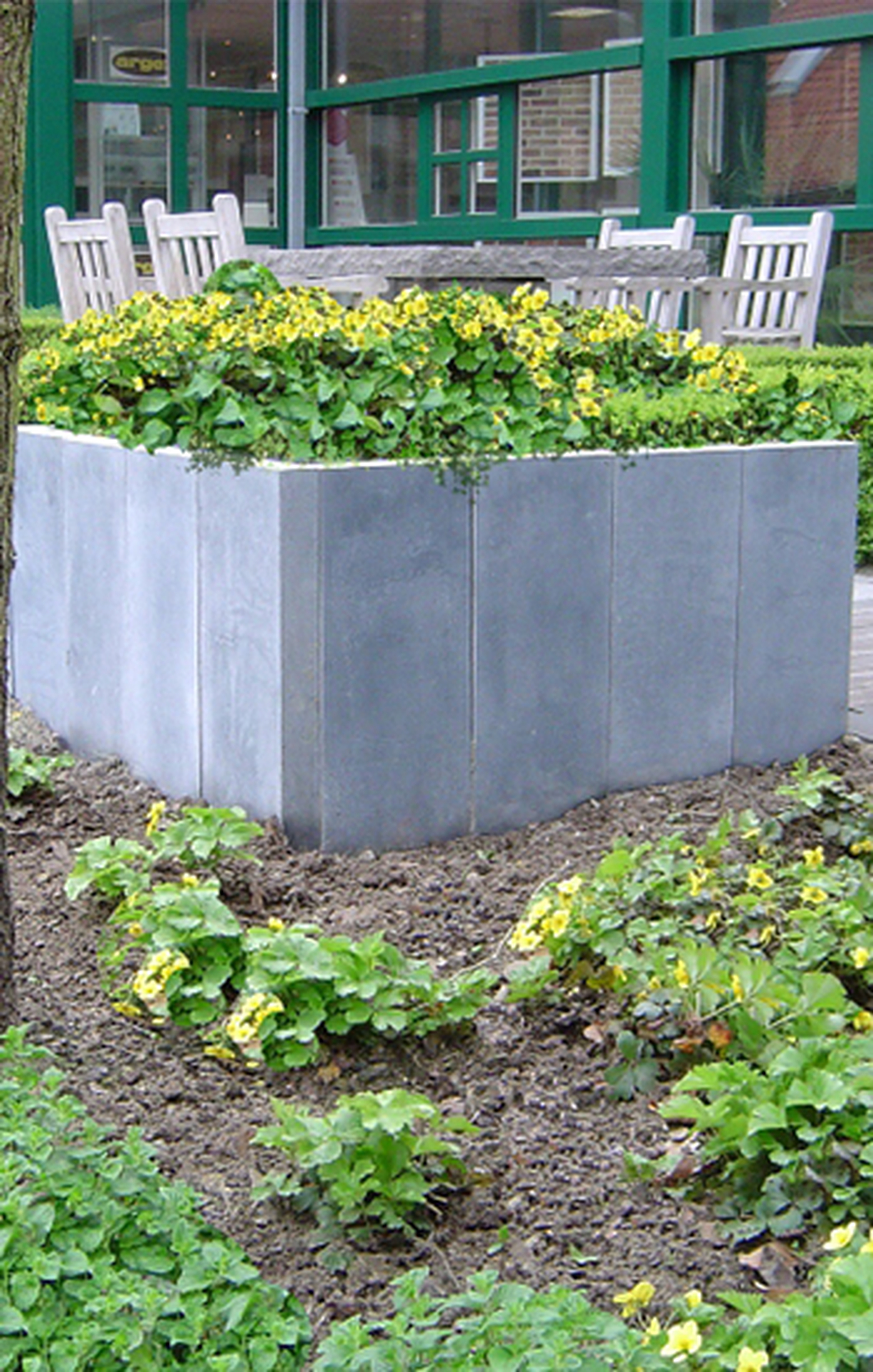
Palisades
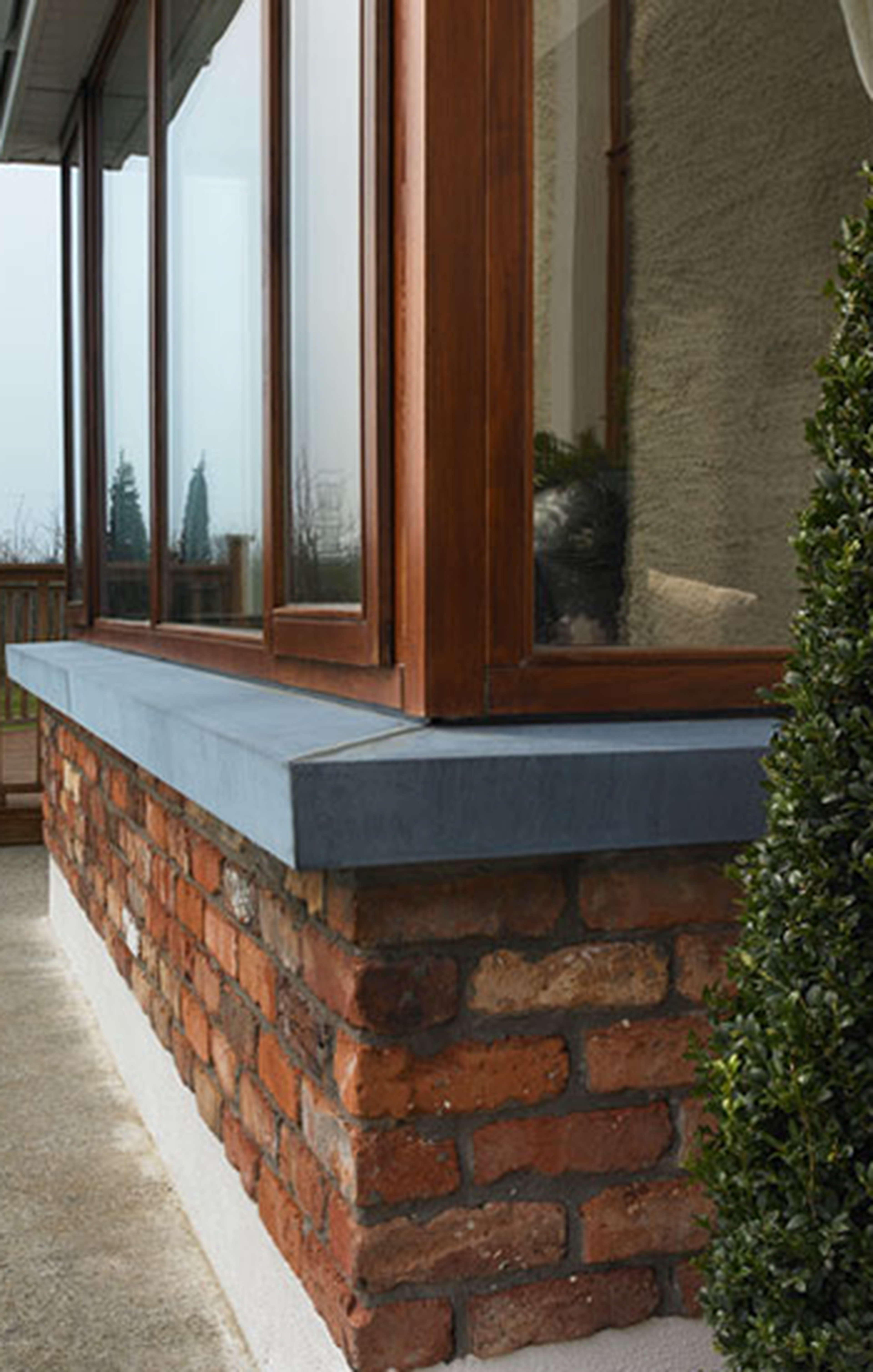
Windowsills
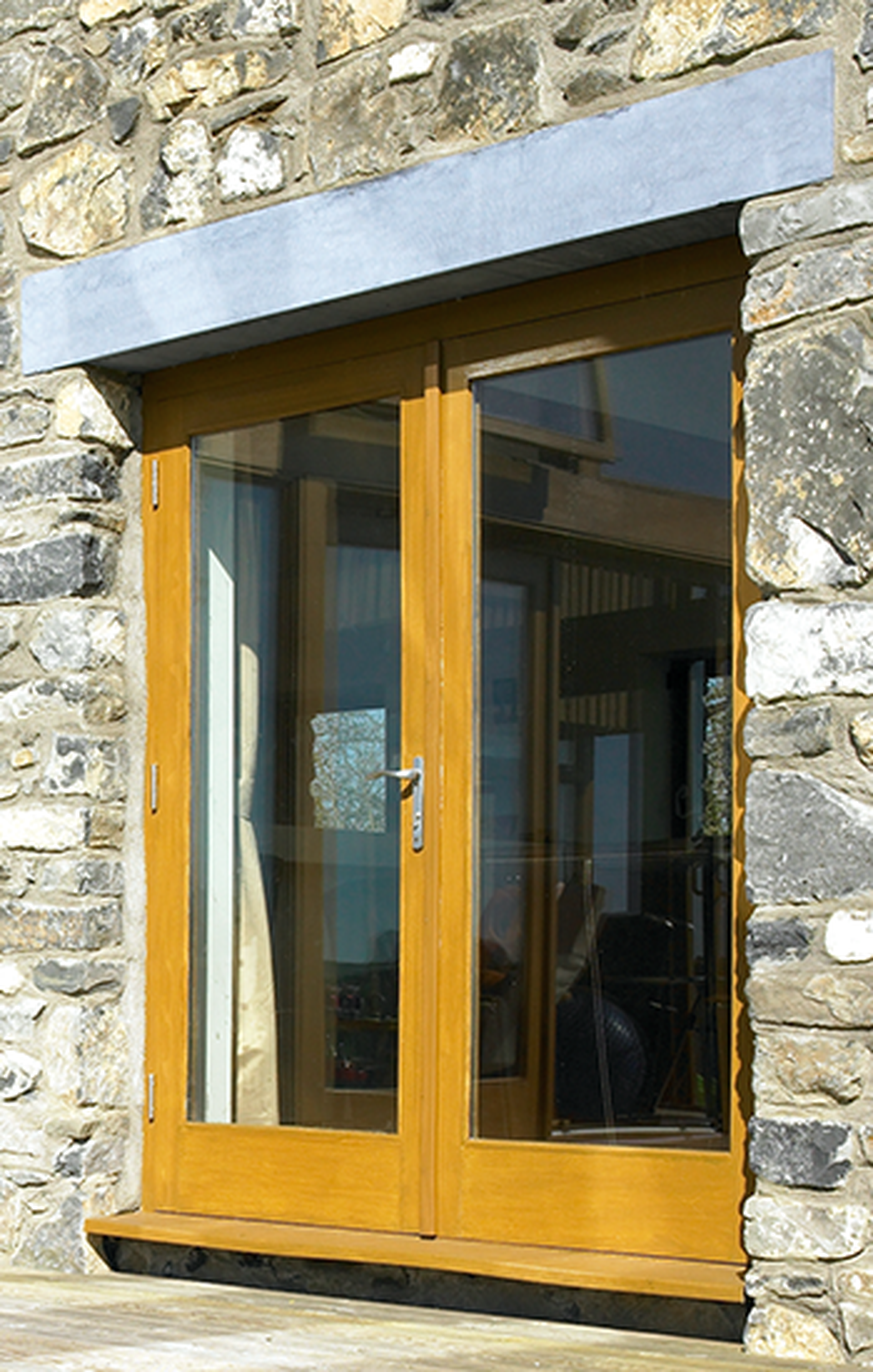
Lintels
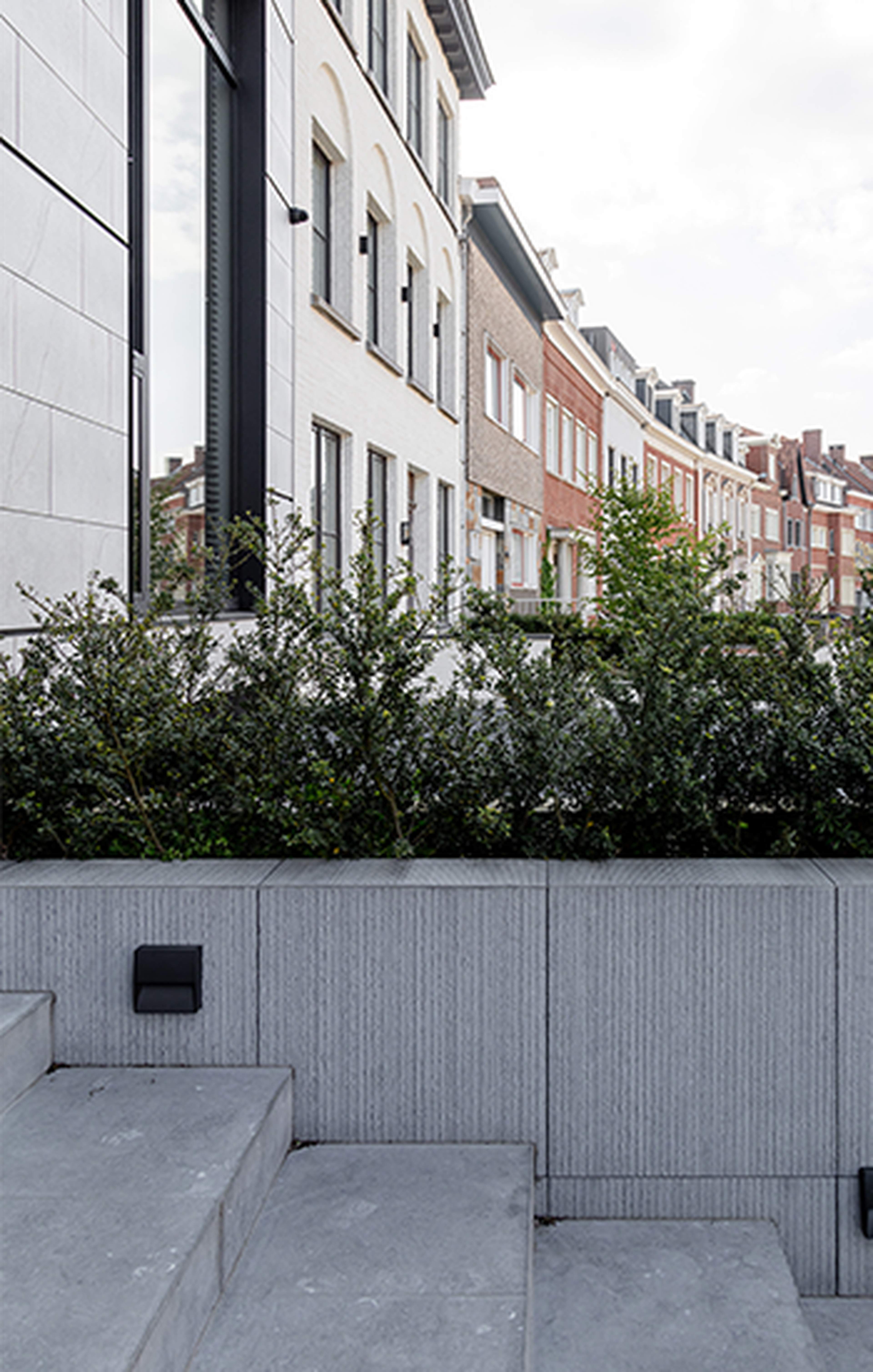
Stairs & massifs - old fine chisel
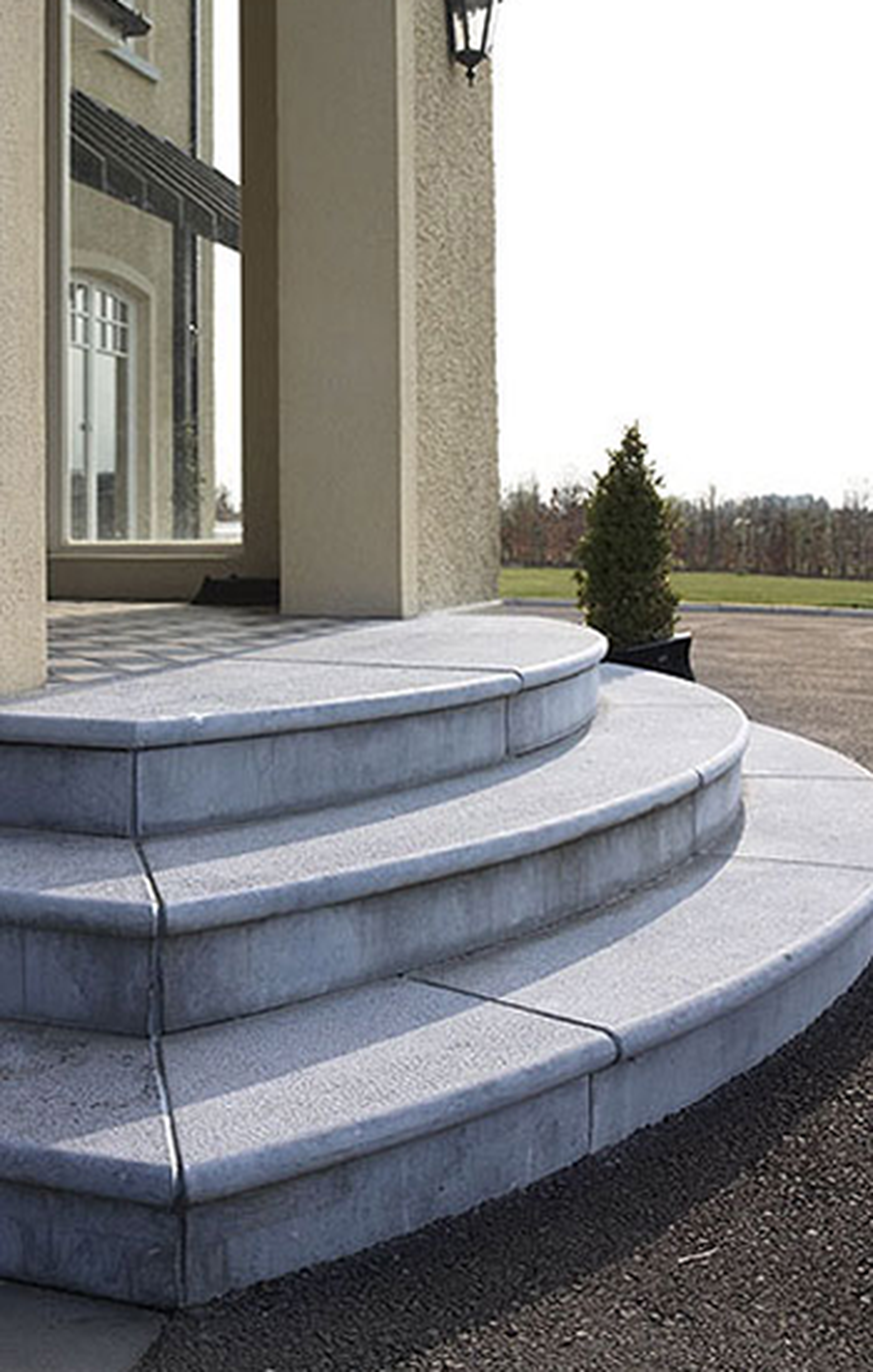
Stairs
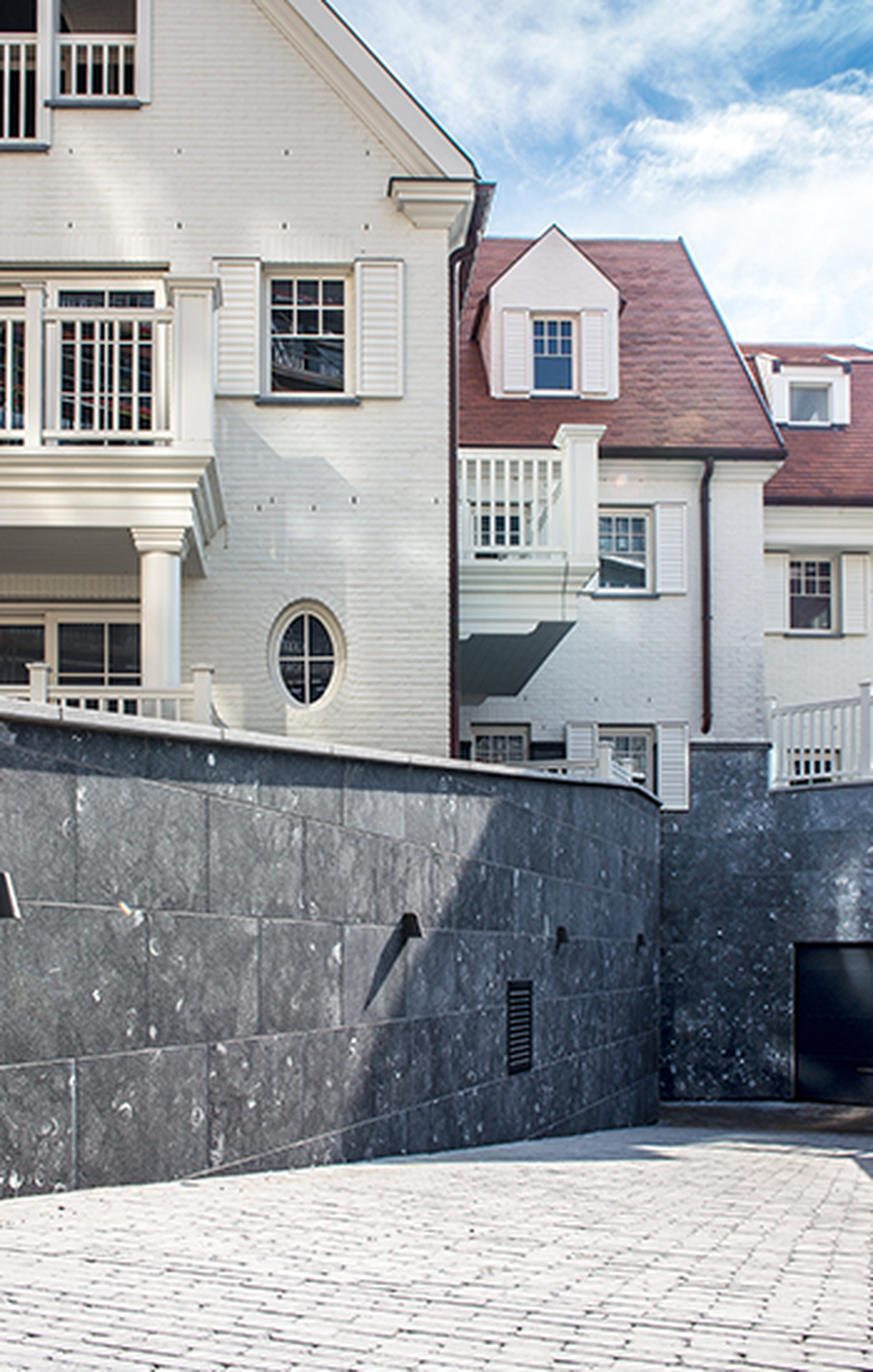
Façade cladding - Fossil stone
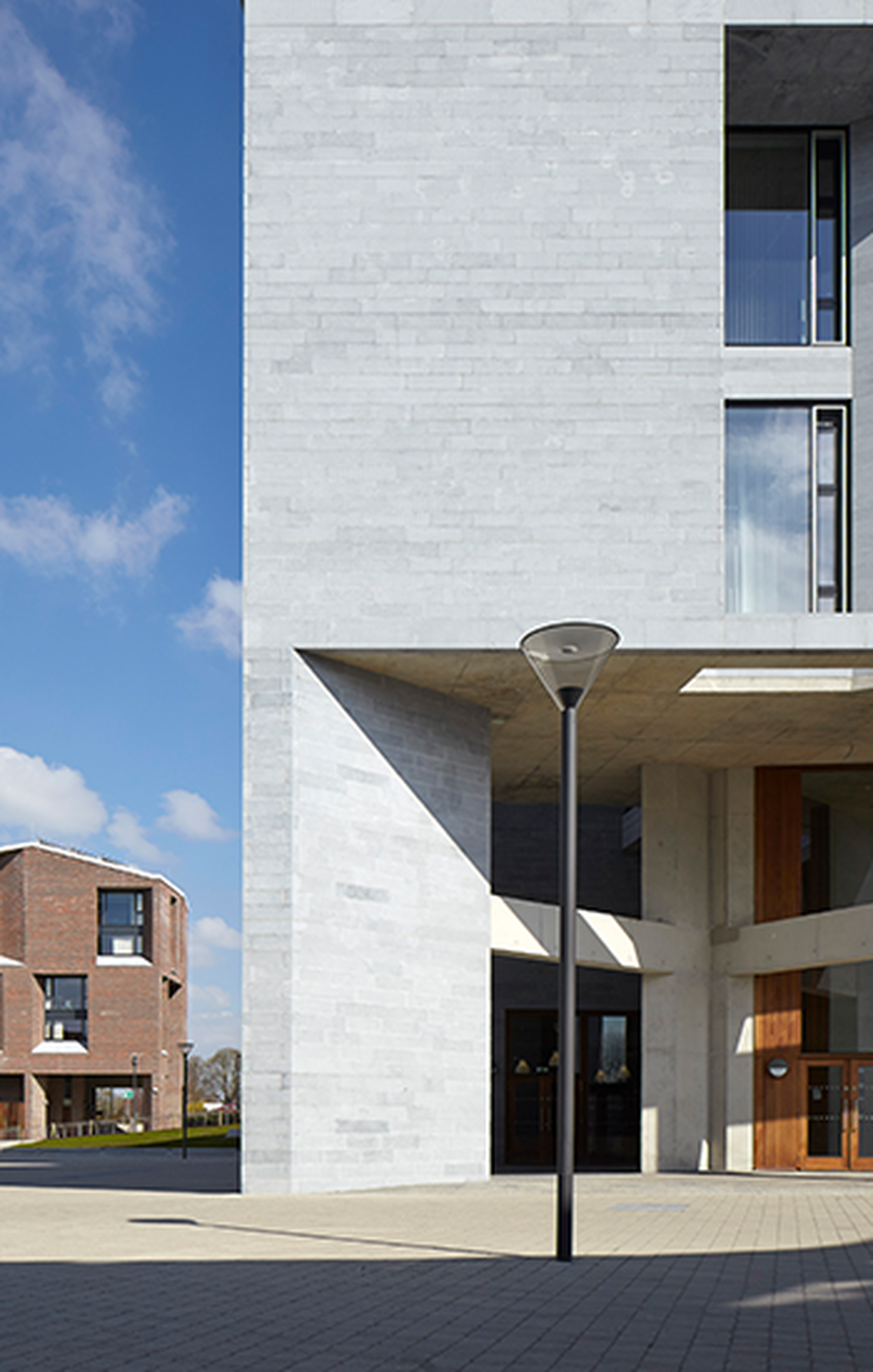
Façade cladding
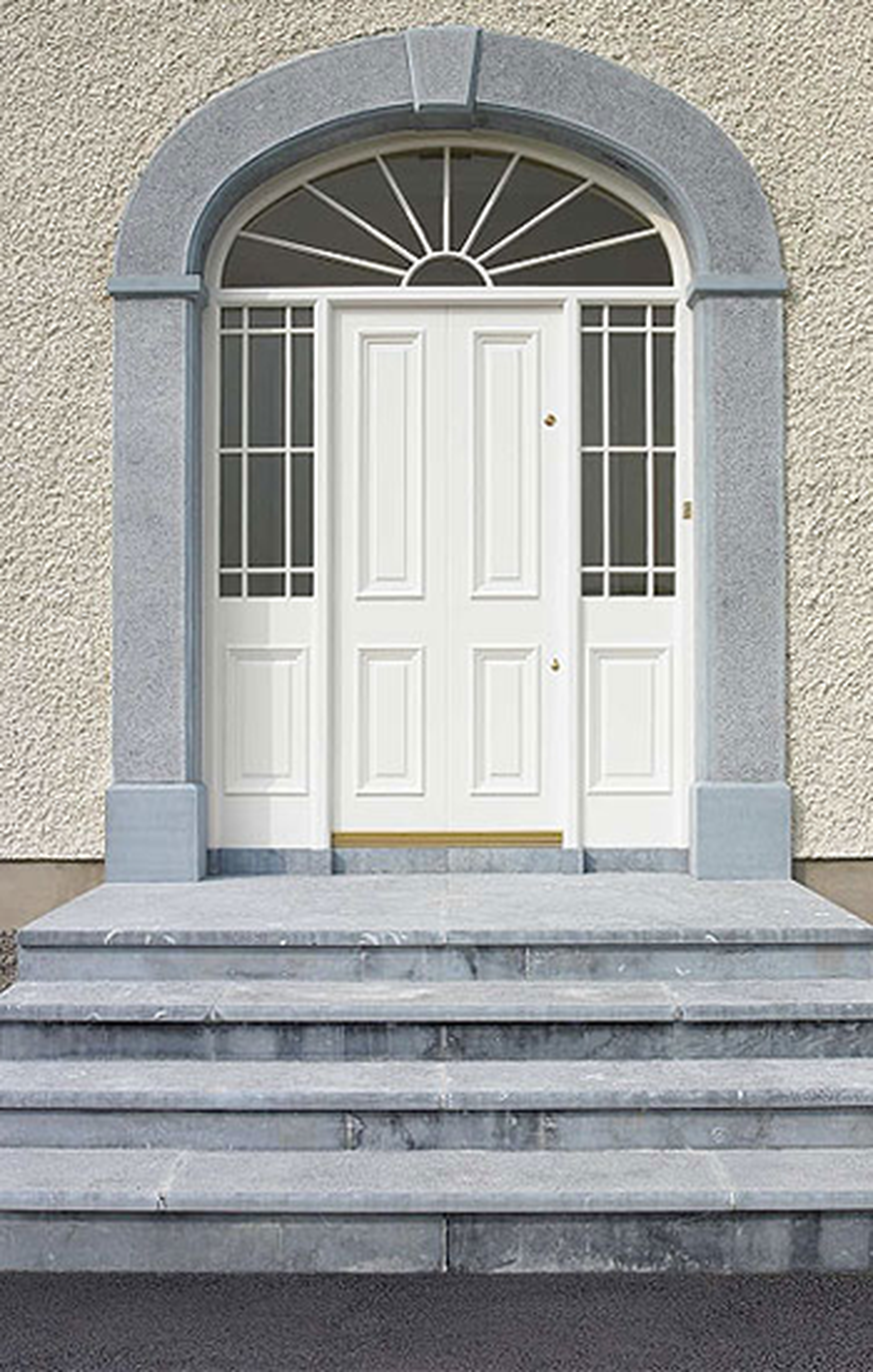
Stairs & door frame
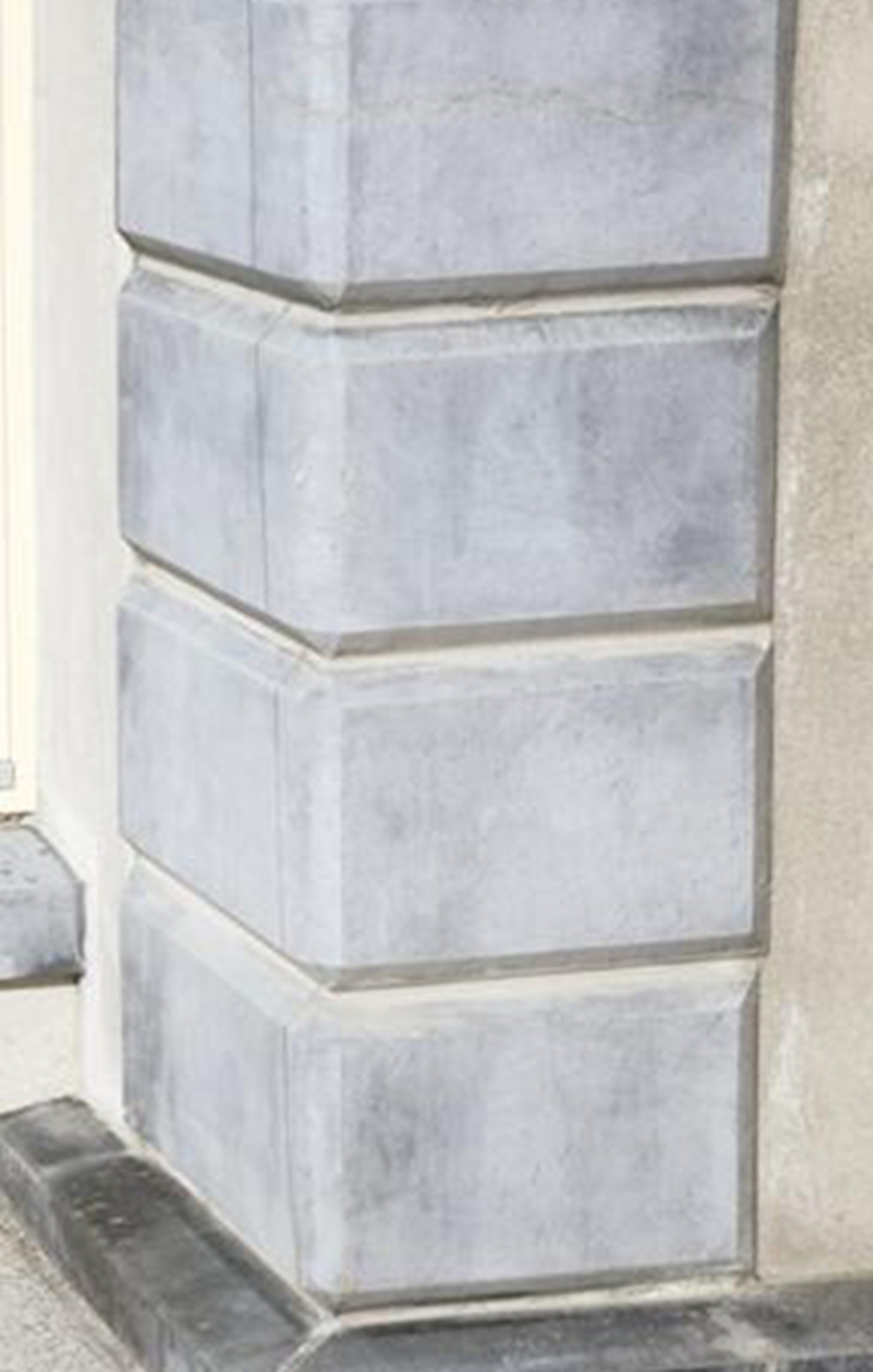
Cornerstones
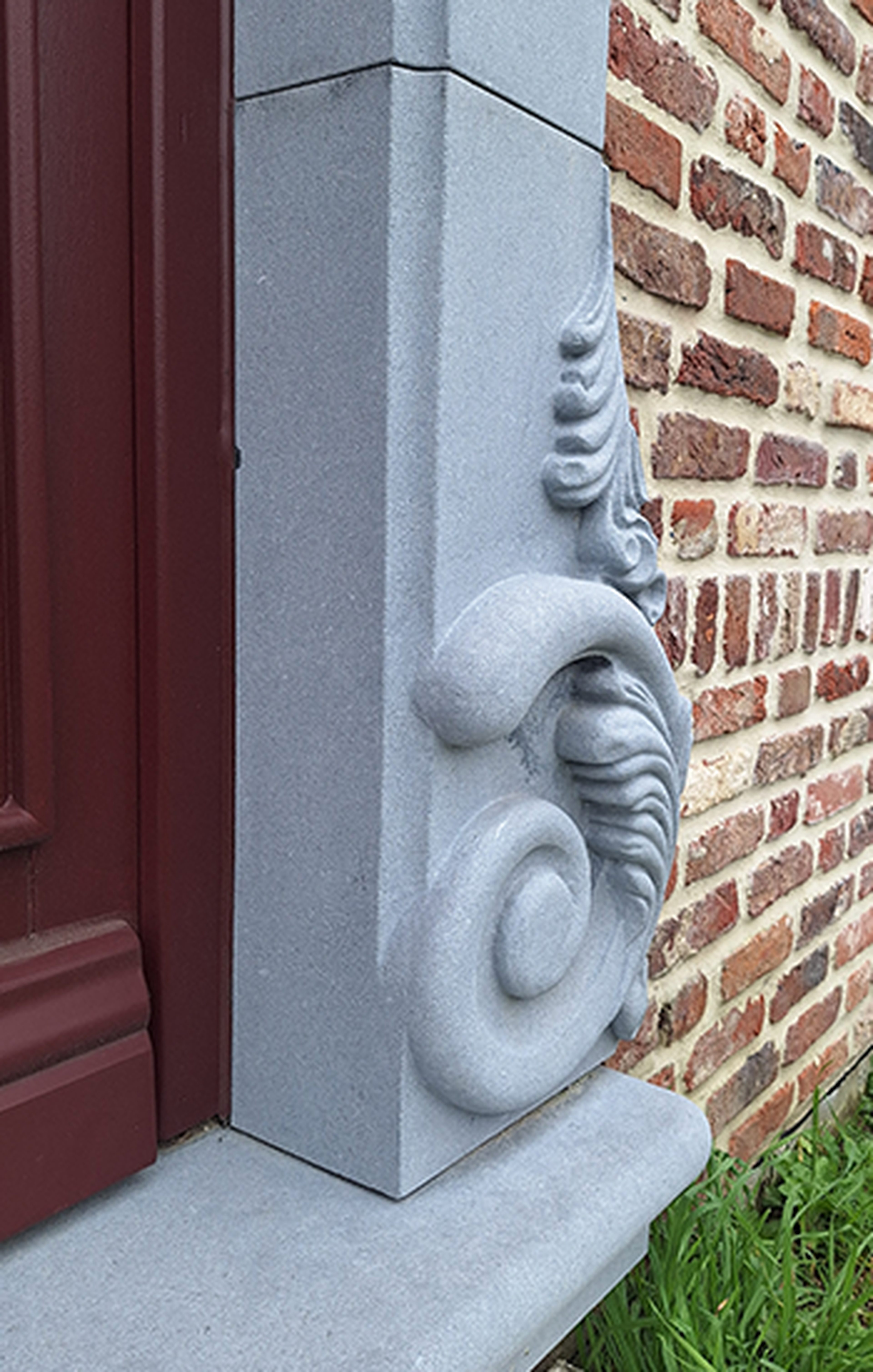
Door frame decorations
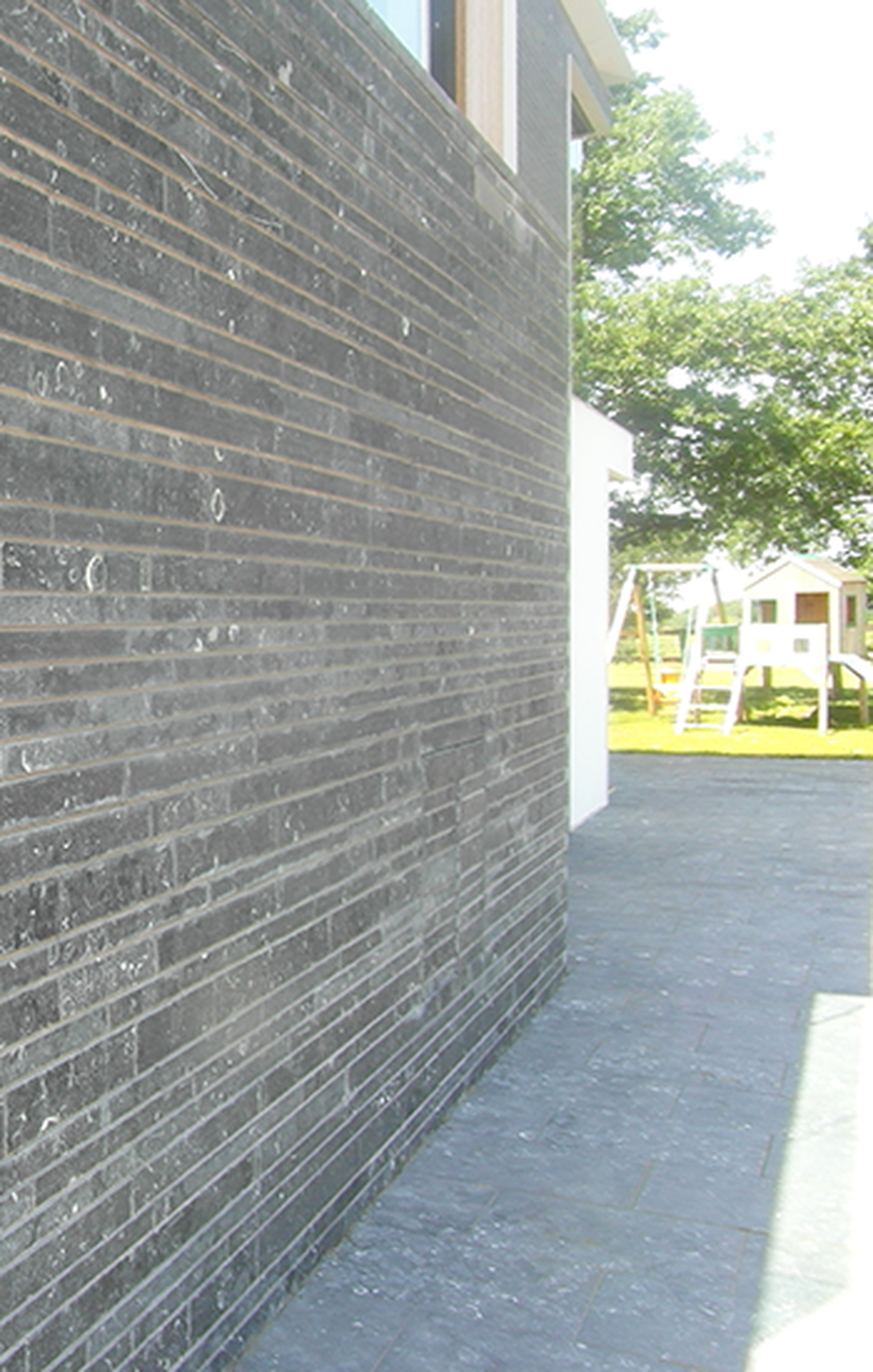
Façade cladding - Fossil stone
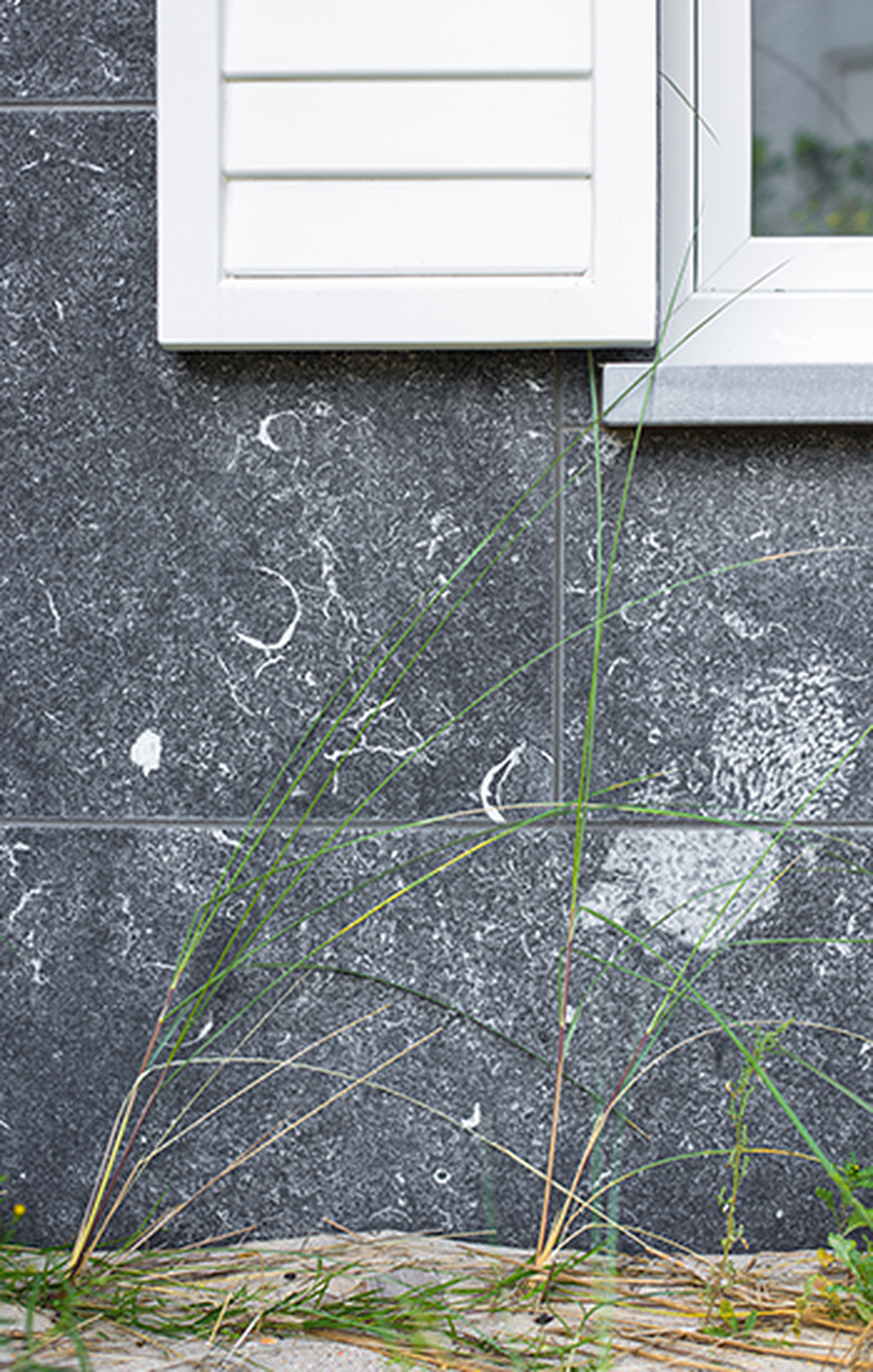
Façade cladding - Fossil stone
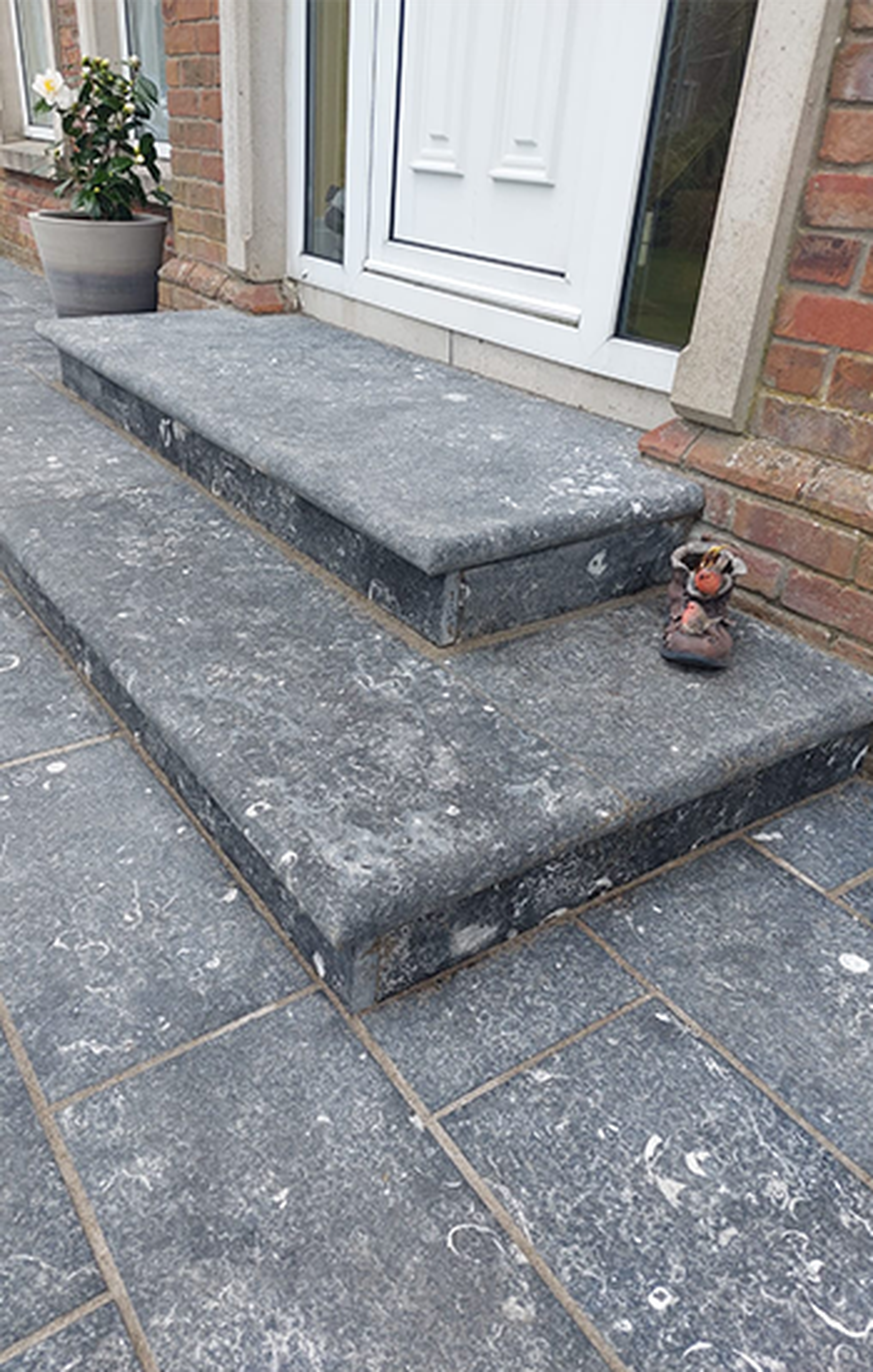
Steps - Fossil stone
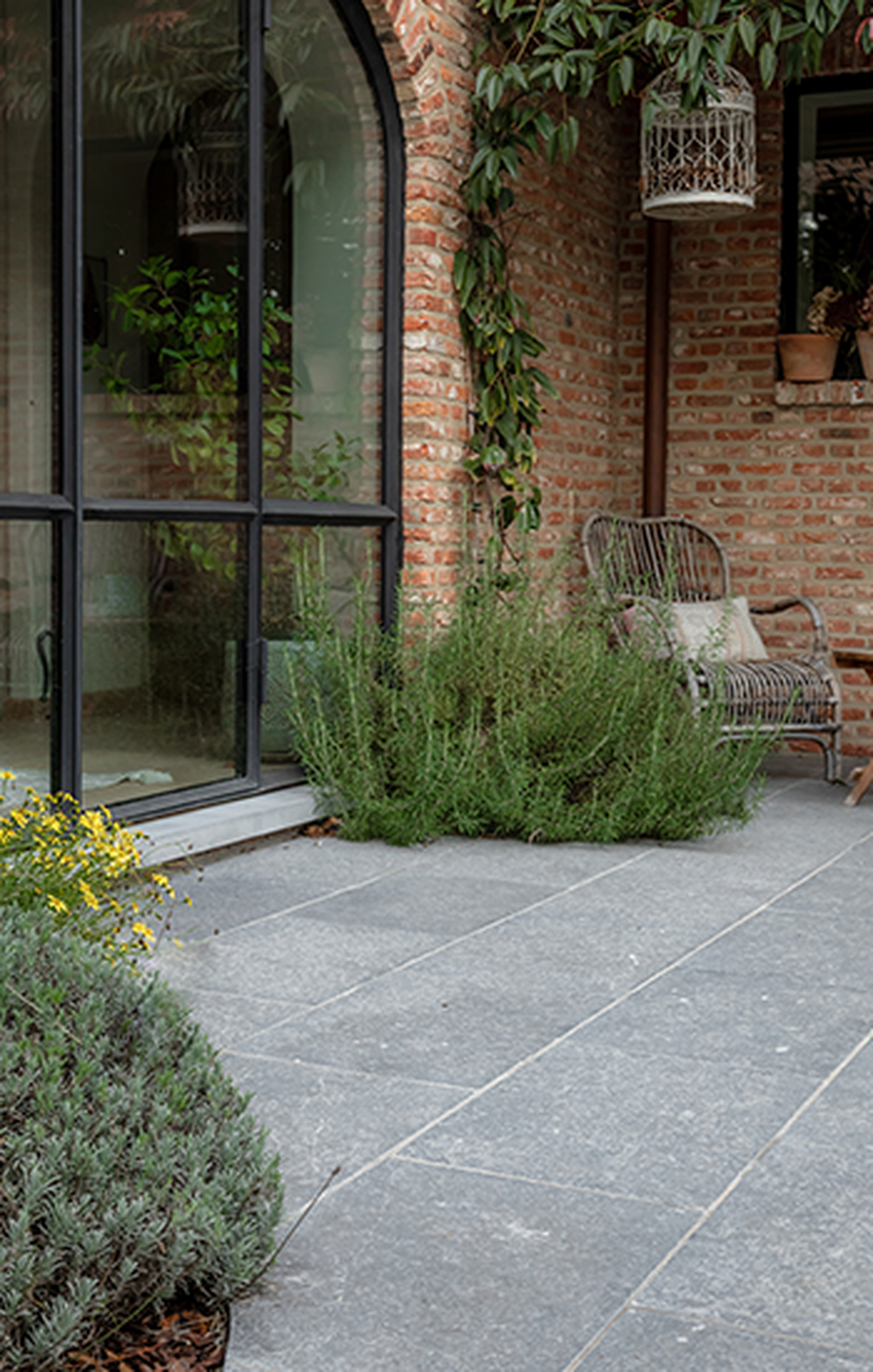
Patio slabs - stonewashed
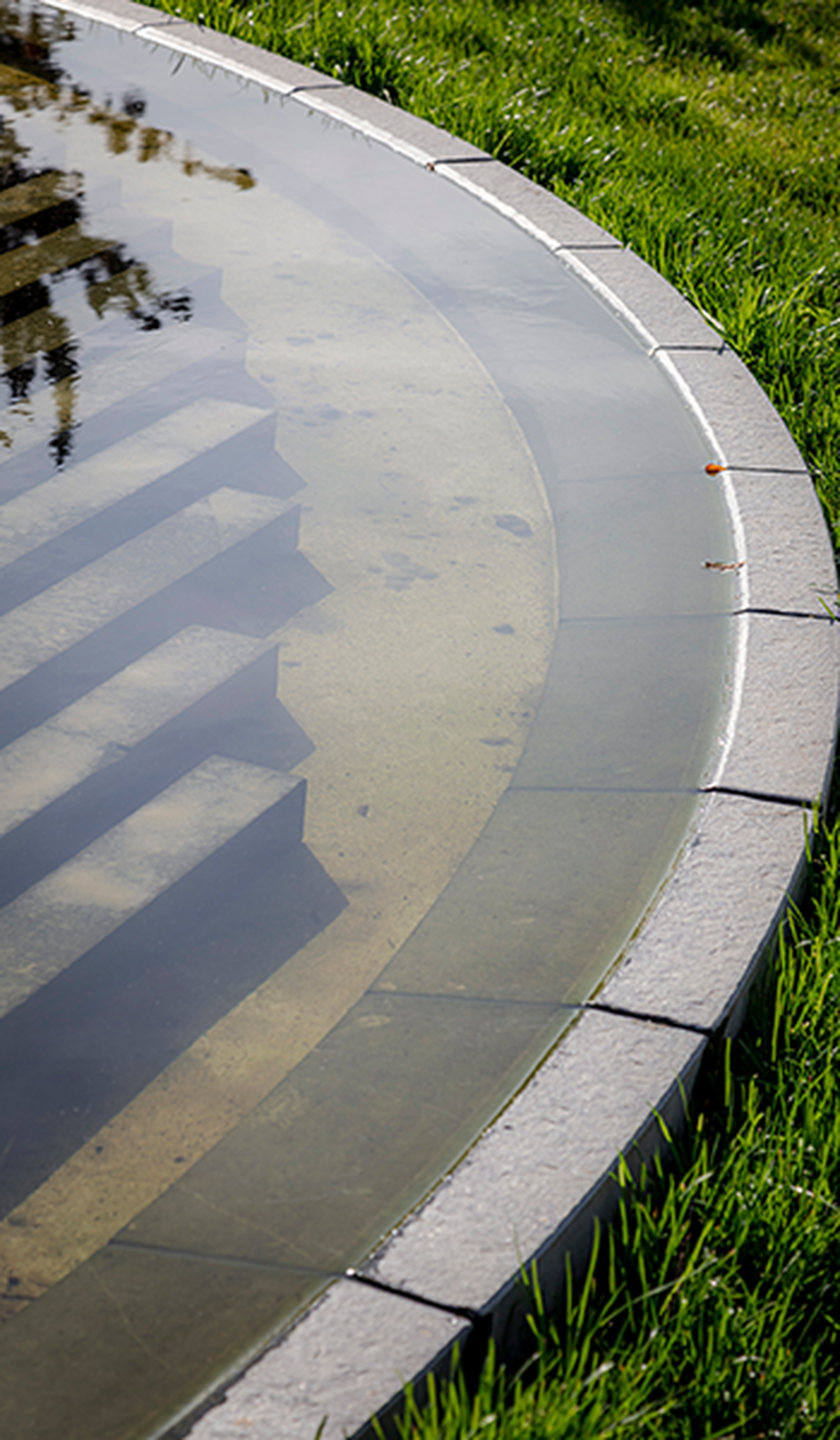
Pond copings and centre strips - diamond cut and flamed
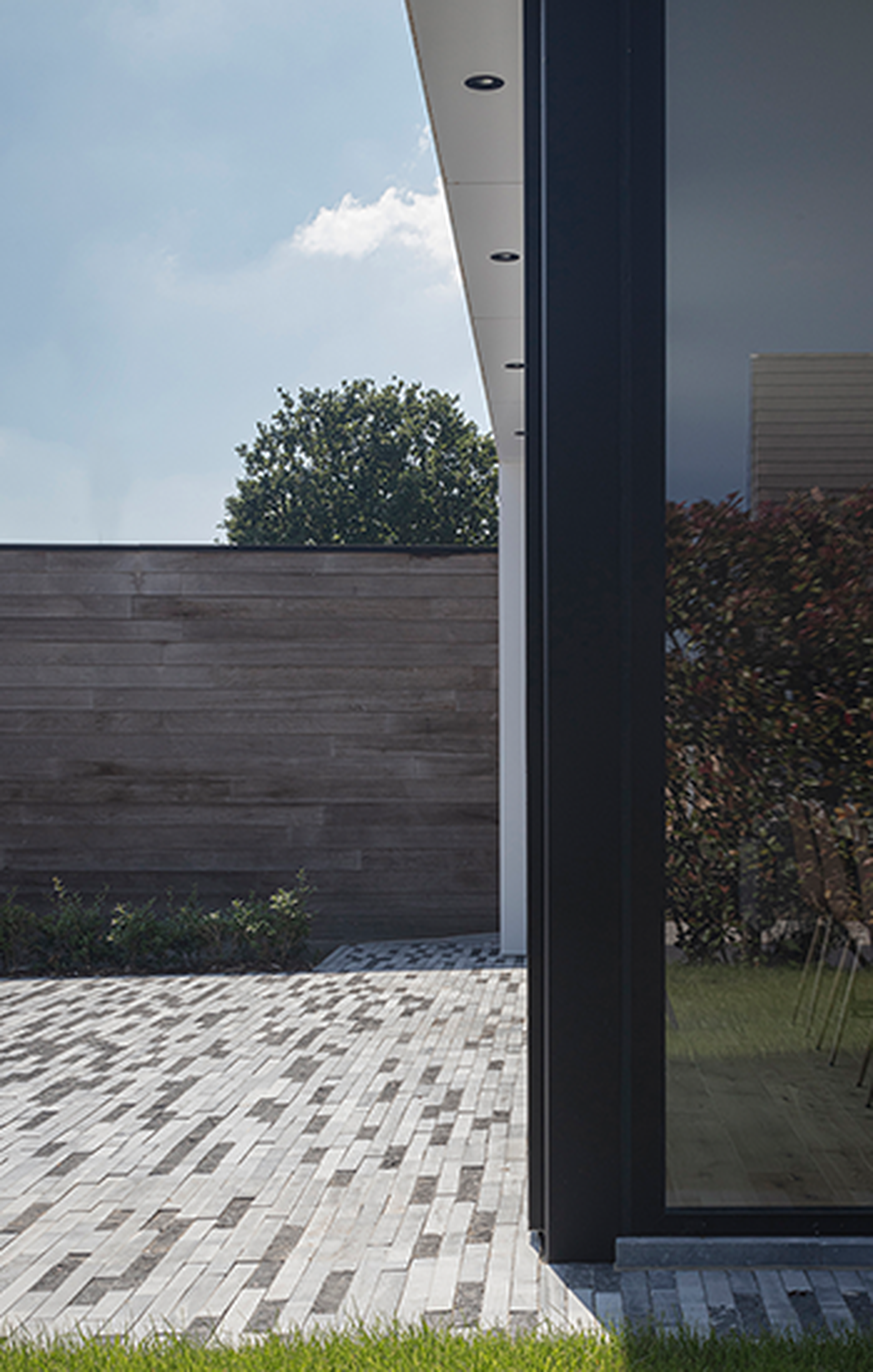
Paving setts - honed and hand cleft
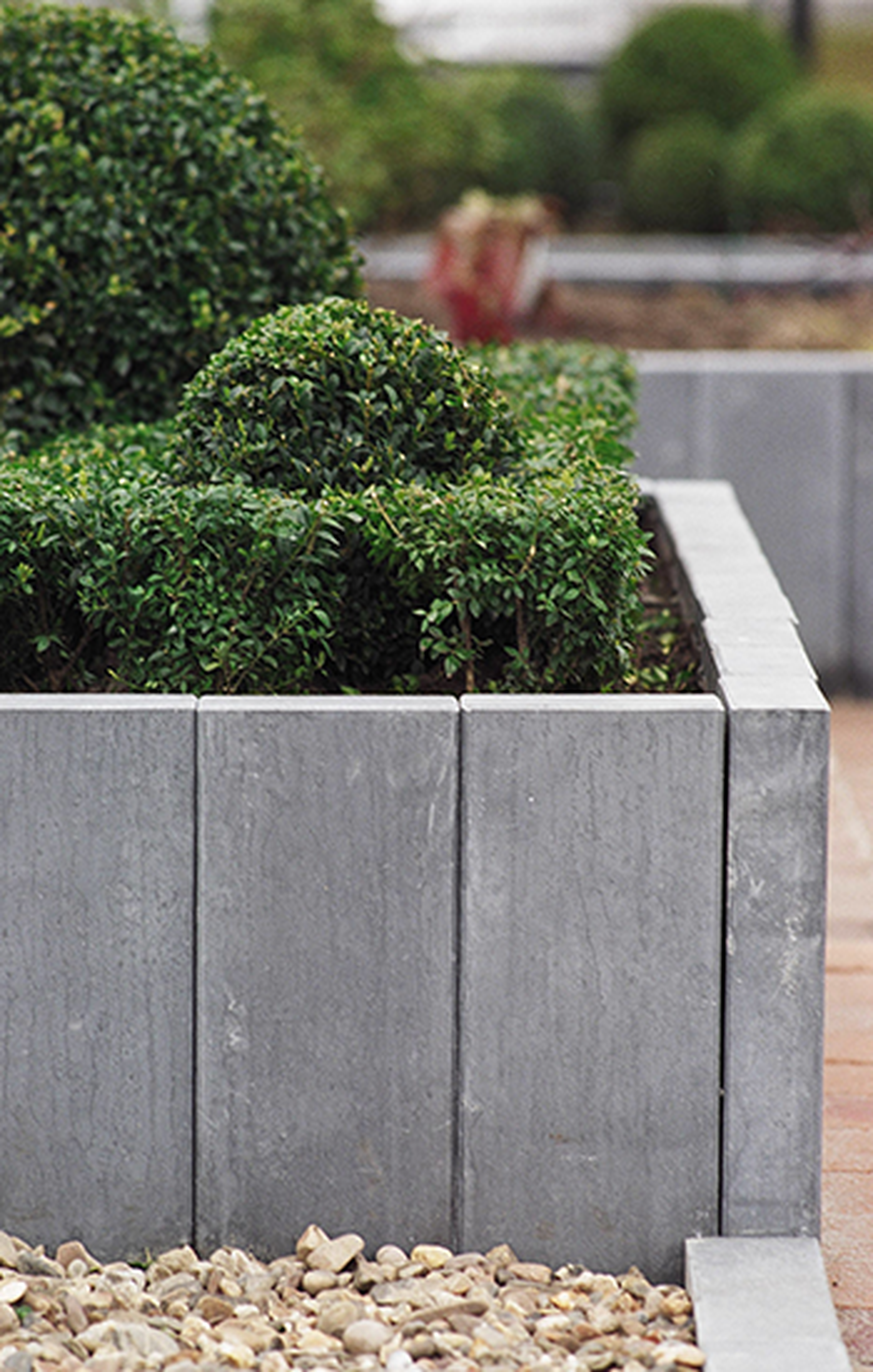
Planters
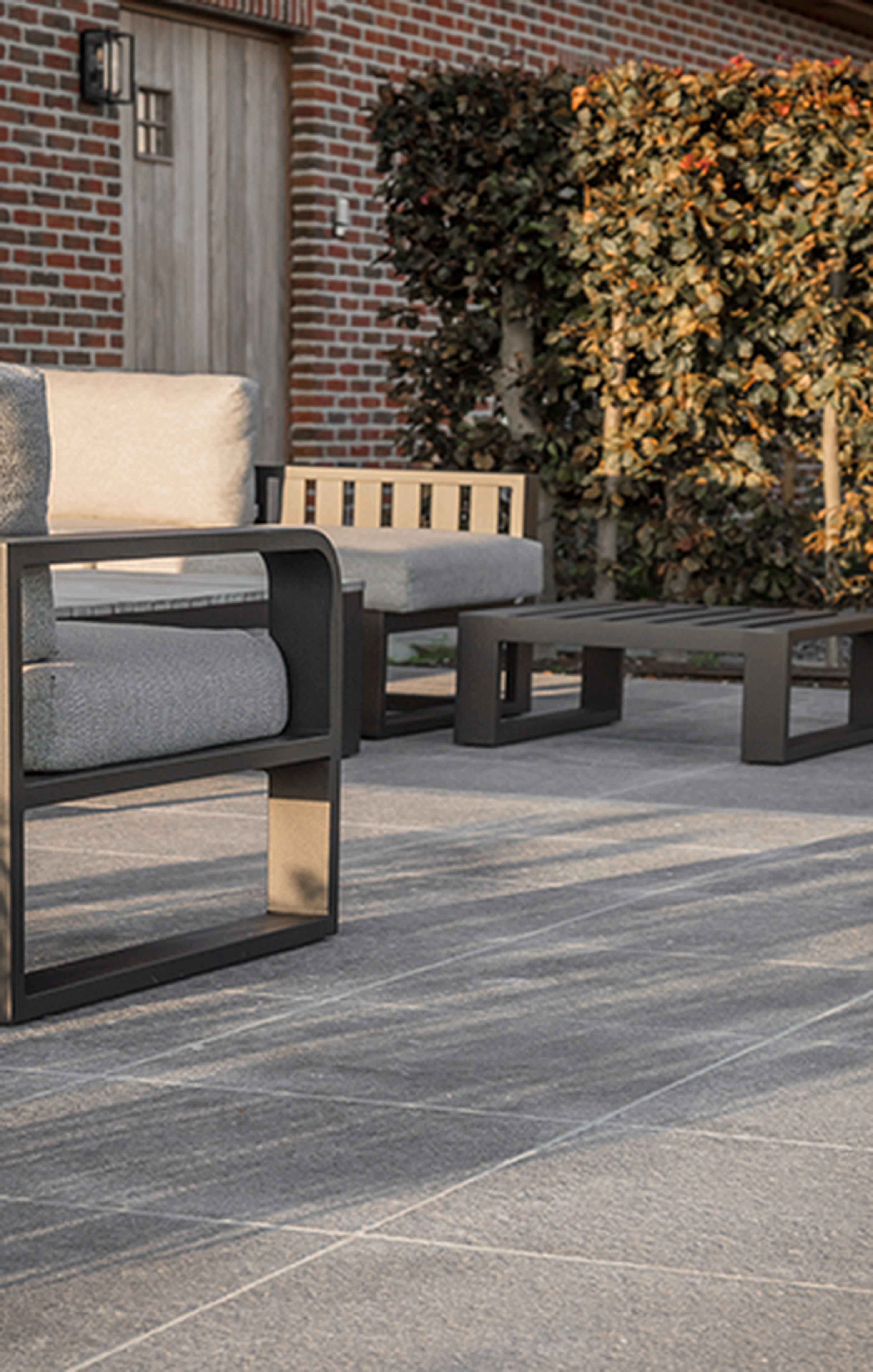
Patio slabs - flamewashed
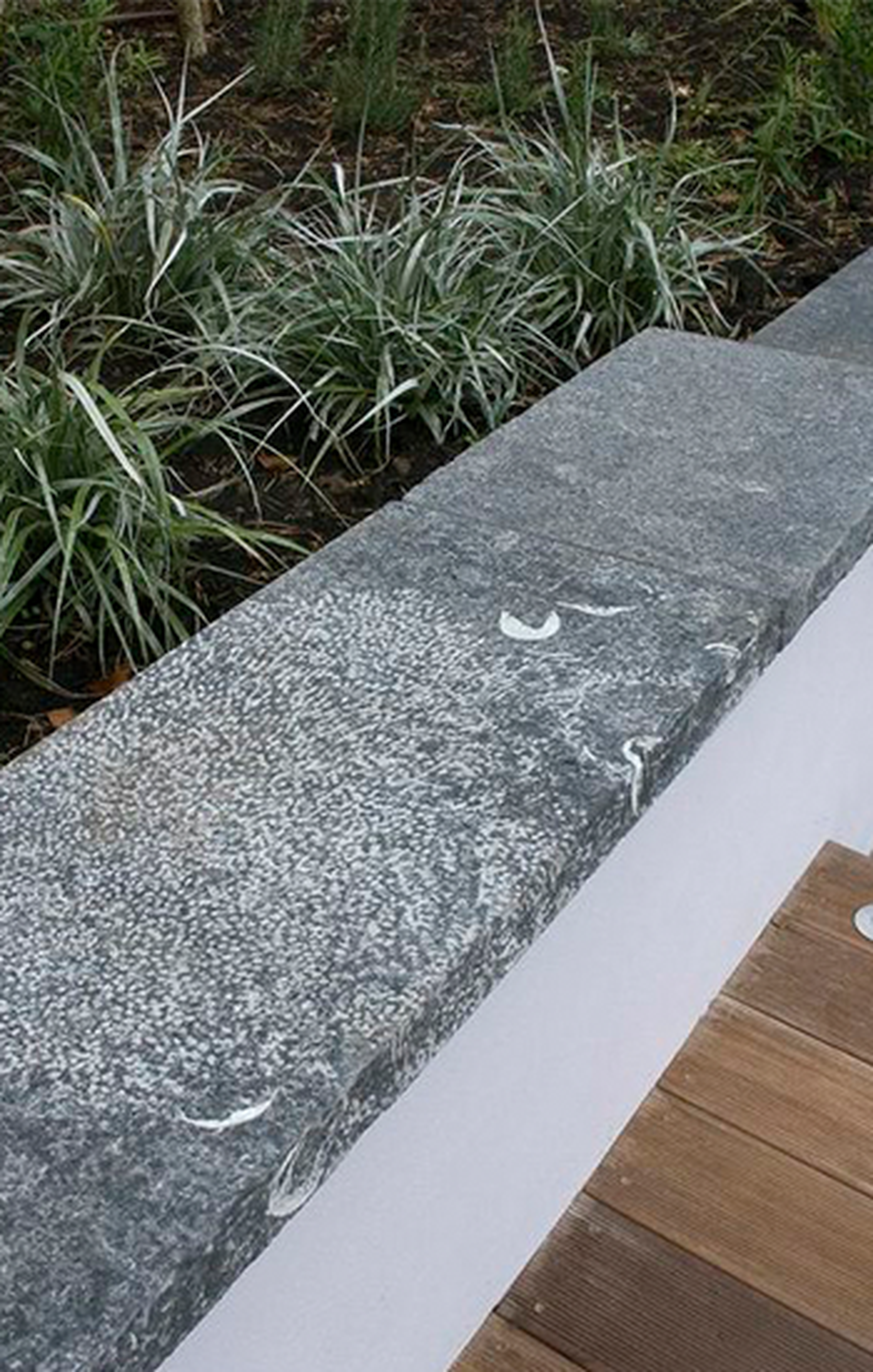
Wall capping
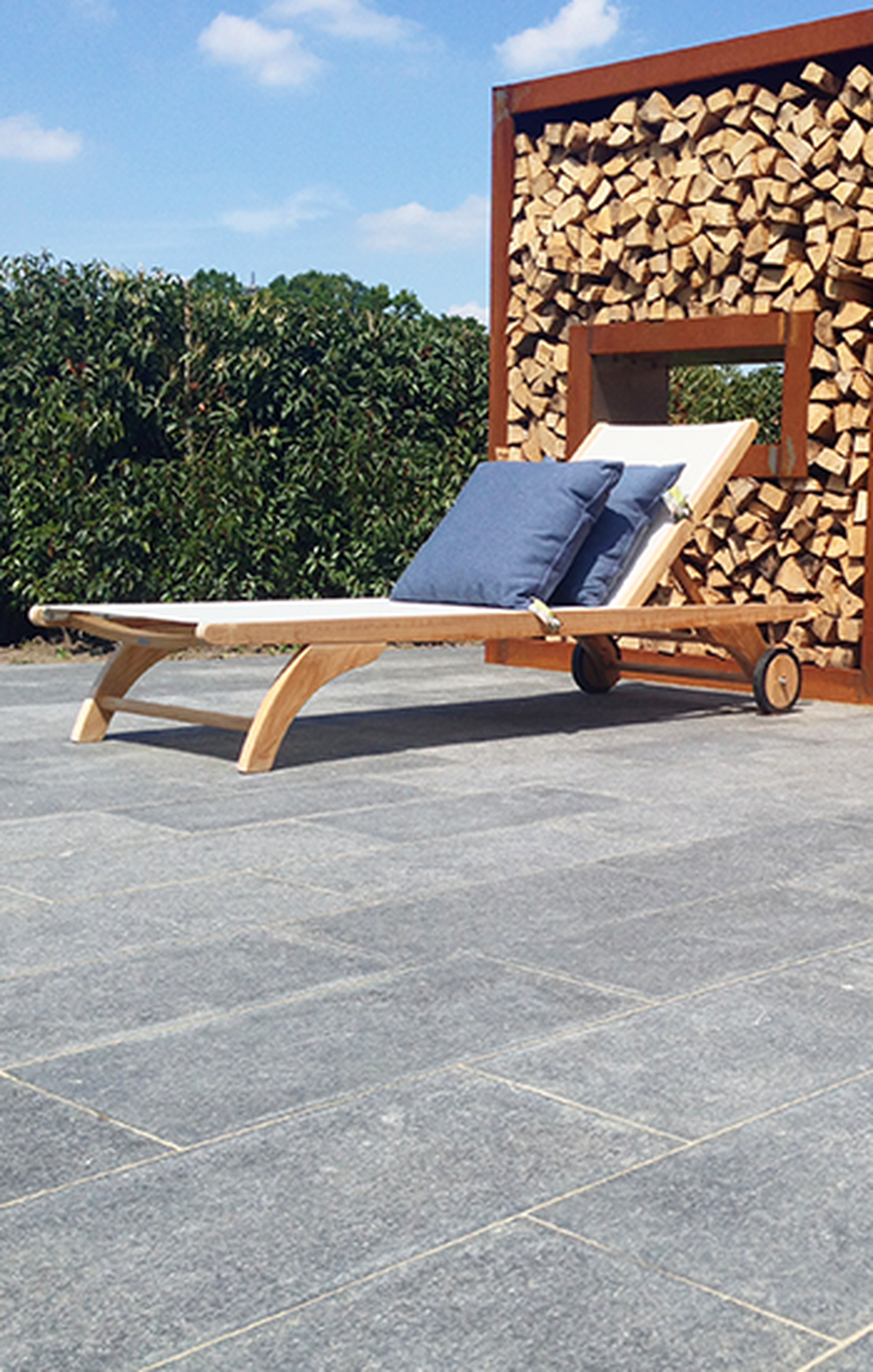
Patio slabs - flamed
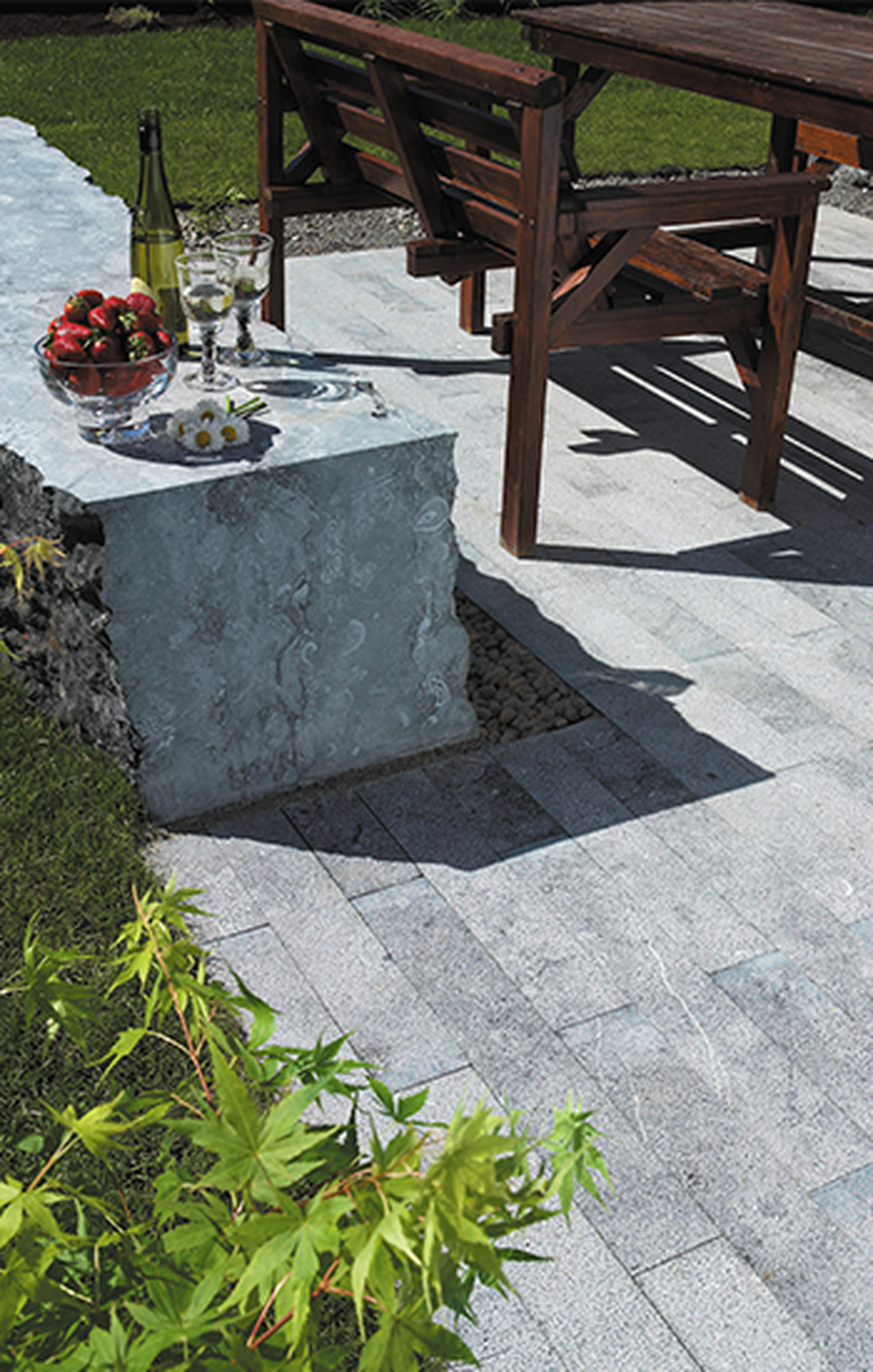
Patio slabs - bush hammered
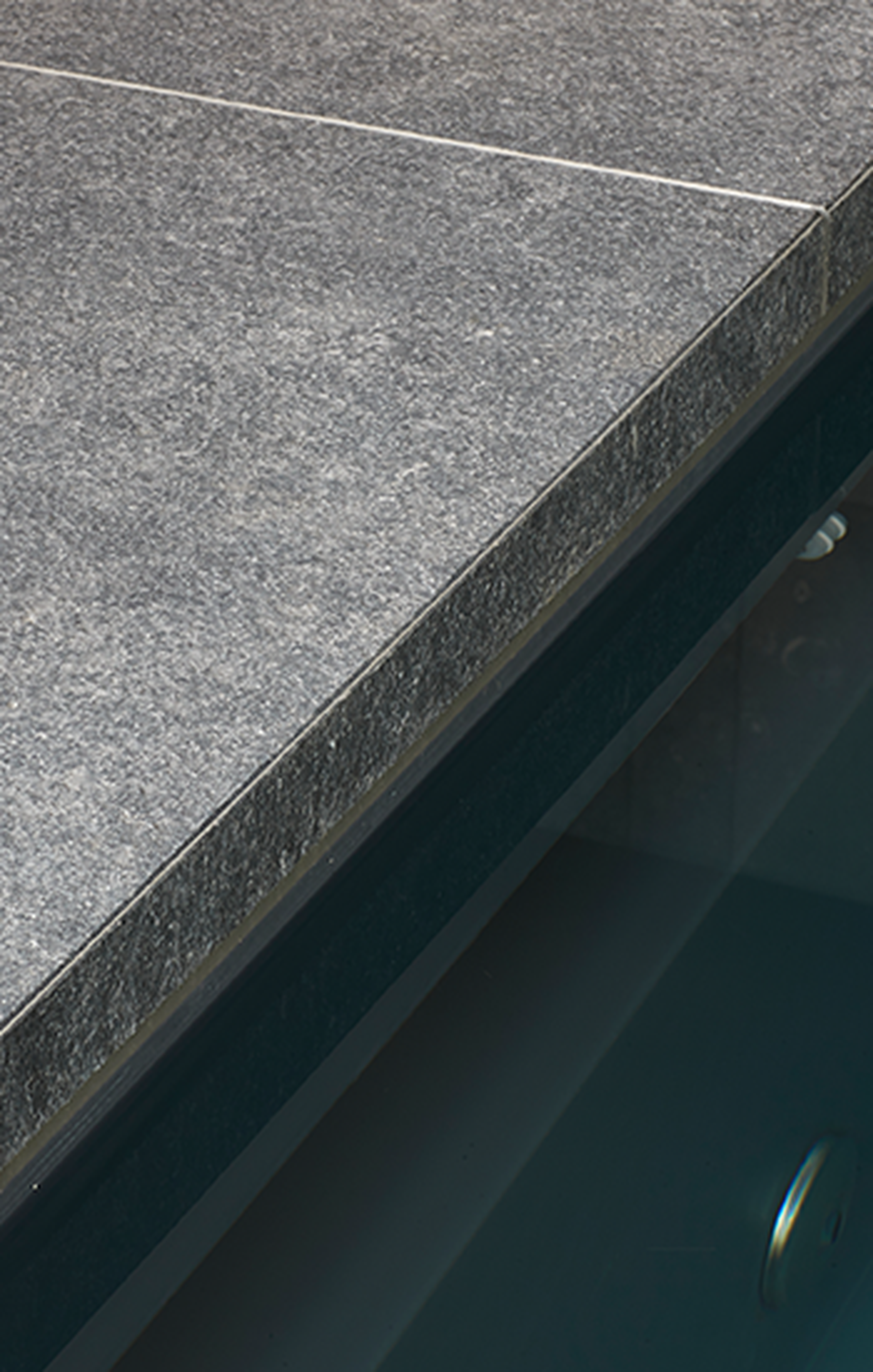
Pool copings - flamed
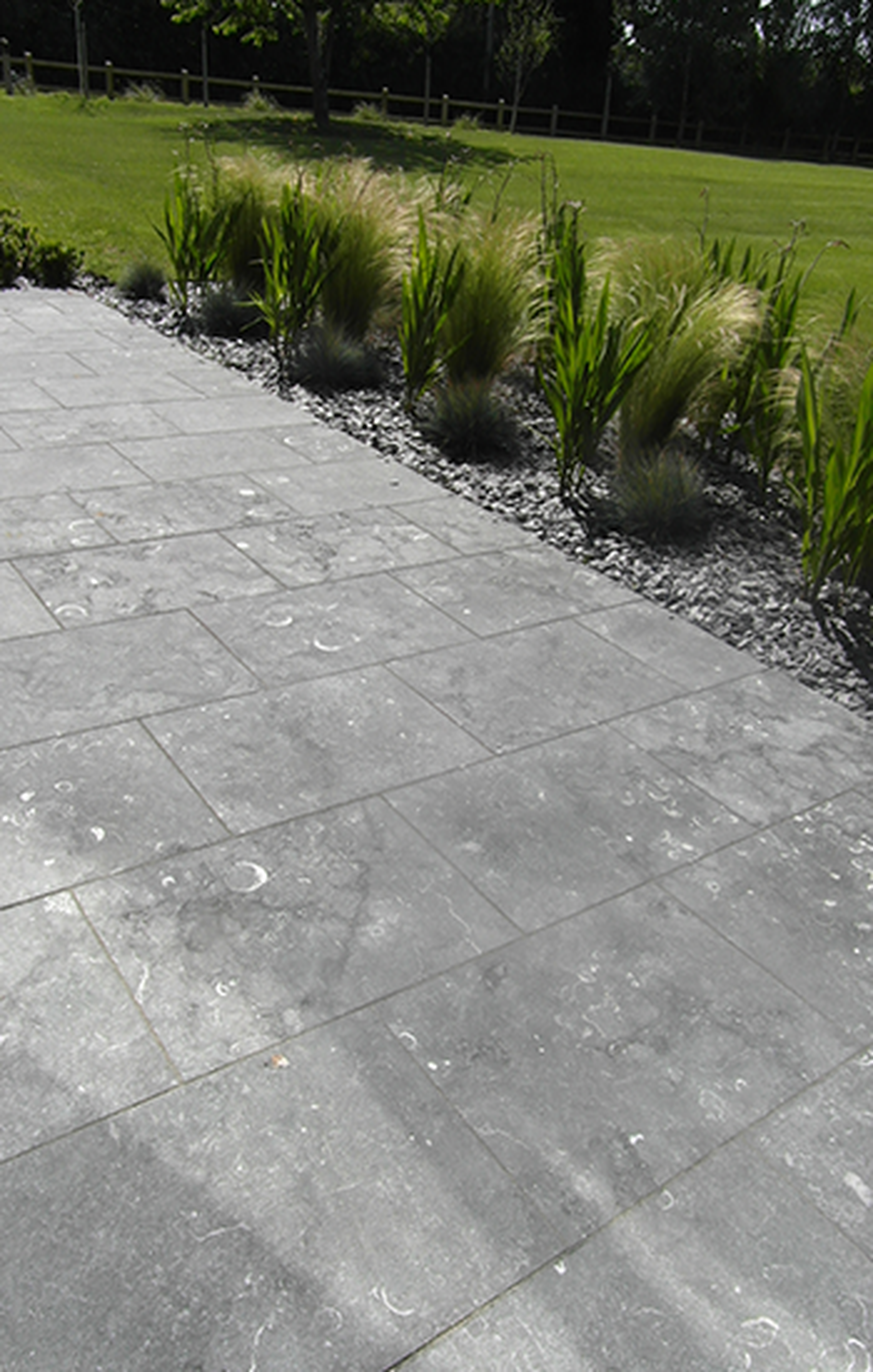
Patio slabs - Fossil stone
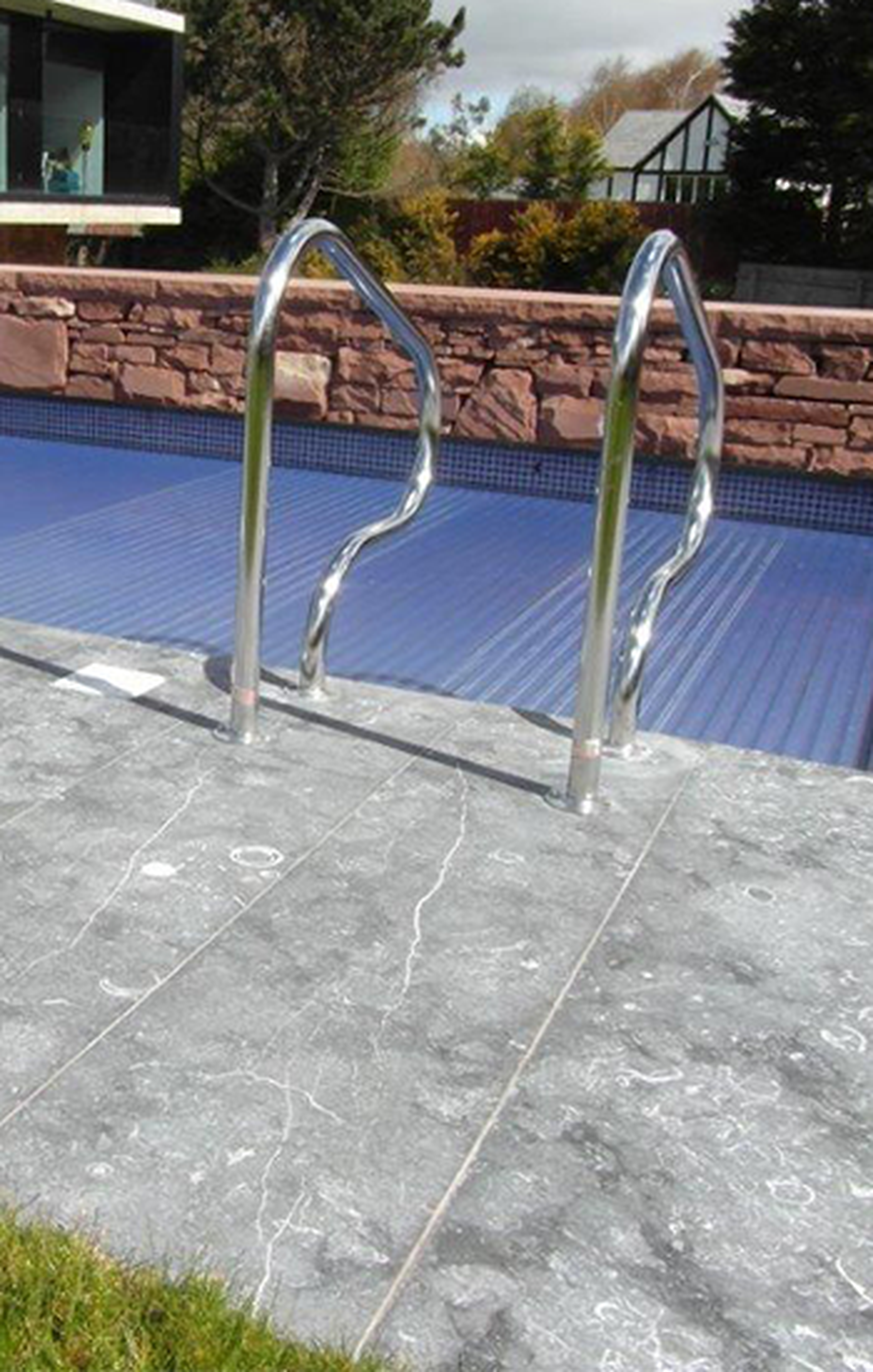
Pool copings - Fossil stone
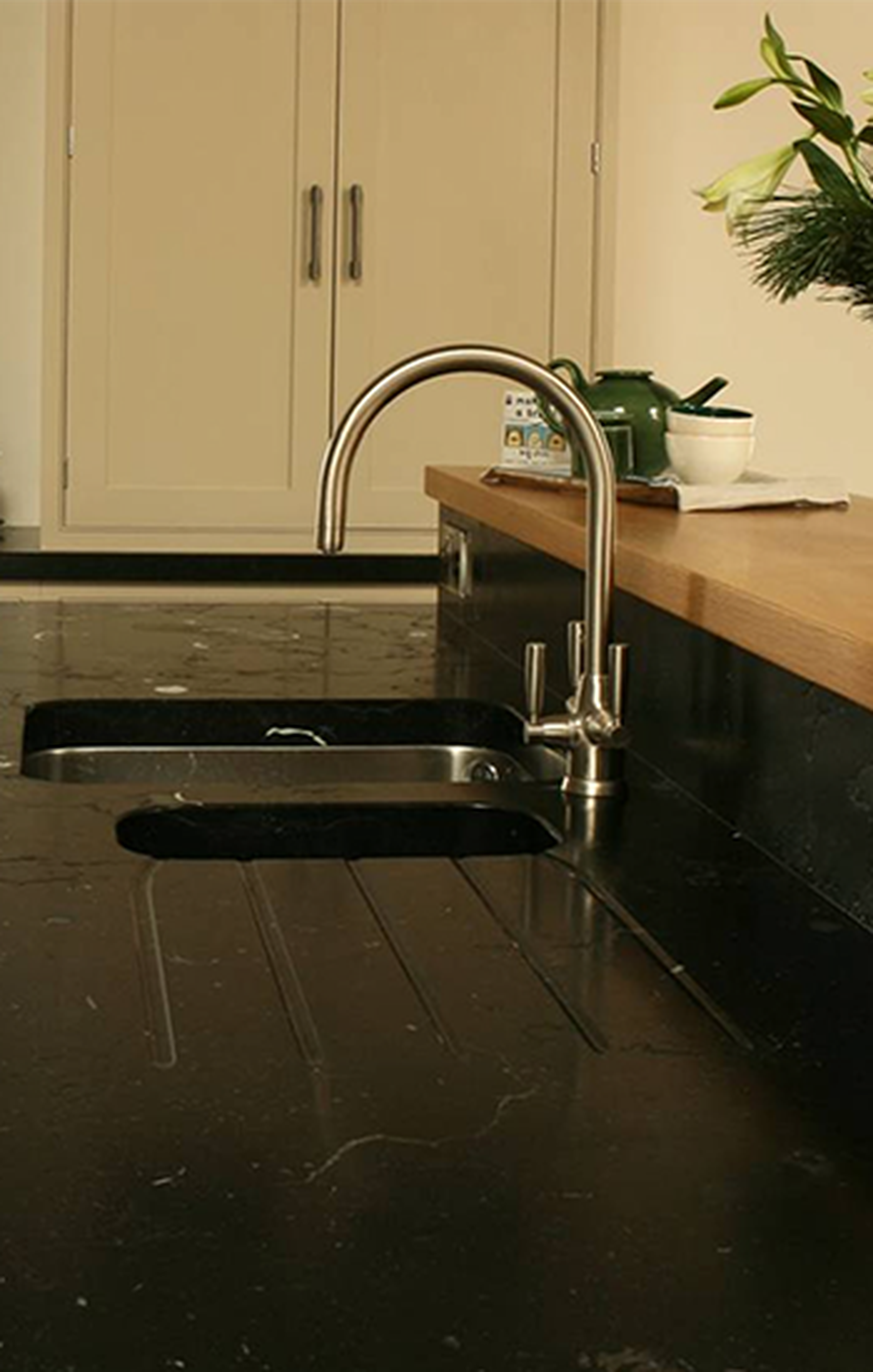
Kitchen worktop
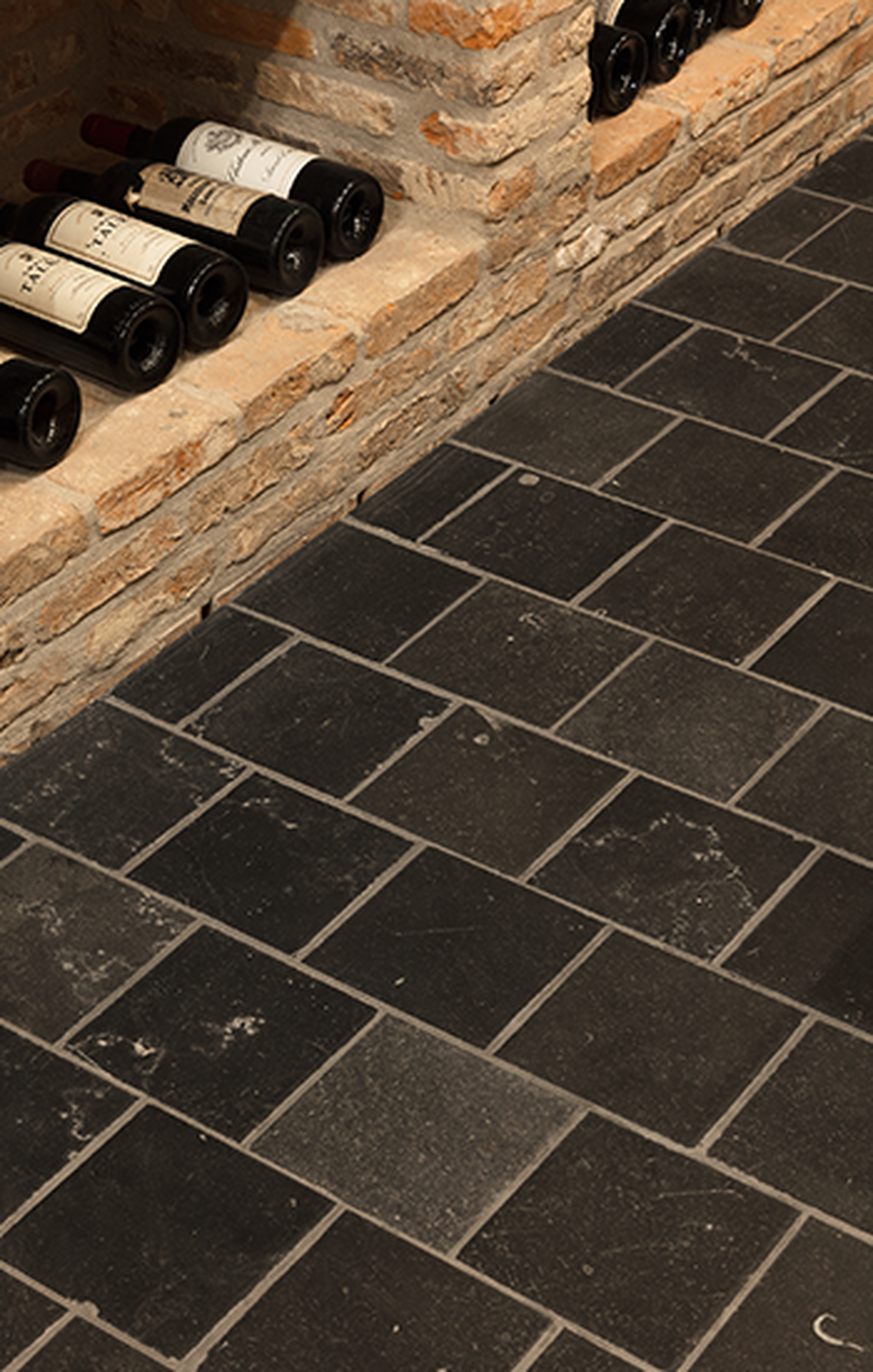
Interior flooring - antico
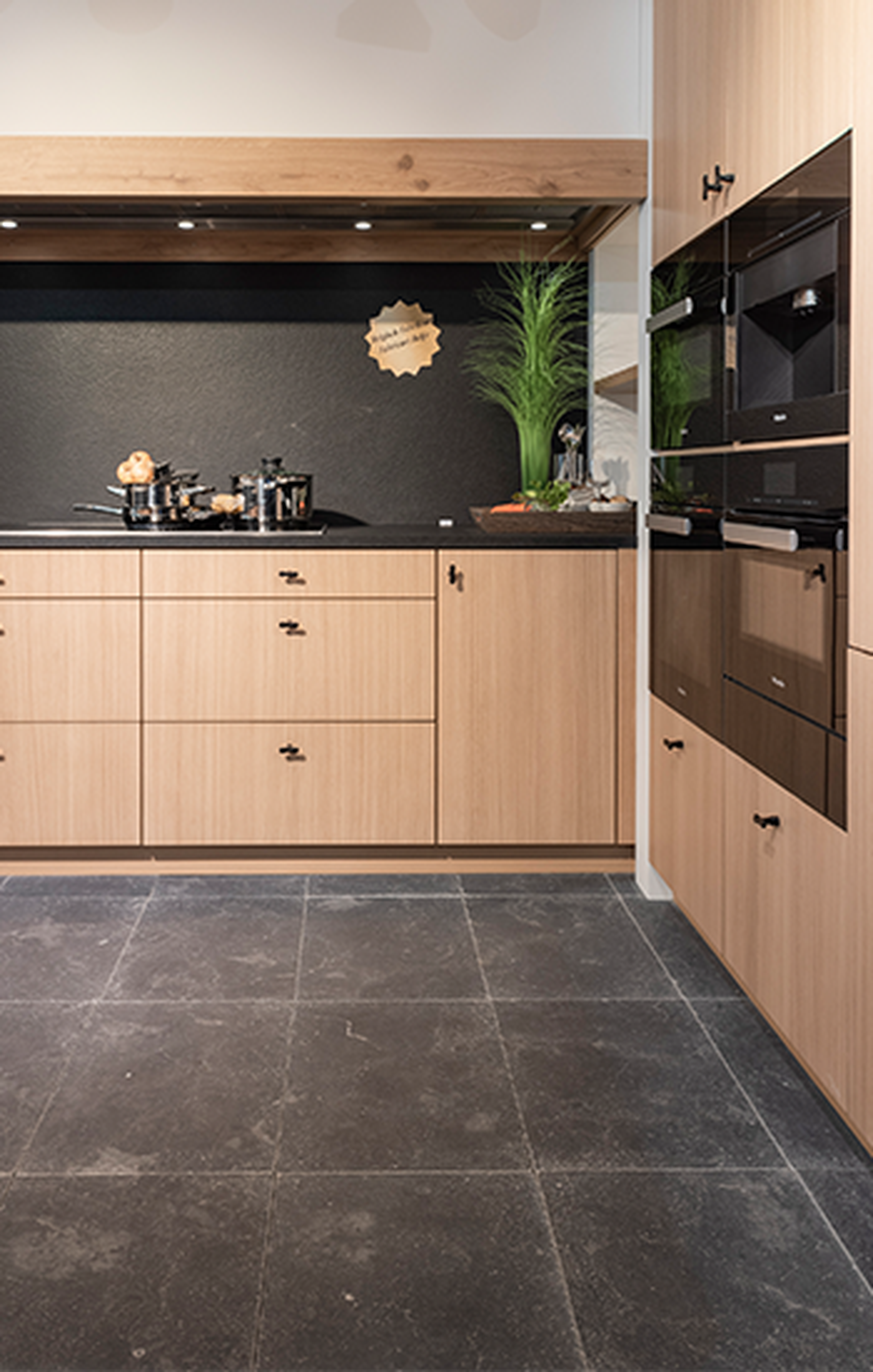
Interior flooring - stonewashed
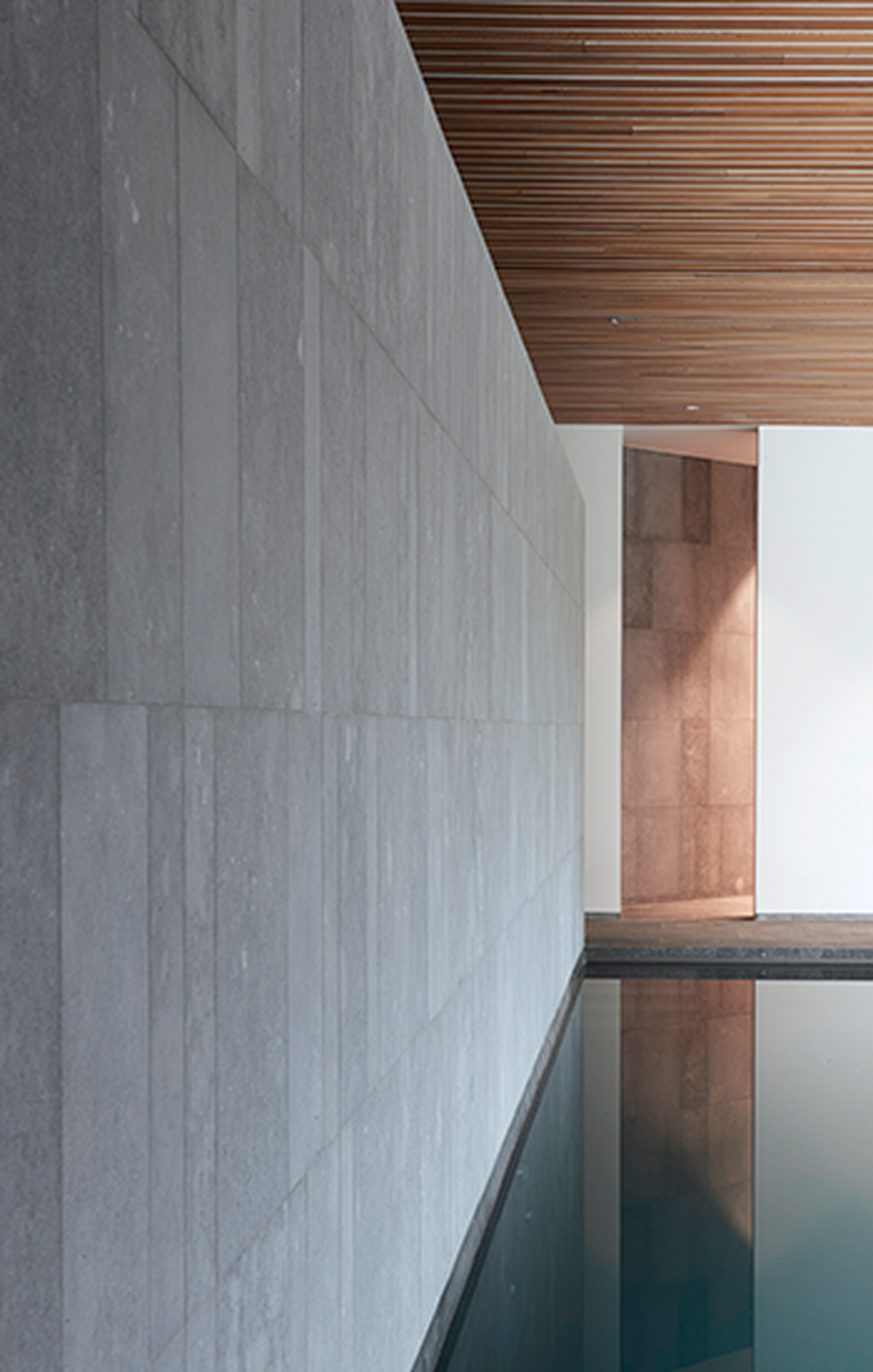
Wall cladding - hand honed
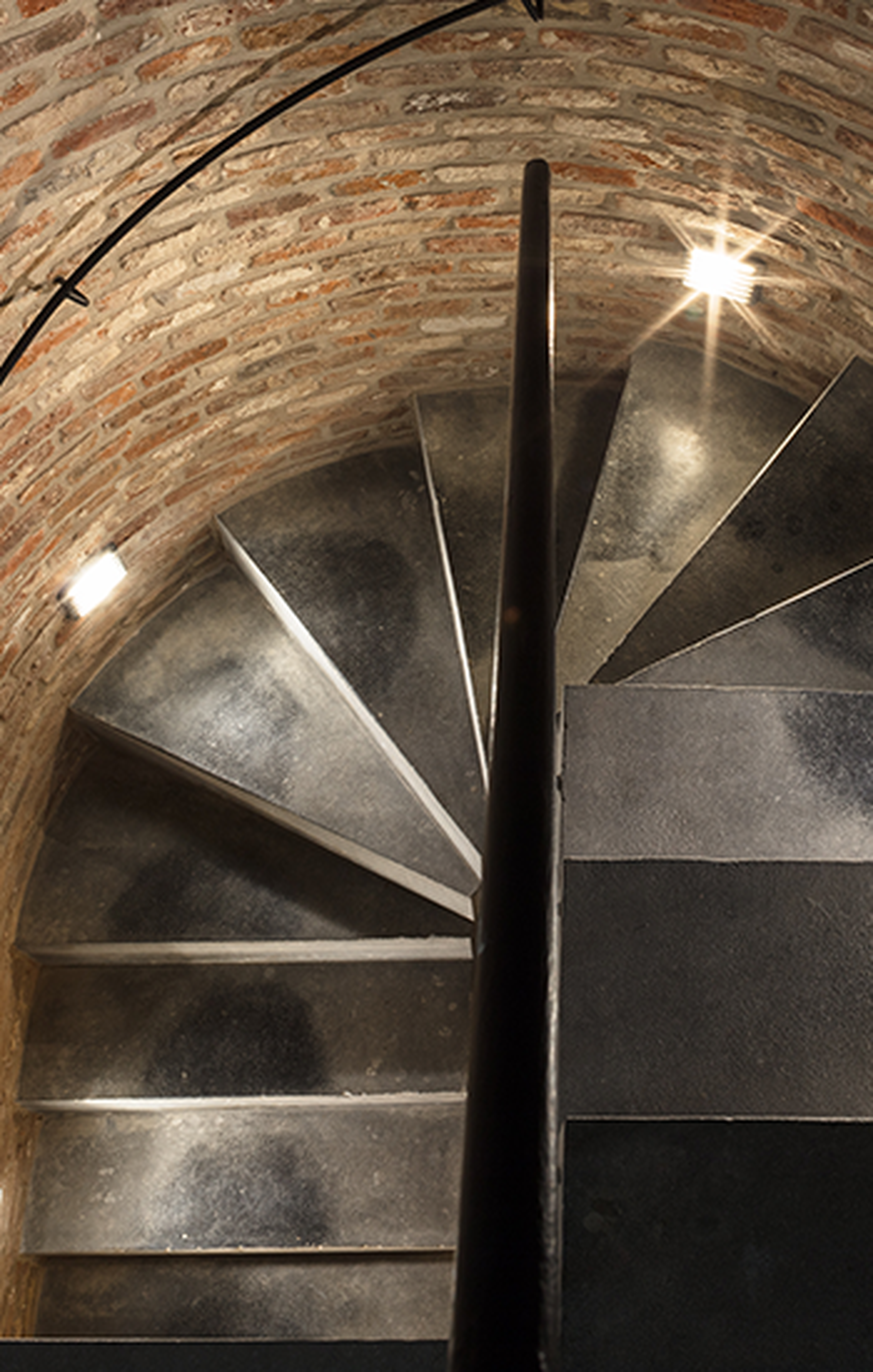
Stairs
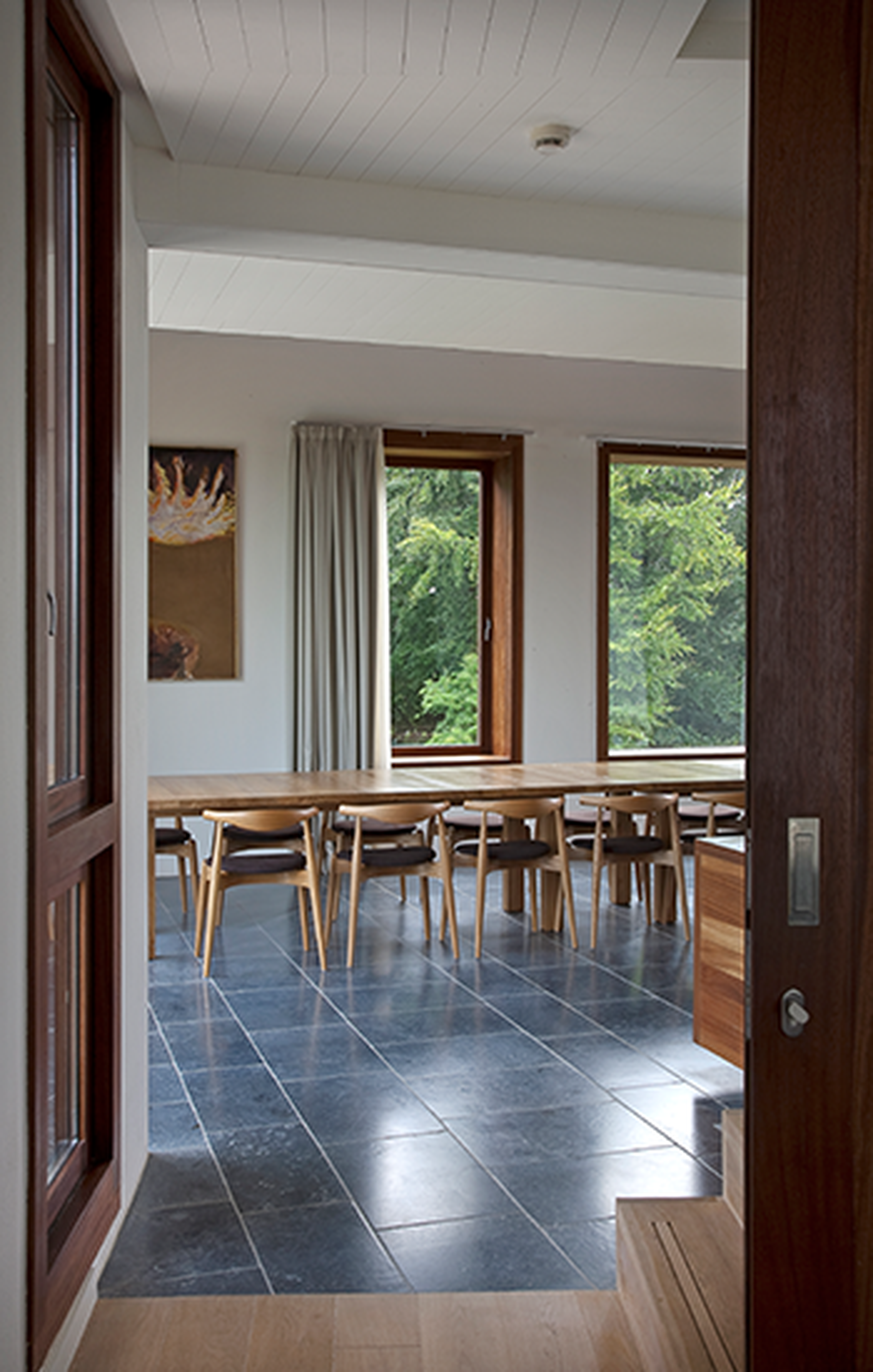
Indoor flooring
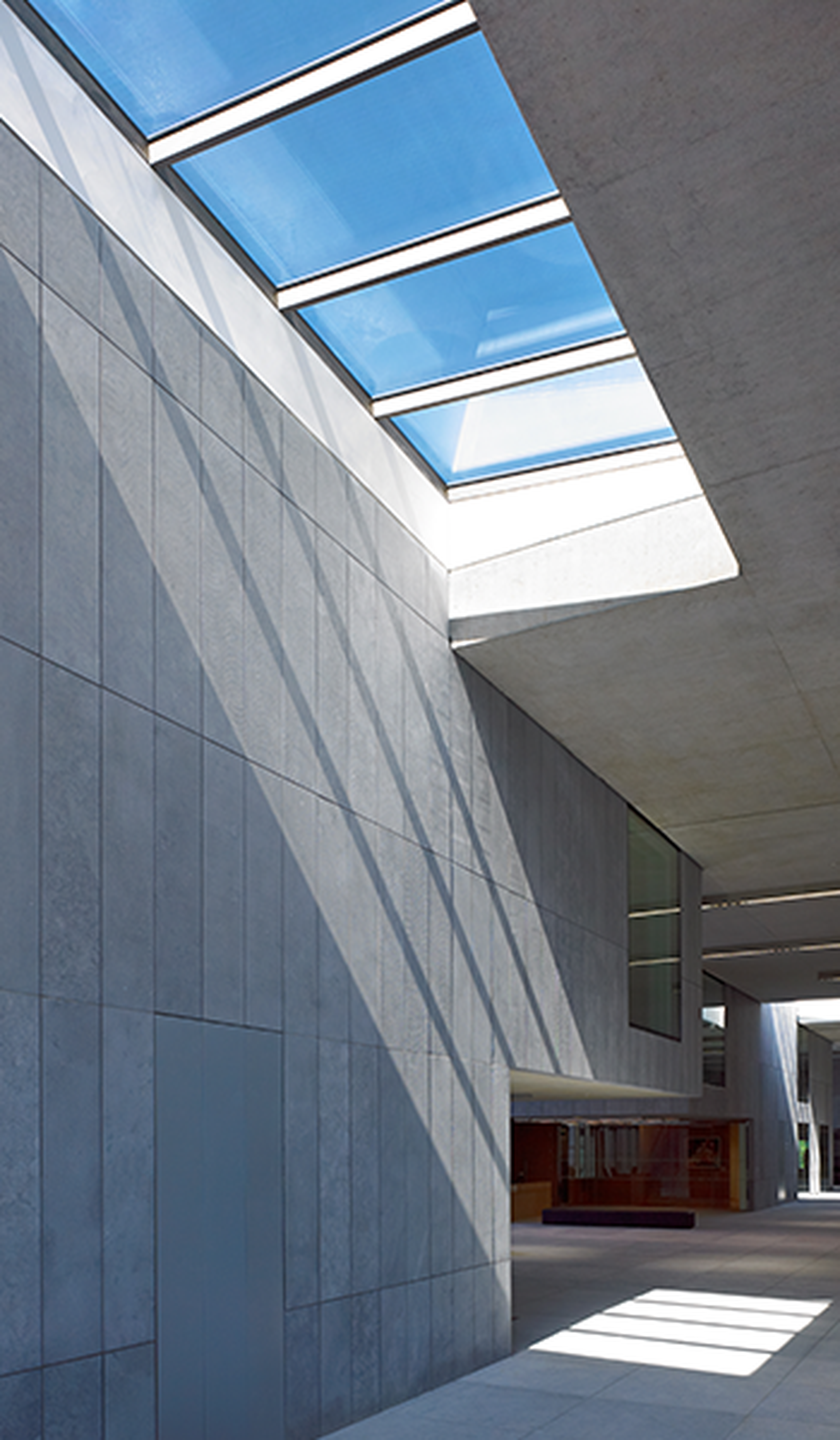
Indoor flooring & wall cladding
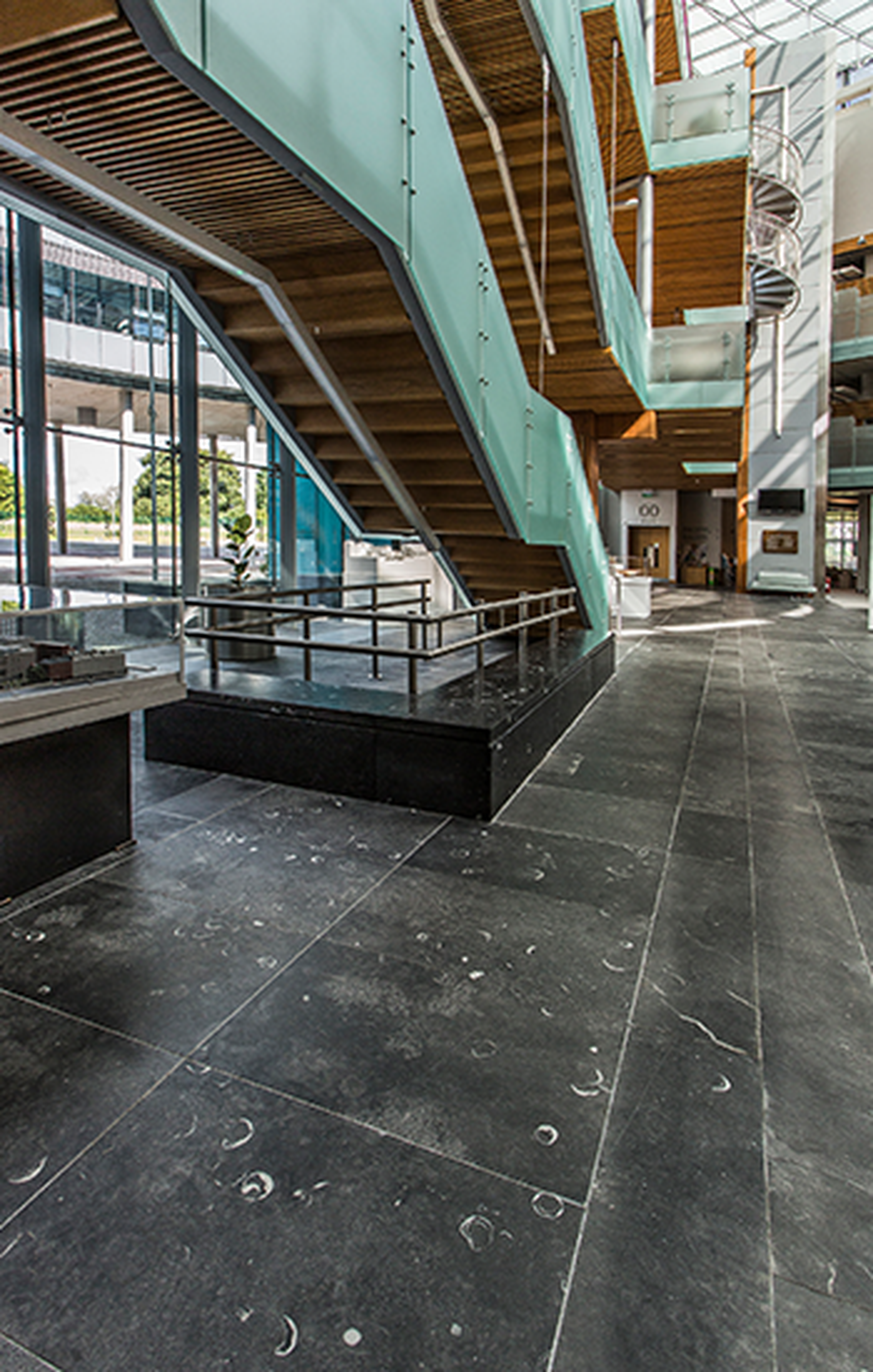
Indoor flooring - Fossil stone
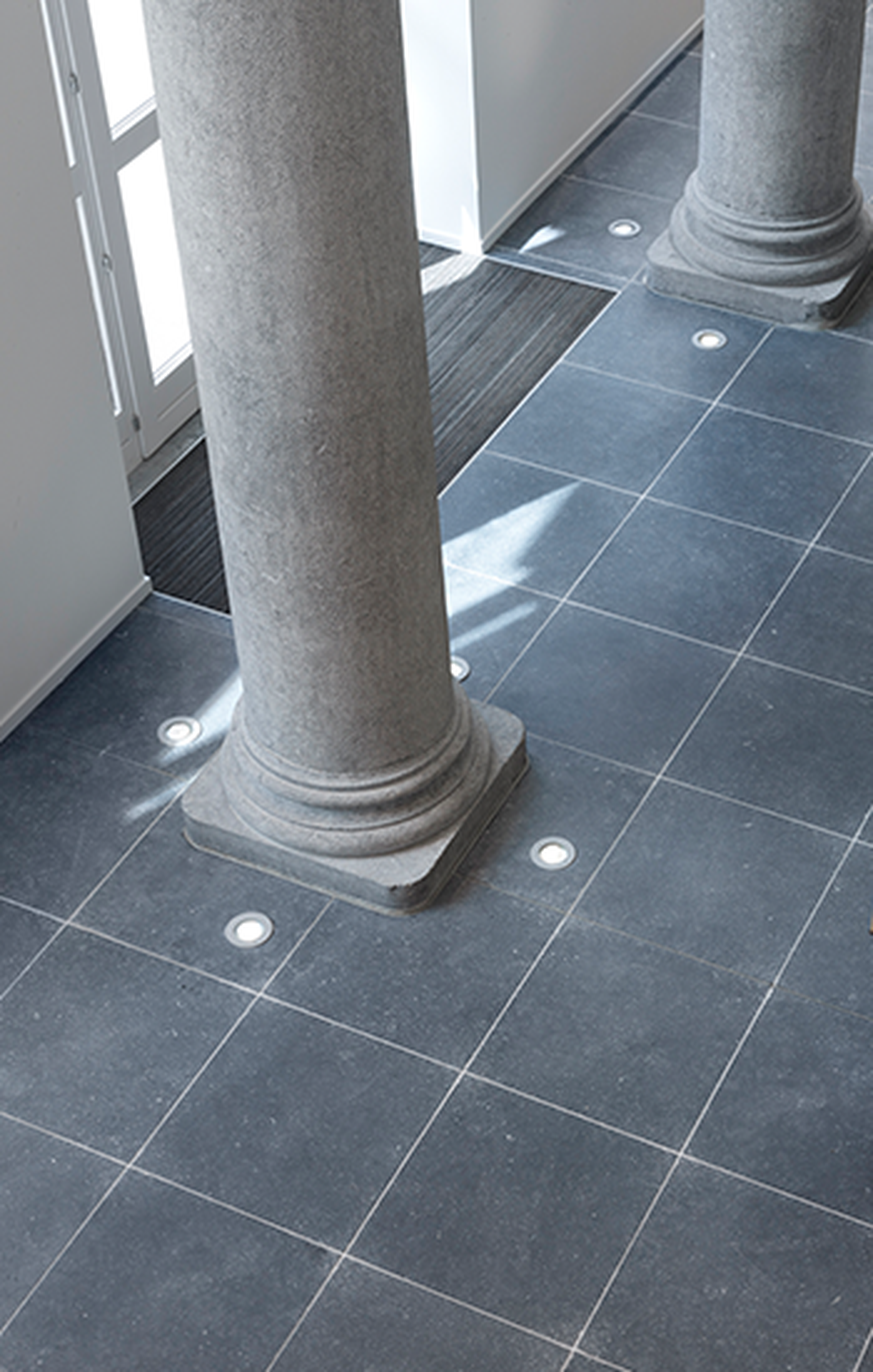
Interior flooring
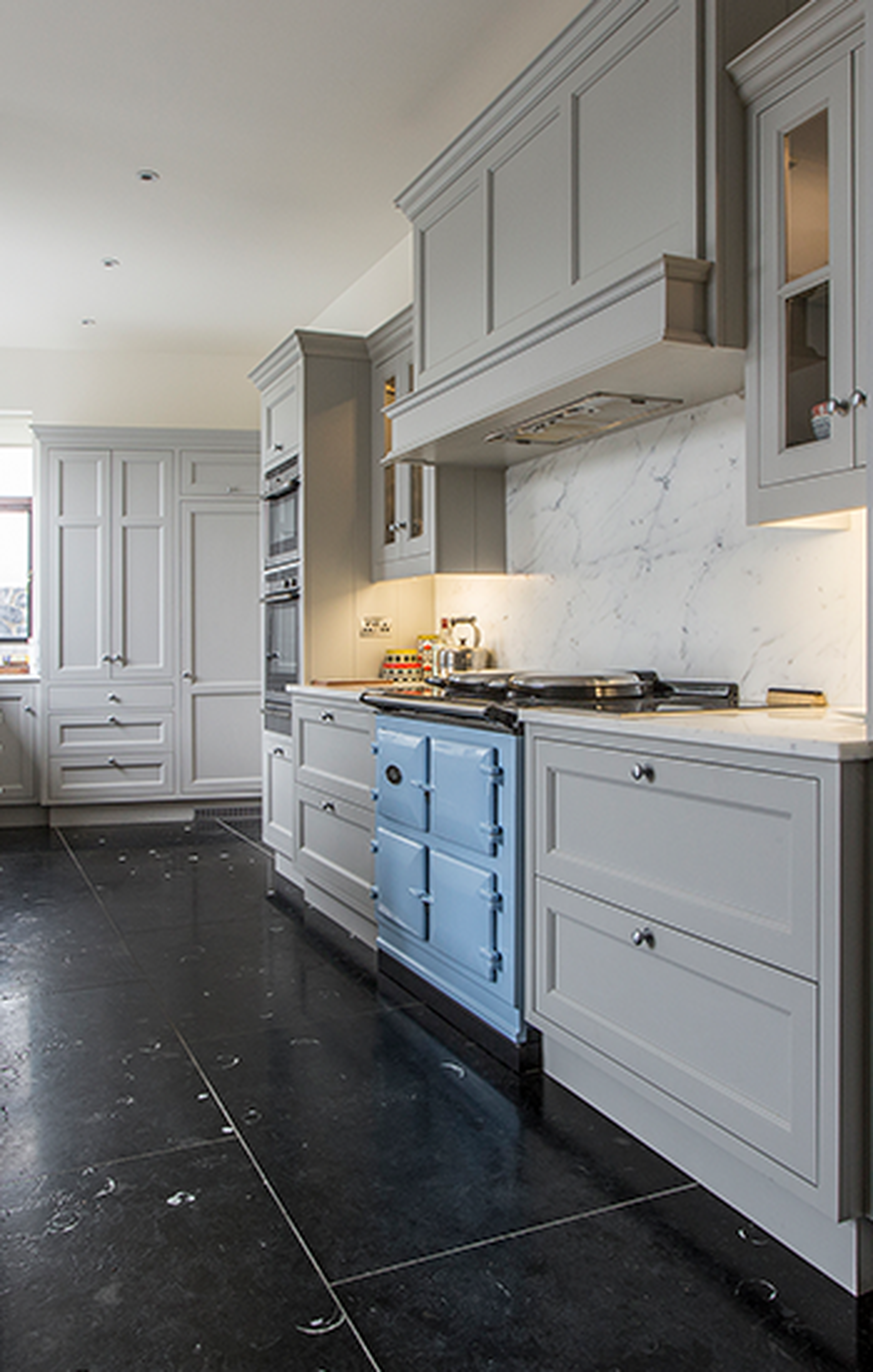
Interior flooring - Fossil stone
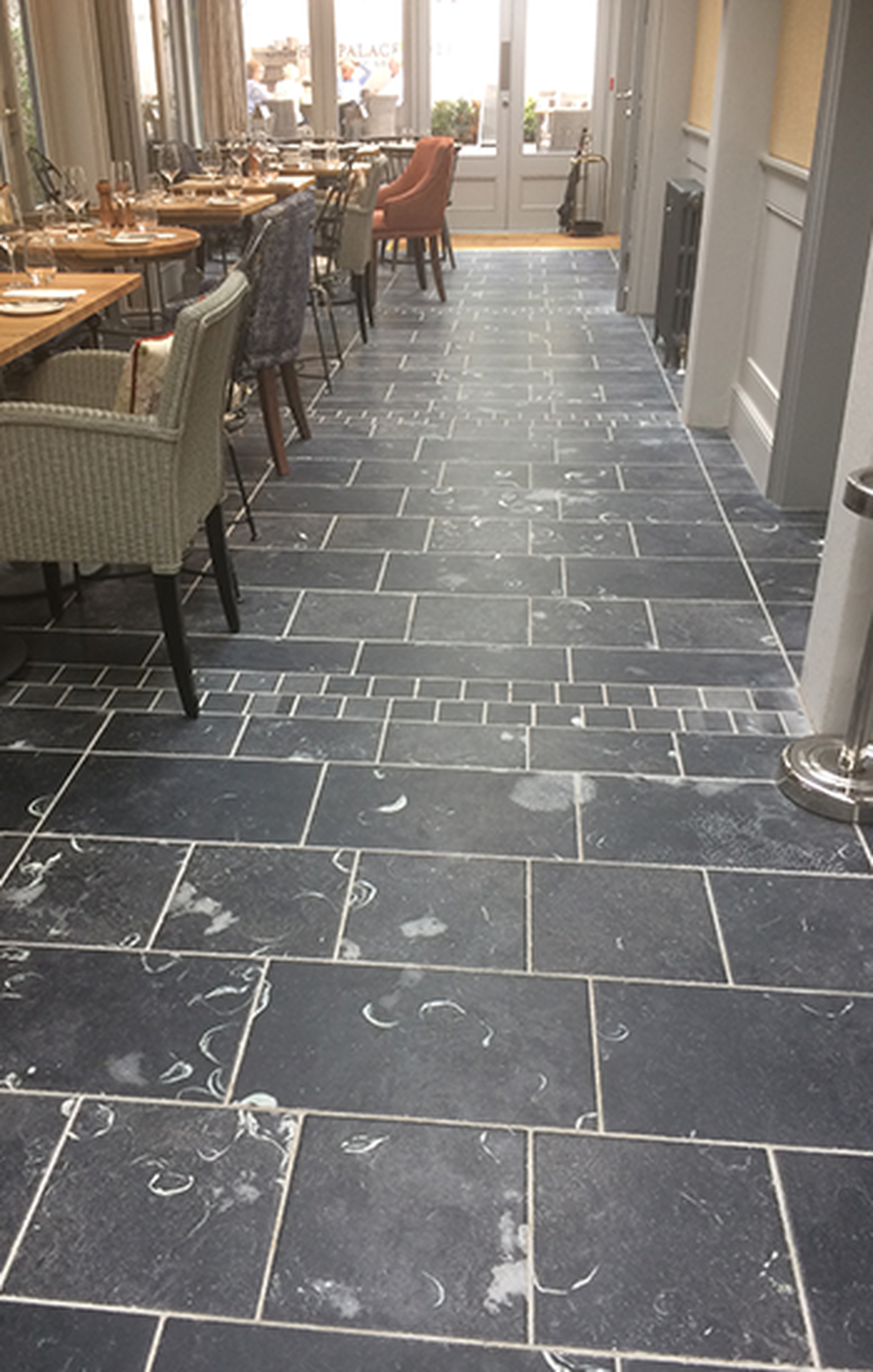
Interior flooring - Fossil stone
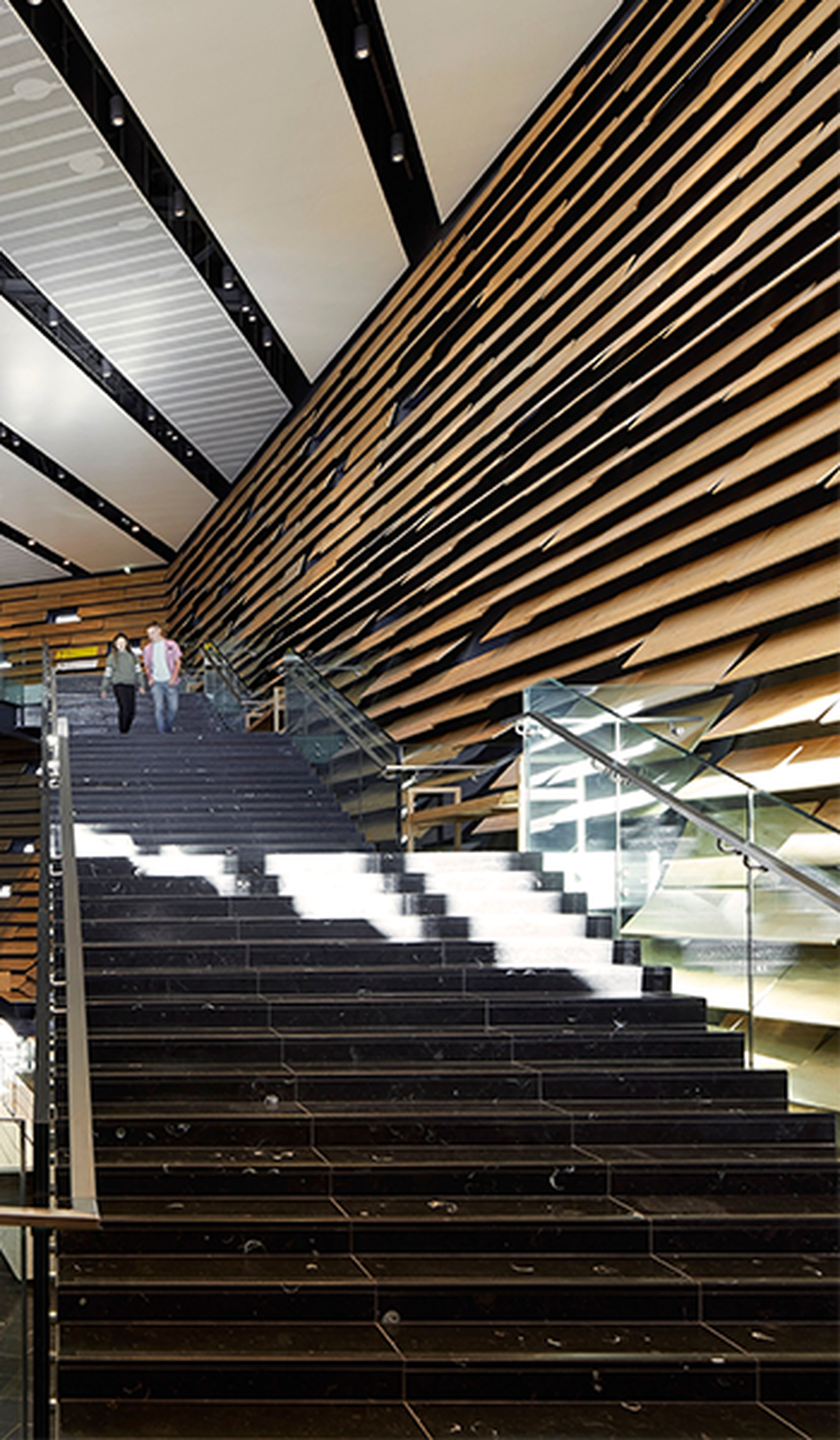
Stairs & indoor flooring - Fossil stone letano
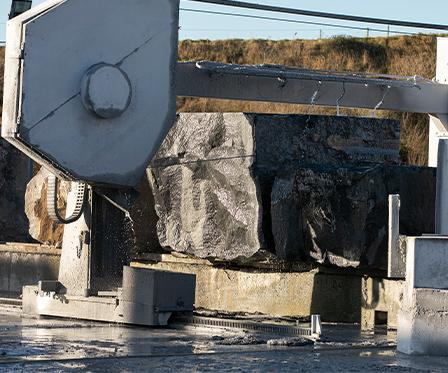
Quarrying at Kilkenny Limestone's three sites at Old Leighlin (Co. Carlow) and Kellymount and Holdensrath (Co. Kilkenny) is certified under ISO 14001:2015 for environmental management, and all products carry CE marking under the relevant European norms (EN 1341, EN 1342, EN 1343, EN 12057/12058).