Blue limestone
A compact limestone for paving, cladding and urban infrastructure
Blue limestone is a compact, dark-toned limestone with a characteristically dense structure that makes it one of the most technically reliable natural stones for both architectural and civil applications.
The two most widely specified varieties are Kilkenny Limestone, quarried from our own quarries in Ireland, and Belgian Blue Stone. Both have a proven track record spanning centuries, used across patios, indoor flooring, exterior paving, wall cladding, and building products such as window sills, lintels and stairs.
The blue-grey colour of this stone originates from traces of ancient carbon dioxide preserved in the rock. Irish blue limestone tends toward a deeper, more pronounced blue tone with a cleaner, more uniform surface, while Belgian bluestone carries a slightly warmer grey and a higher fossil content. A distinction that often guides specification decisions based on aesthetic preference or project context.
Its hardness and very low porosity make blue limestone well suited to high-traffic surfaces, exposed outdoor conditions and precision-cut building elements alike.
Blue limestones in our product range:
Best-selling finishes
The finishes below are a selection of the most popular finishes available for blue limestone. At Brachot, we are also constantly developing new finishes and optimising existing ones. So we can always match the right finish to the material, the project context and your client's preferences.
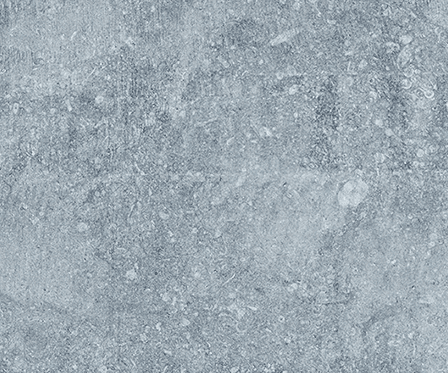
Diamond-sawn
This finish highlights the natural unrefined appearance that results from diamond frame-sawing. Light-grey in colour, the saw-marks remain clearly visible on the face. Often well-utilized on limestone for cladding and kerbing, this ready-rough finish is suitable for a multitude of uses.
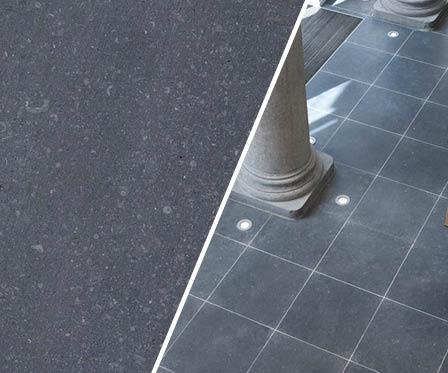
Blue Honed
The smooth and even appearance rendered by the blue honed finish is achieved through the use of a range of grits. When a honed finish is applied to Irish blue limestone, the coarseness of the grit used will directly impact the colour of the final finish. The coarsest grit (100) achieves a pale blue-grey colour and produces a smooth and matt texture with a faint pattern of circular scores. Honed finishes are suitable for interiors such as worktops, flooring and cladding but are also used externally for furniture, window sills and plinths.

Flamed
Flamed faces have a slightly translucent speckled grey colour, varied by slightly and randomly developed lighter areas. The surface is smooth but with an irregular texture of minor creases. This finish is the result of the torching of the stone surface with a white hot open flame, lending a modern finish with a truly original texture. With excellent slip-resistant properties, flamed Irish limestone is perfect for outdoor uses, including paving and landscaping works, paths and patios. The distinctive aesthetic of this finish has also made it popular for cladding and indoor use.
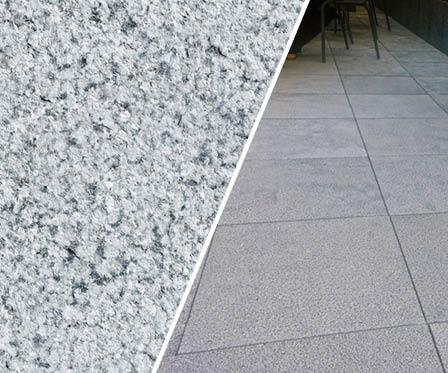
Bush Hammered
The bush hammered finish delivers a dark blue-grey background with randomly distributed, closely spaced and contrasting paler blue-grey indentations. The surface has a smooth background which is in contrast to a pattern of fine dimpling. Due to its superior slip-resistant qualities, Irish blue limestone with a bush hammered finish is an ideal choice for outdoor use on paving, kerbs and steps. This finish is also applied for decorative purposes and to showcase the various characteristics in a large piece of Irish blue limestone.
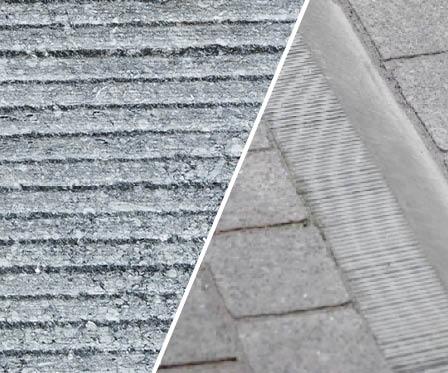
Line chiselled
This classic masonry technique involves incising the limestone surface with a series of parallel thin lines. These rows of incisions in the limestone appear dark grey or black set against the smooth curved surfaces of the stone. The chiselled finish achieves a paler blue-grey colour with the ancient crinoids revealing themselves as a randomly distributed pattern of paler grey flecks. Chiselled blue limestone is an excellent finish for both internal and external applications such as cladding, ashlar, lintels, mouldings, pavilions, setts, kerbs and steps.
Frequently Asked Questions
Irish blue limestone (Kilkenny Limestone) and Belgian Blue Stone are both compact, dense limestones with a characteristic blue-grey colour, and both formed during the same geological period. Both contain visible fossil remains of crinoids and corals, a defining feature of their appearance. Irish bluestone tends toward a deeper blue tone with fewer fossils and a more uniform surface. Belgian bluestone carries a slightly warmer grey with a higher fossil content. Both materials are available in large-format slabs and custom-cut building elements, and both are CE-marked for use in construction.
In the picture: Kilkenny Limestone


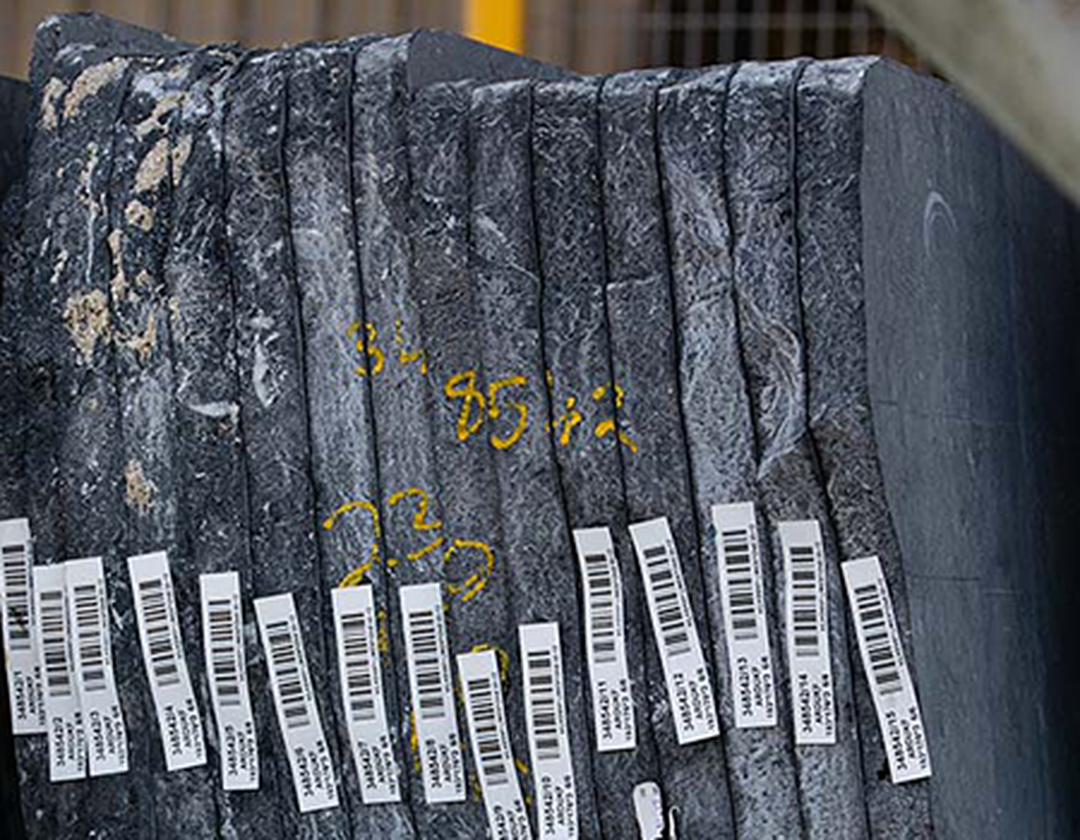
Irish Blue Limestone has been quarried and used for centuries, valued for its distinctive colour and structural quality. From contemporary residential interiors to major architectural projects across Europe and North America, Kilkenny Limestone is specified wherever both performance and appearance are decisive factors.
Varying shade and finish combinations bring out different expressions of colour and texture in the stone, responding to light and ageing naturally over time. Kilkenny Limestone is committed to the correct and appropriate use of this material in the buildings and landscapes it helps define.
Products are CE-marked and produced from ATG-certified materials.
Variety of applications
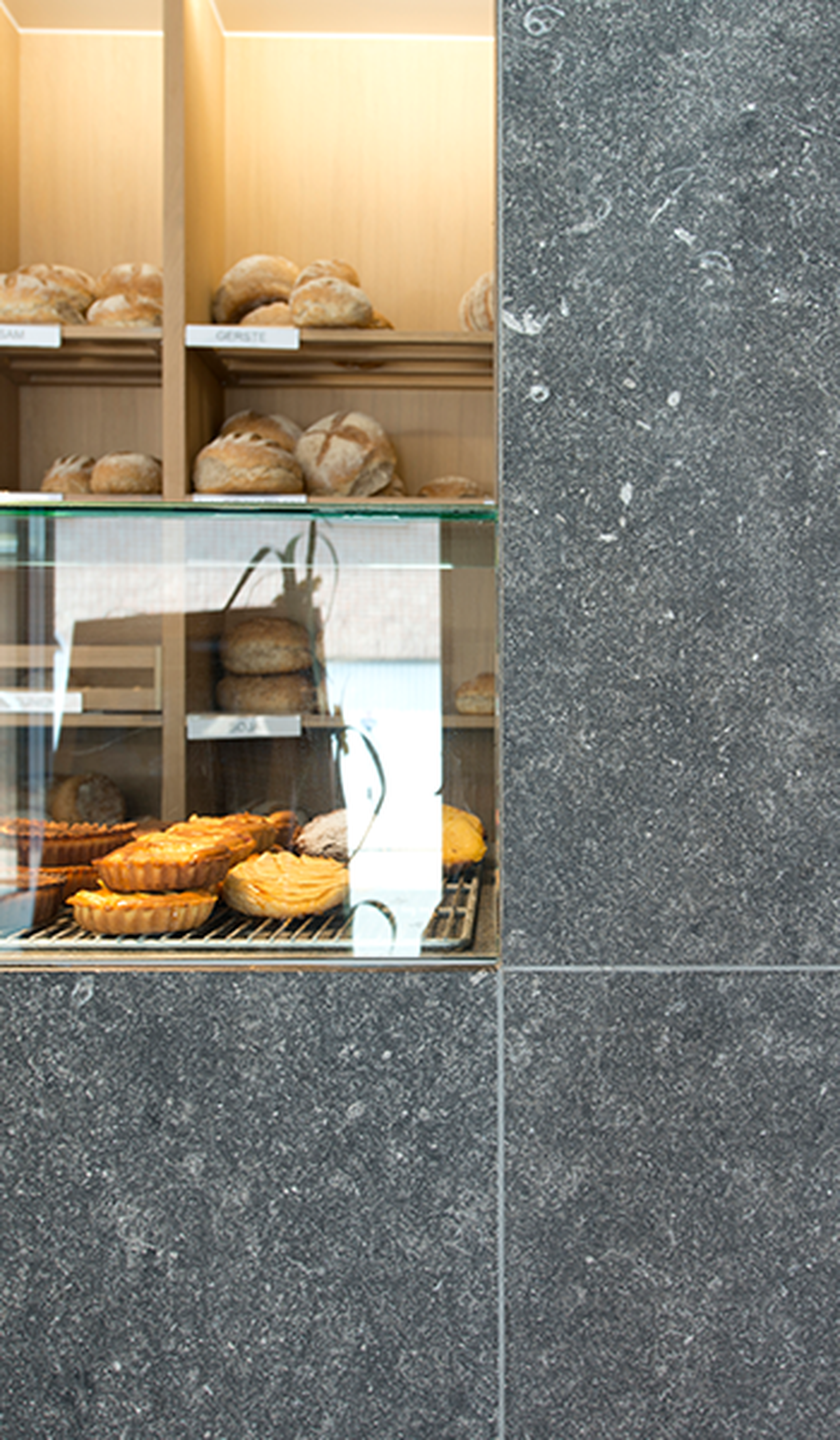
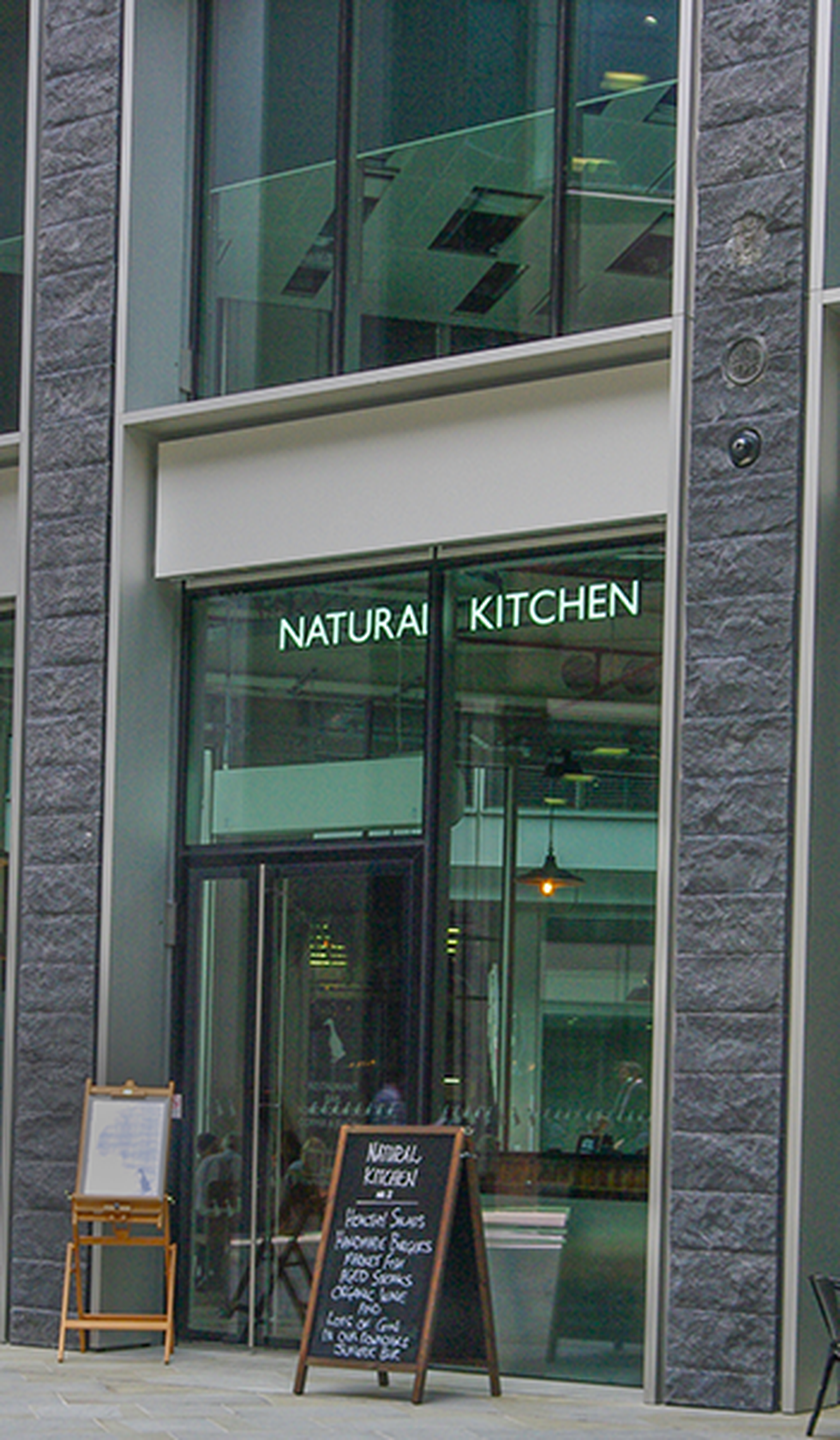
Blue limestone is specified for a wide range of architectural applications, from kitchen worktops and interior flooring to façade cladding, paving and urban infrastructure. Its combination of hardness, low porosity and dimensional stability makes it a reliable choice for both indoor and outdoor projects, regardless of scale.
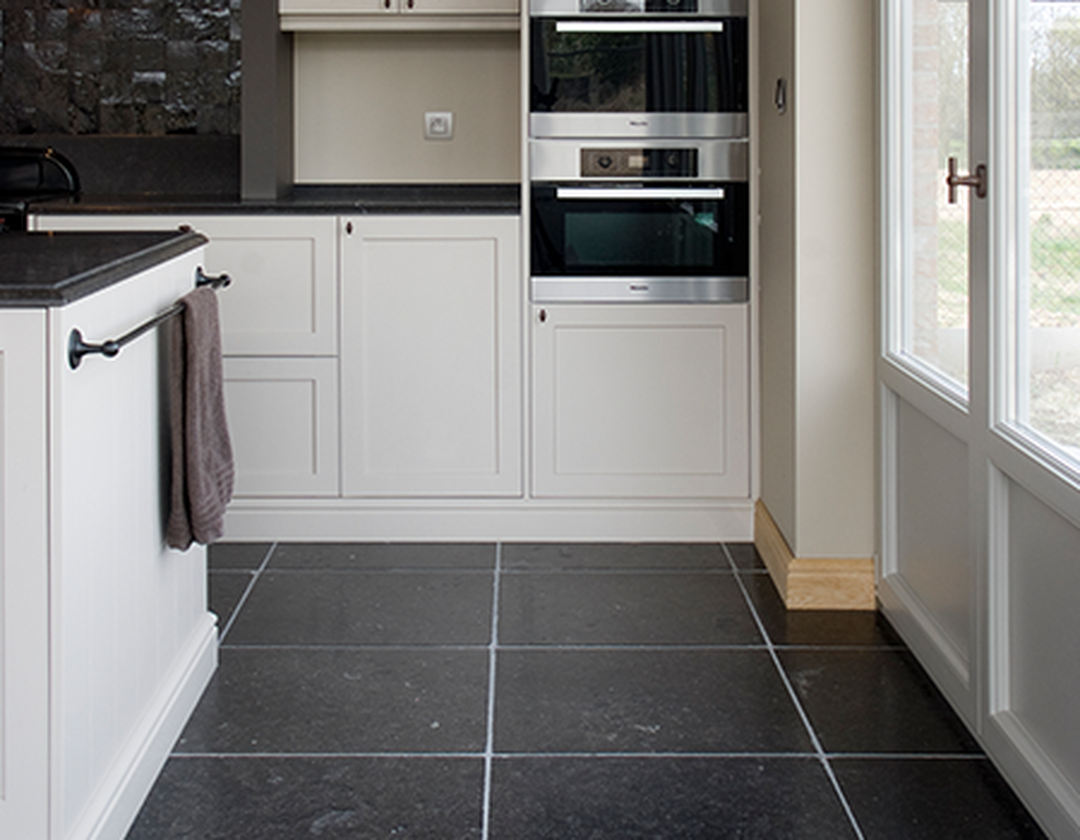
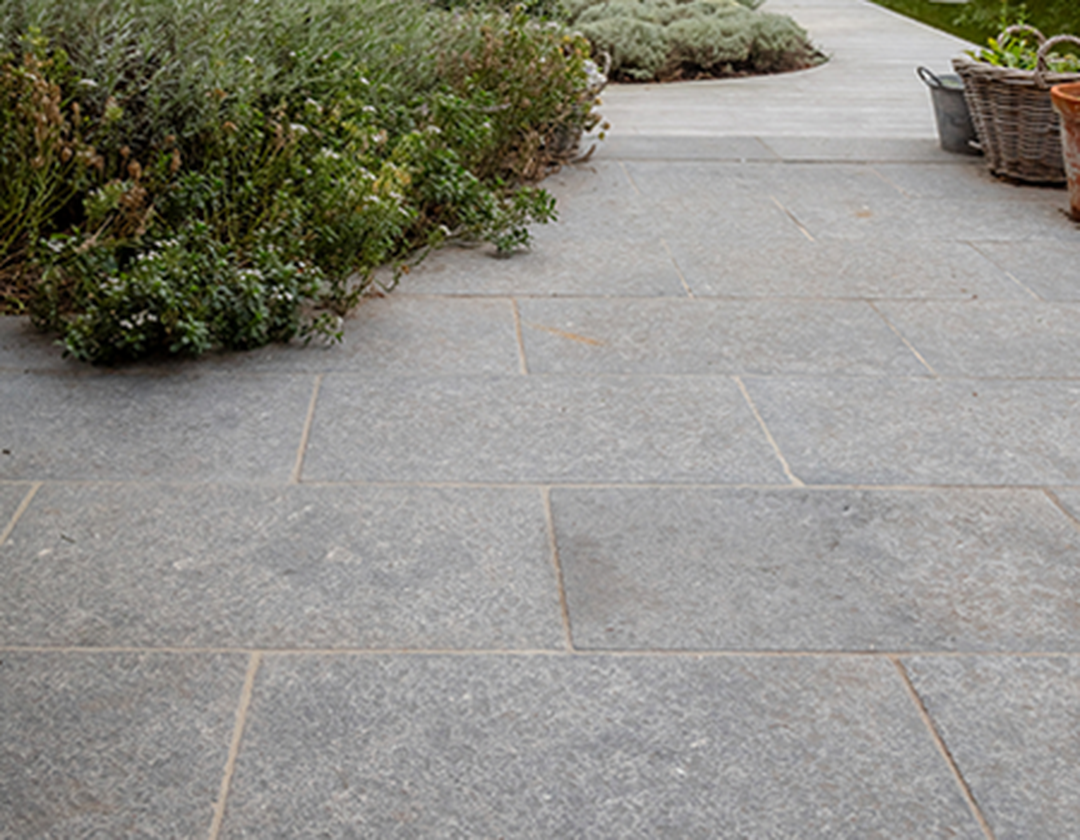
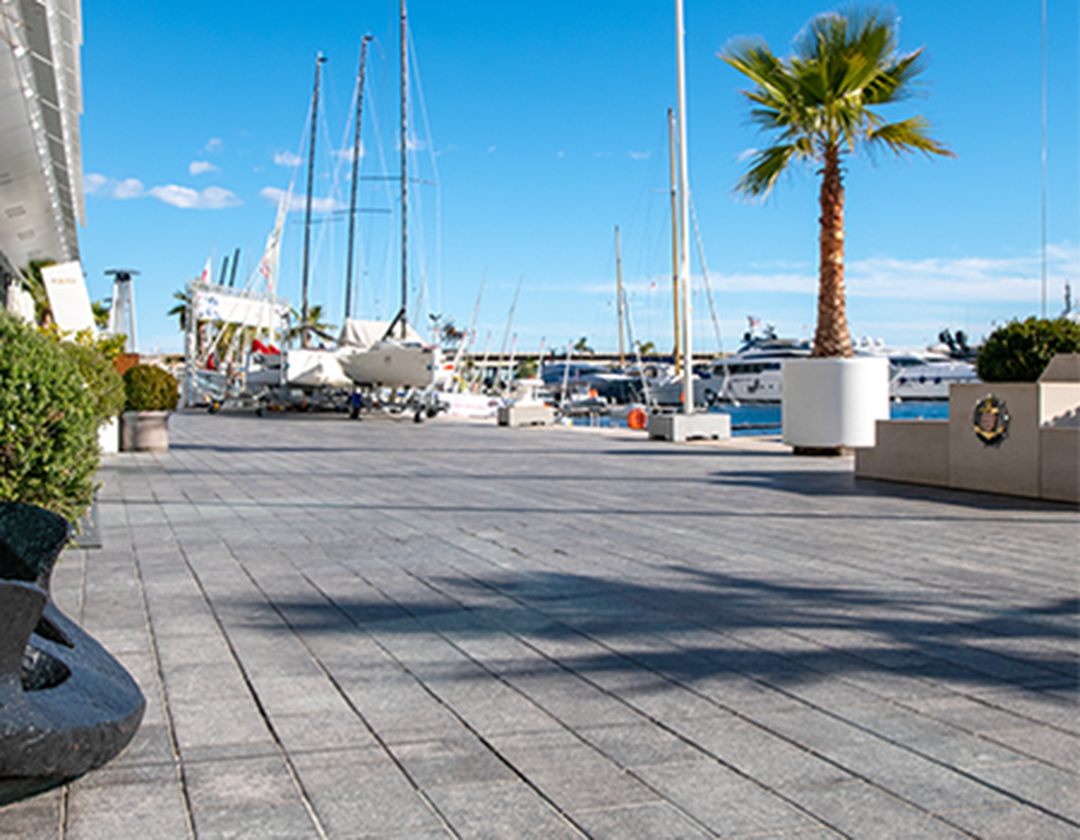
Indoor applications
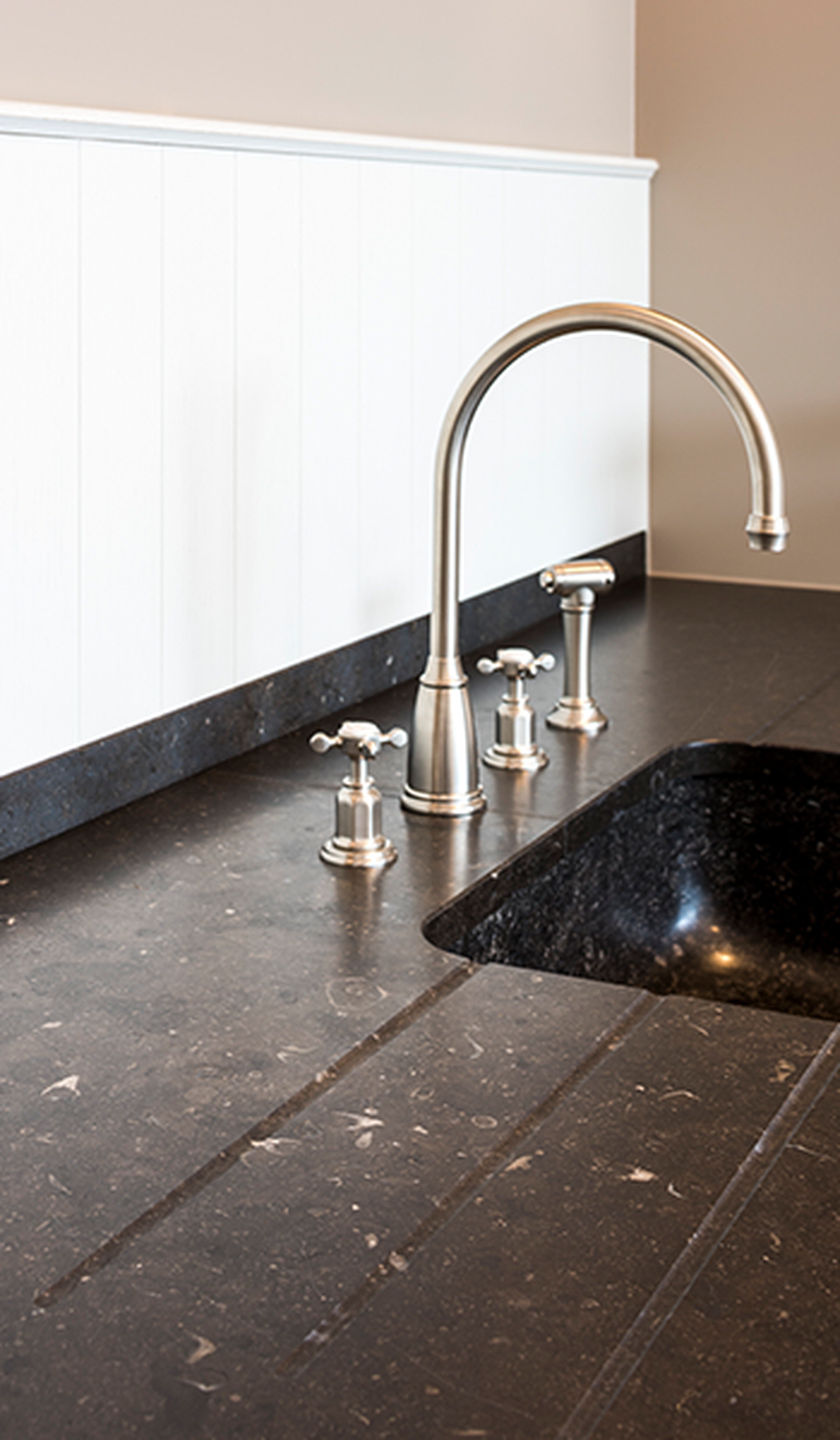
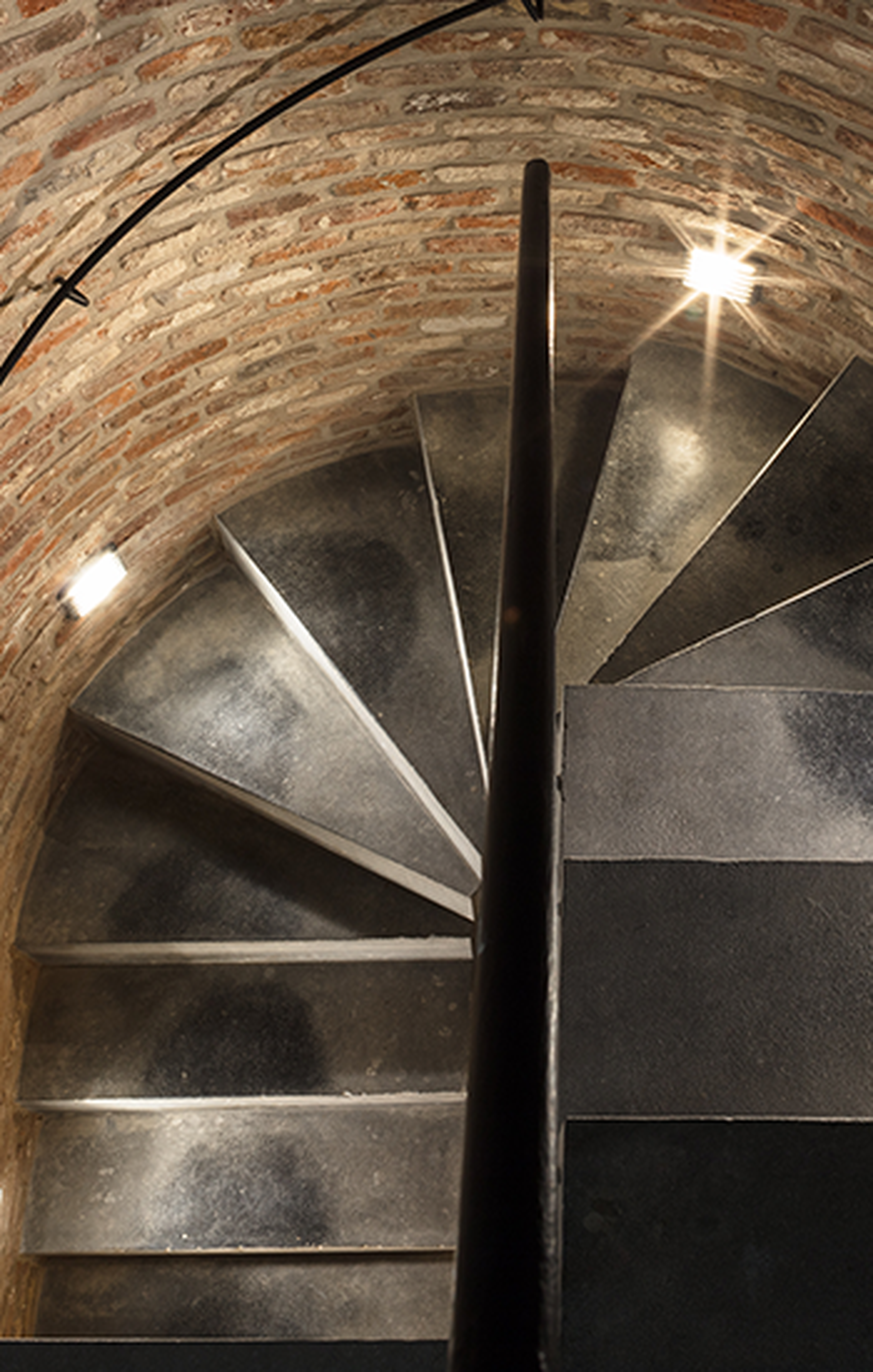
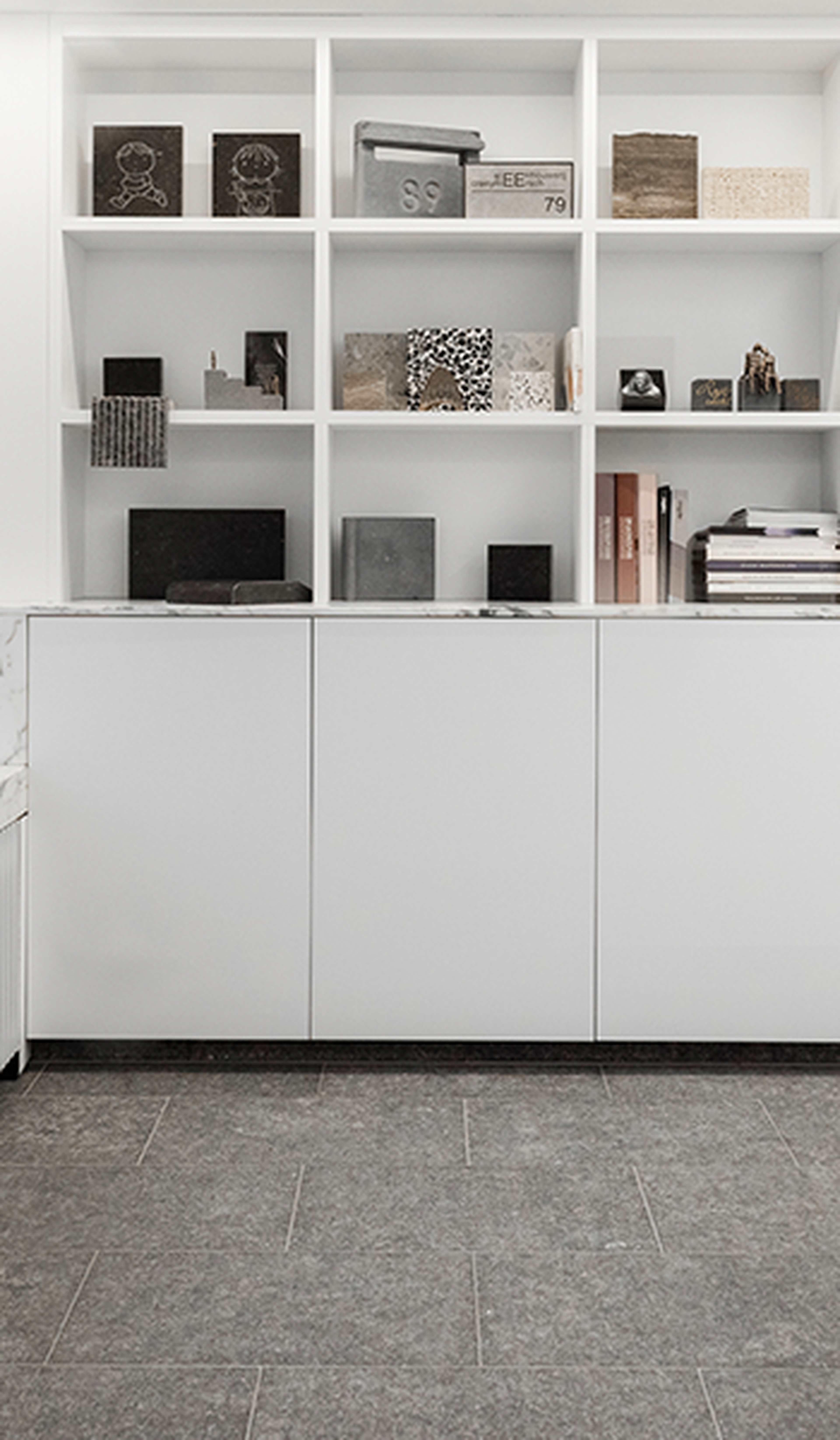
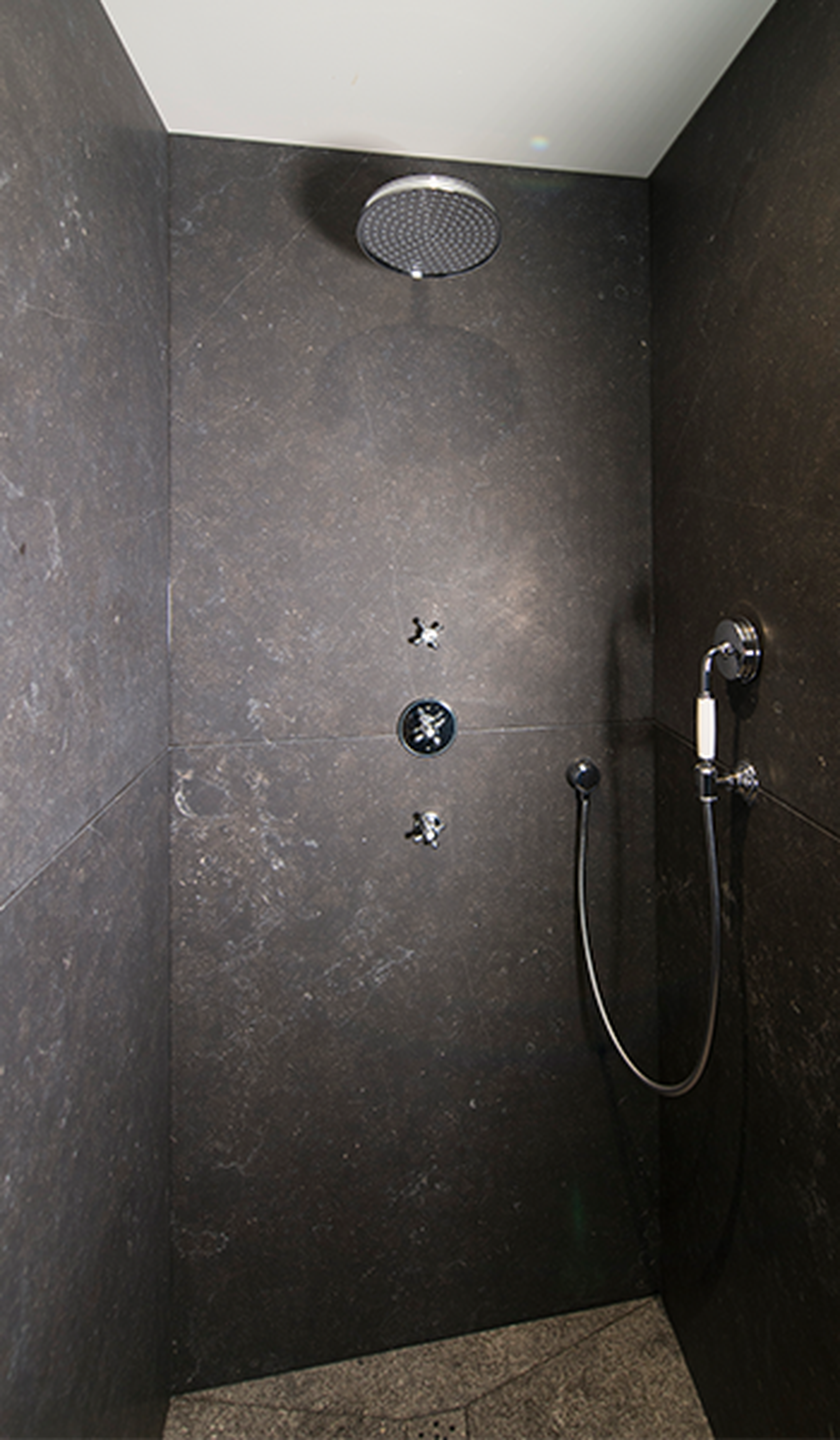
Blue limestone performs well across a broad range of interior applications. Its dense, low-porosity surface makes it a practical and durable choice for kitchen worktops, interior flooring, wall cladding, stairs and bathroom surfaces. The material takes a variety of finishes — honed, brushed or polished — each producing a distinct tonal result that suits different interior contexts, from contemporary residential projects to more traditional architectural settings.
Outdoor applications
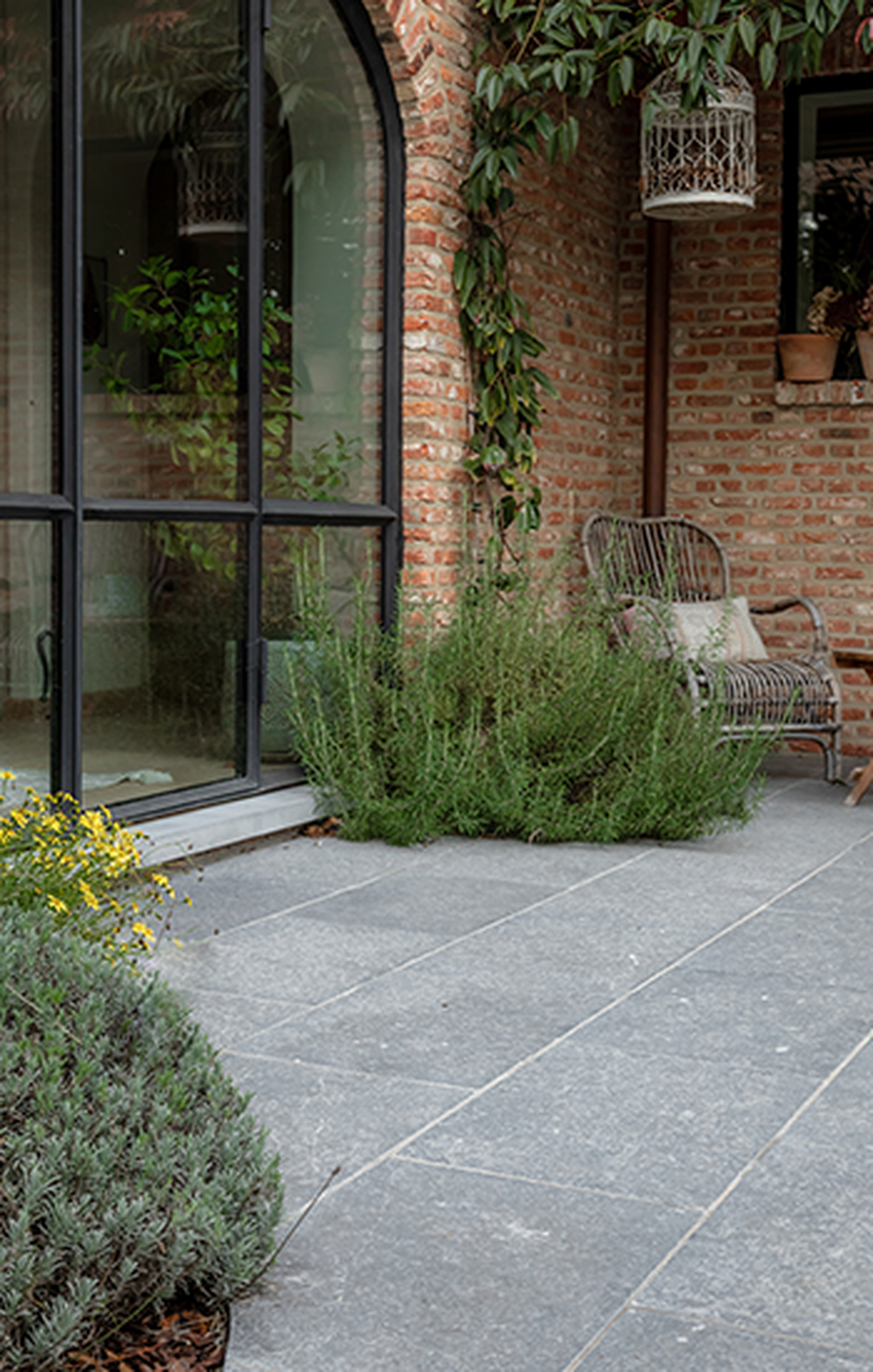
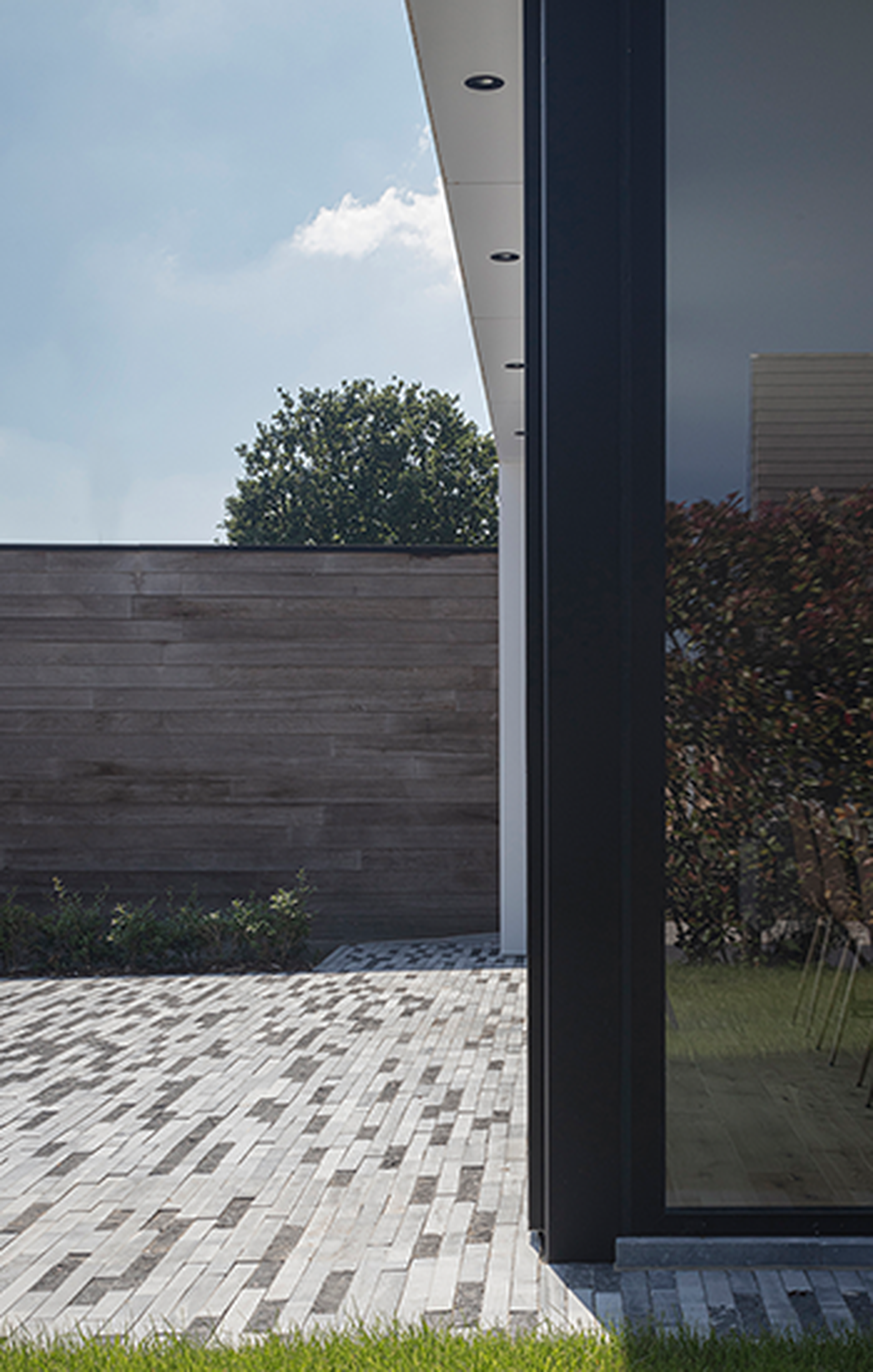
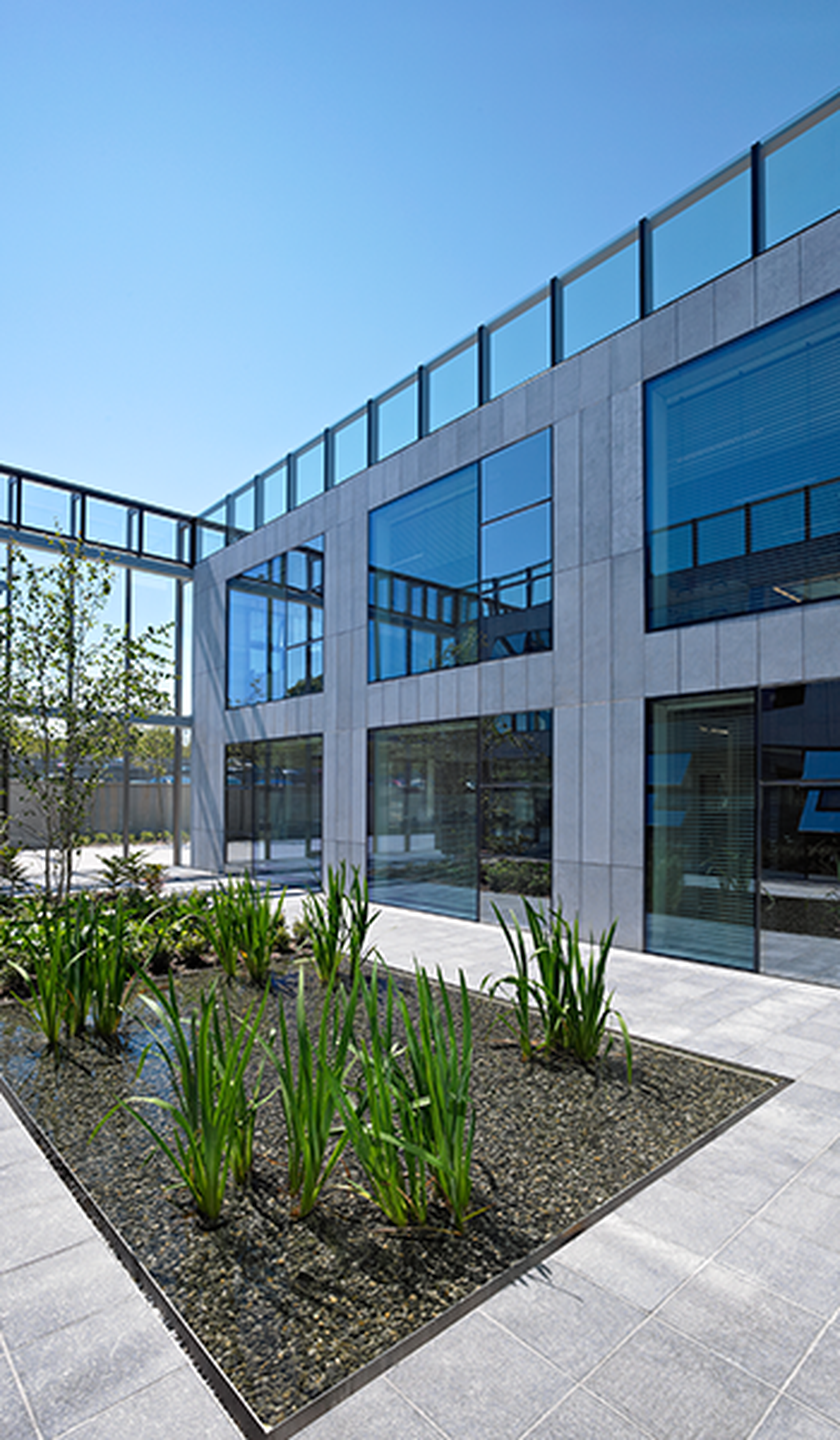
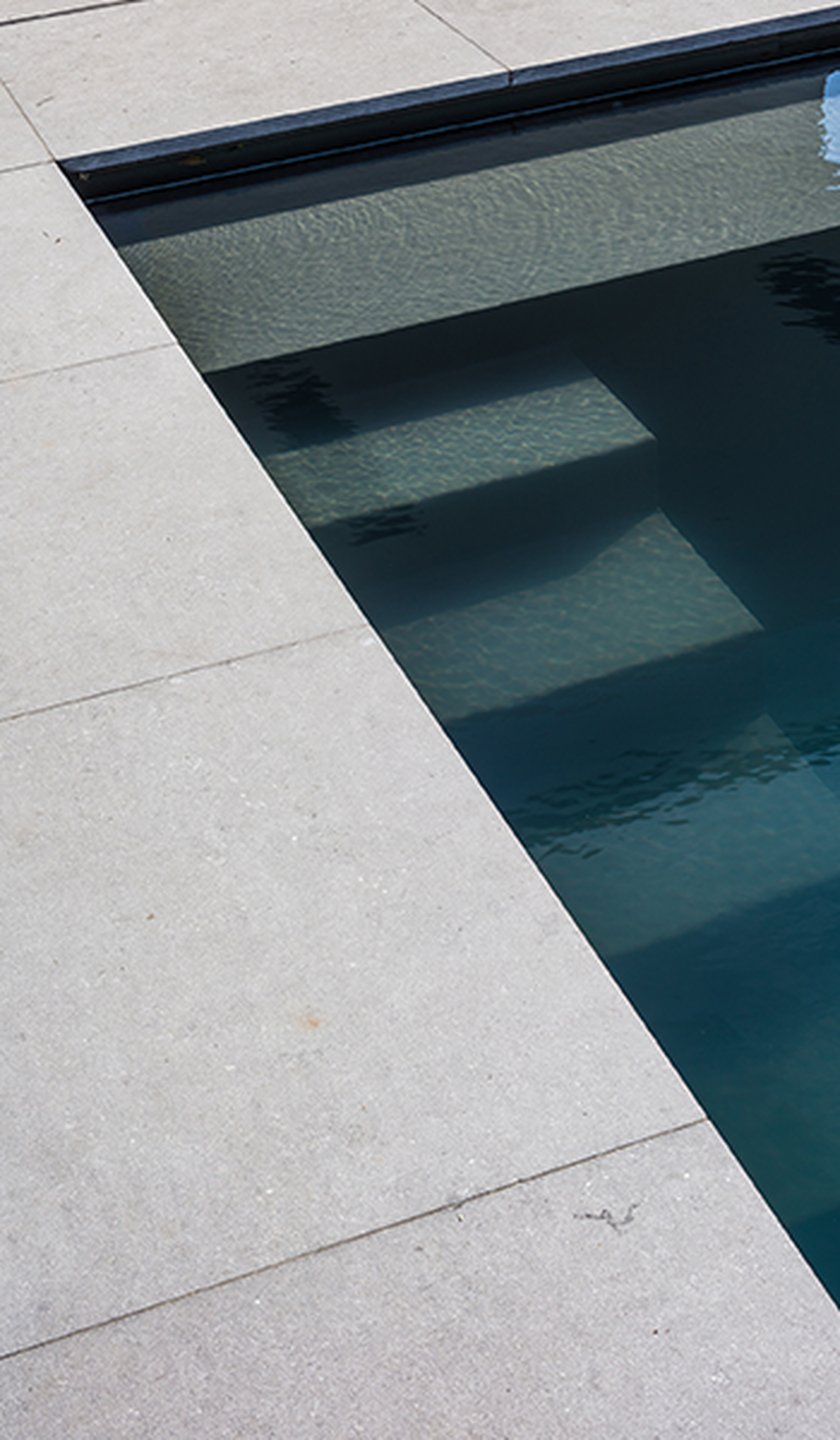
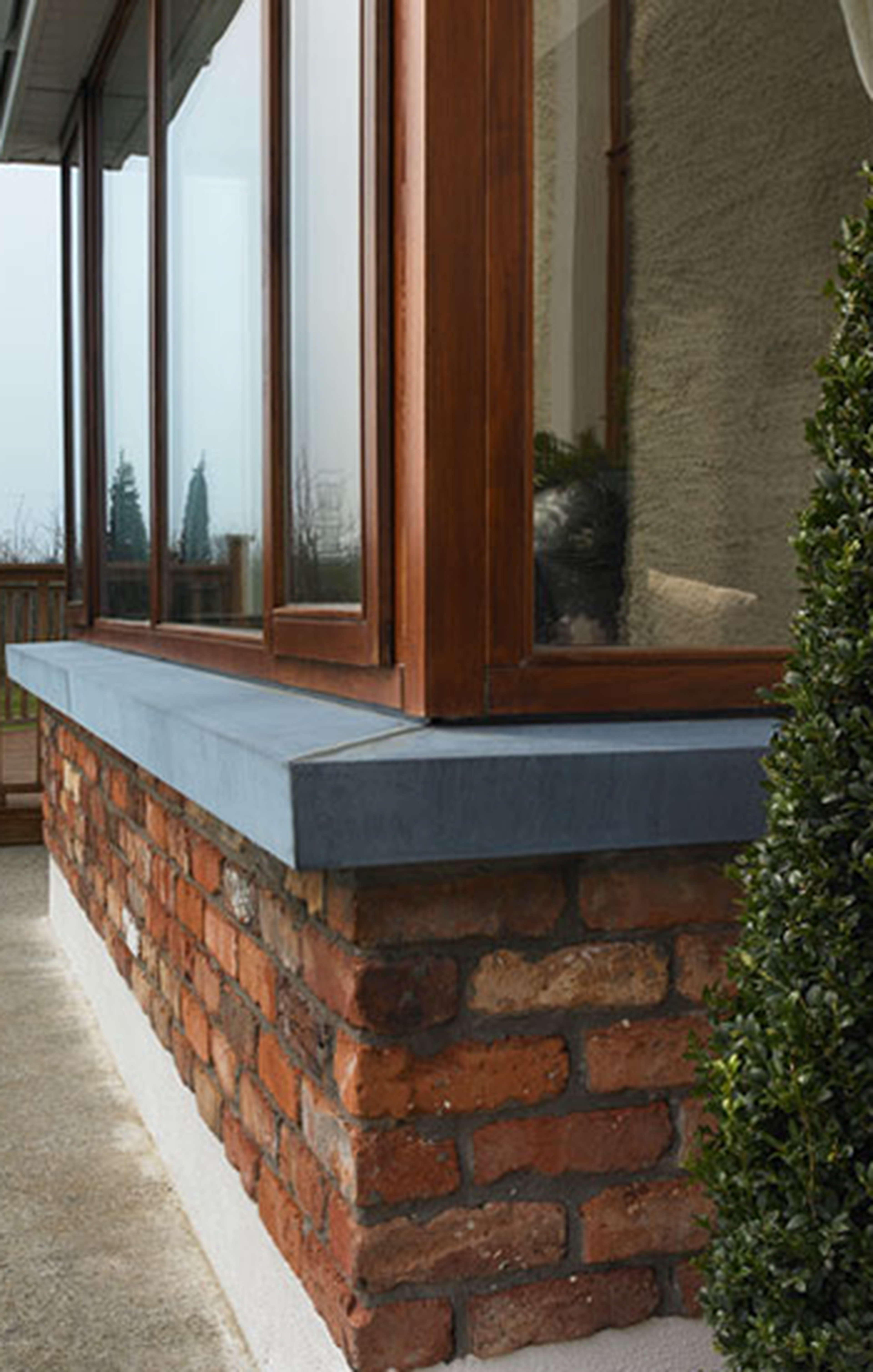
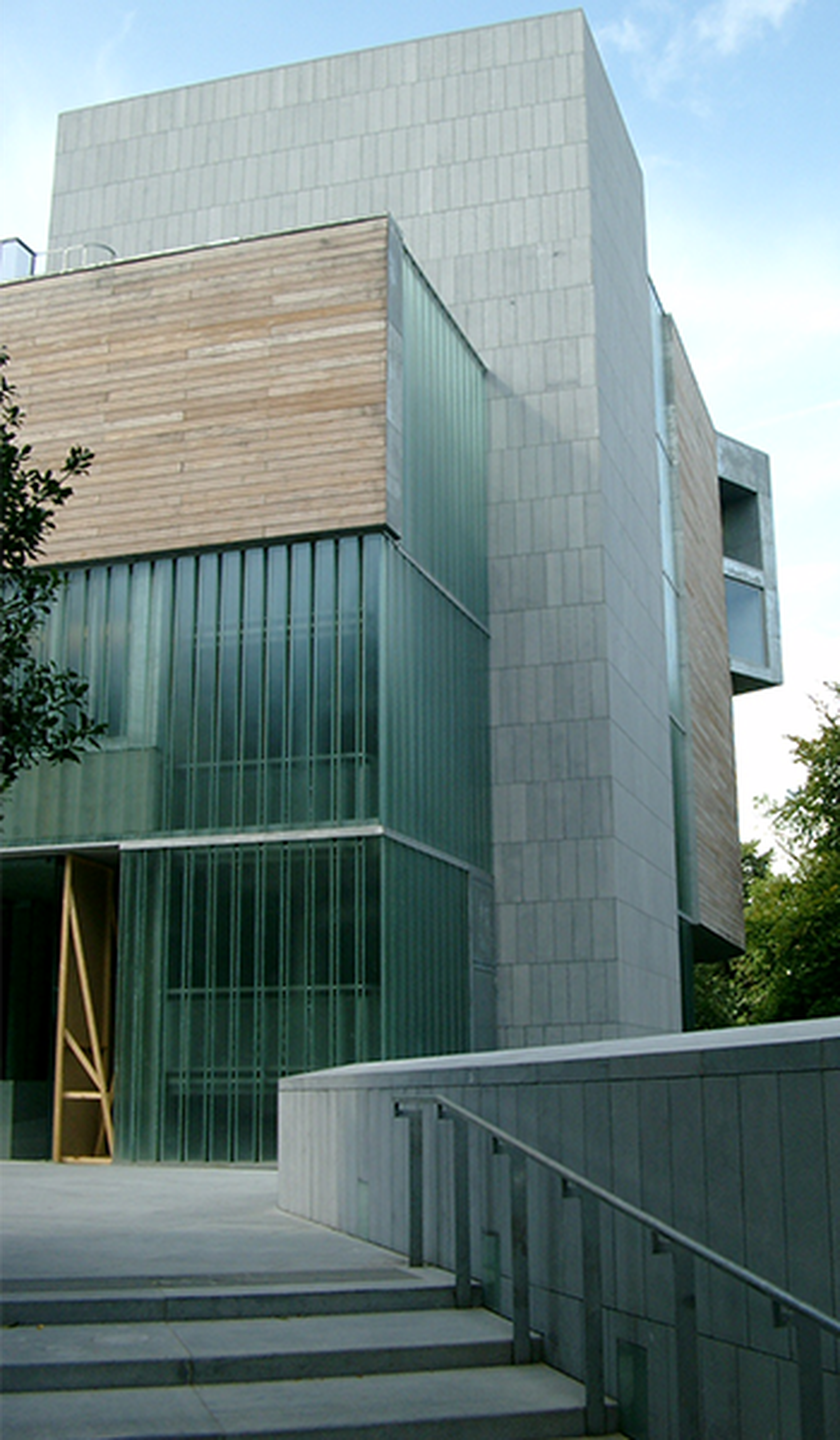
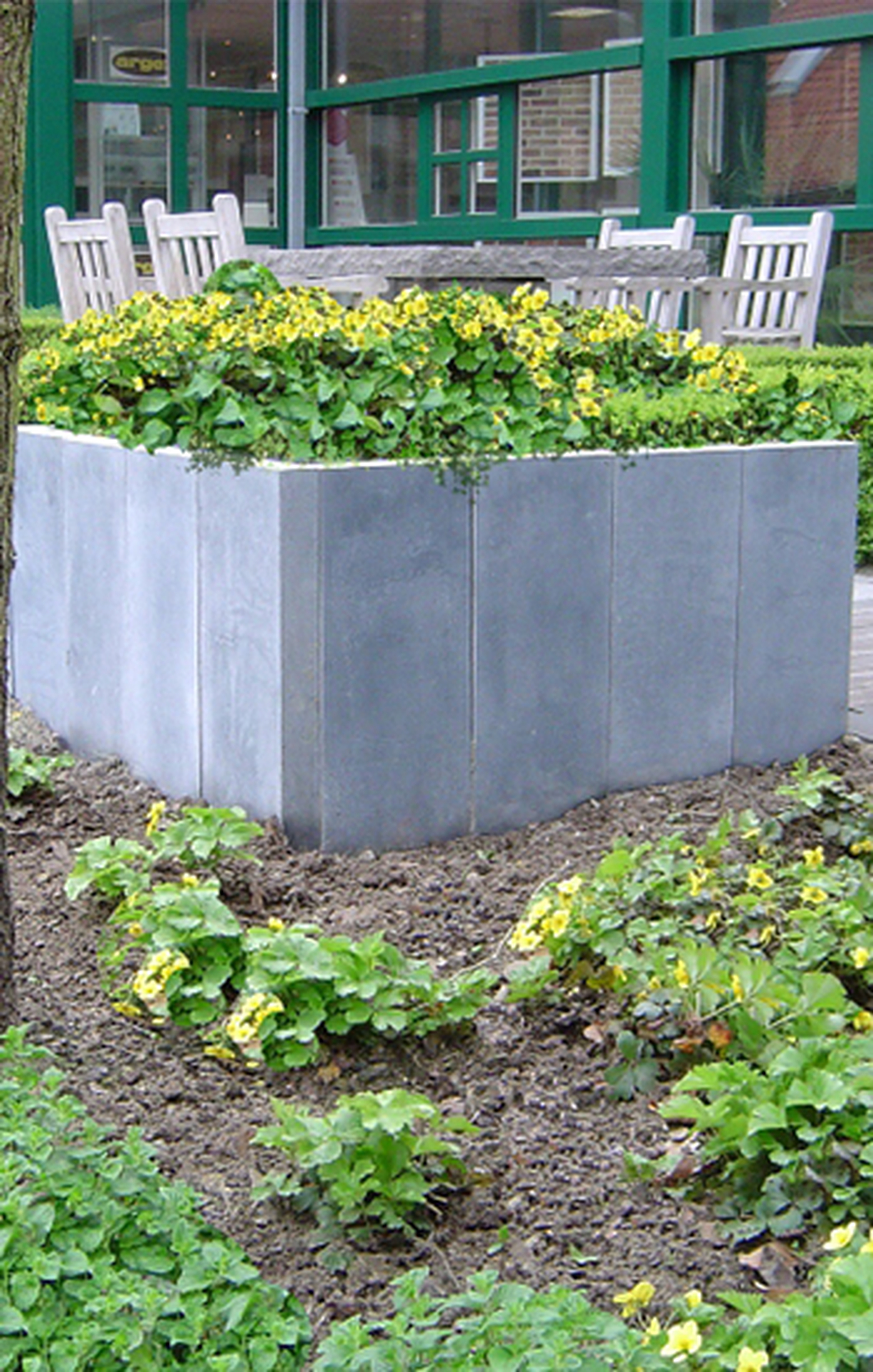
Blue limestone is widely used in exterior projects where both technical performance and appearance matter. Its low water absorption and resistance to freeze-thaw cycles make it a dependable material for patios, paving, driveways and pool copings. For façade cladding, its dimensional stability ensures consistent performance over time without significant movement or surface degradation. Blue limestone is also commonly specified for functional building elements such as window sills, where precision cutting and weather resistance are essential requirements.
Urban renewal
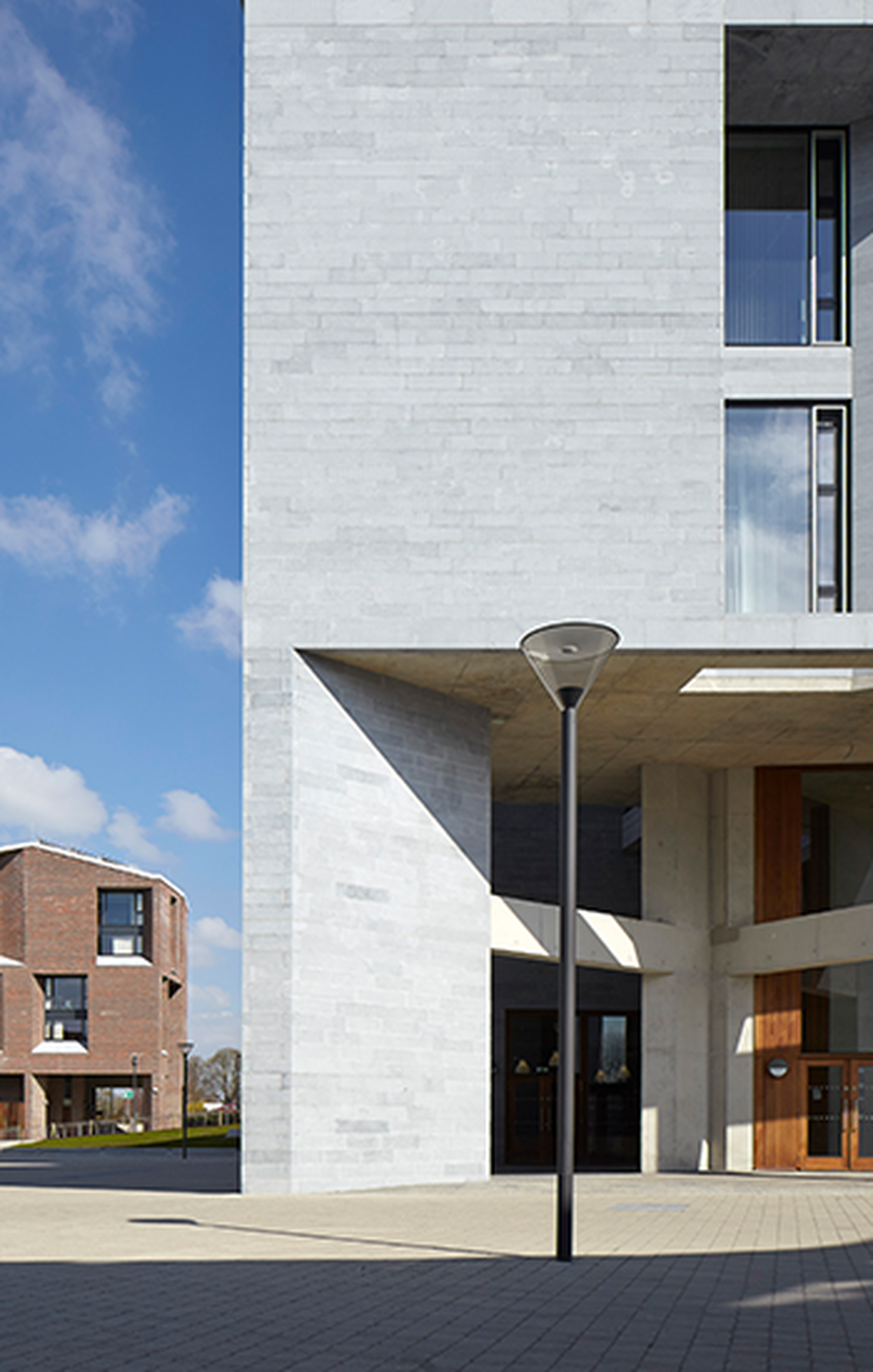
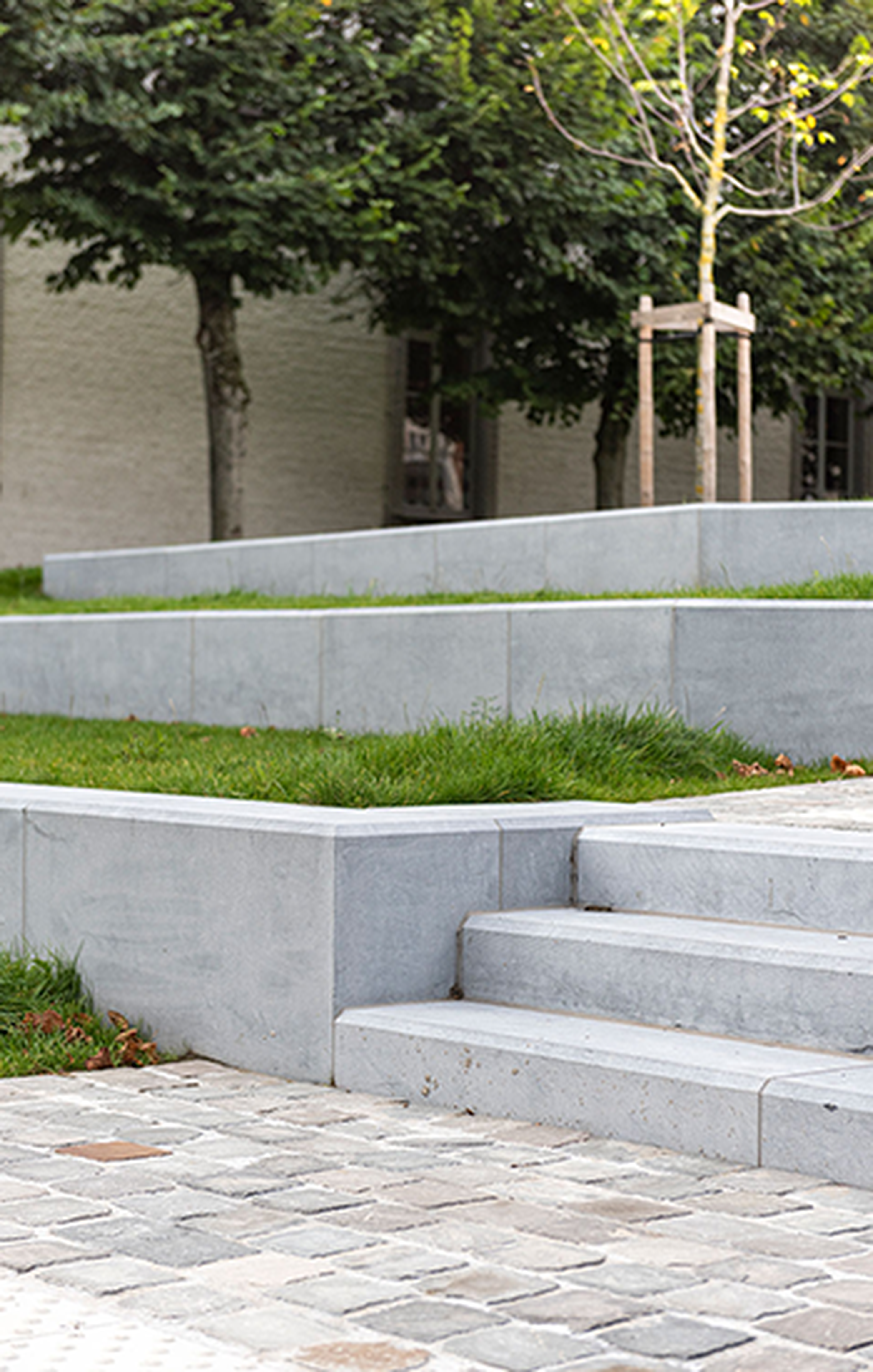
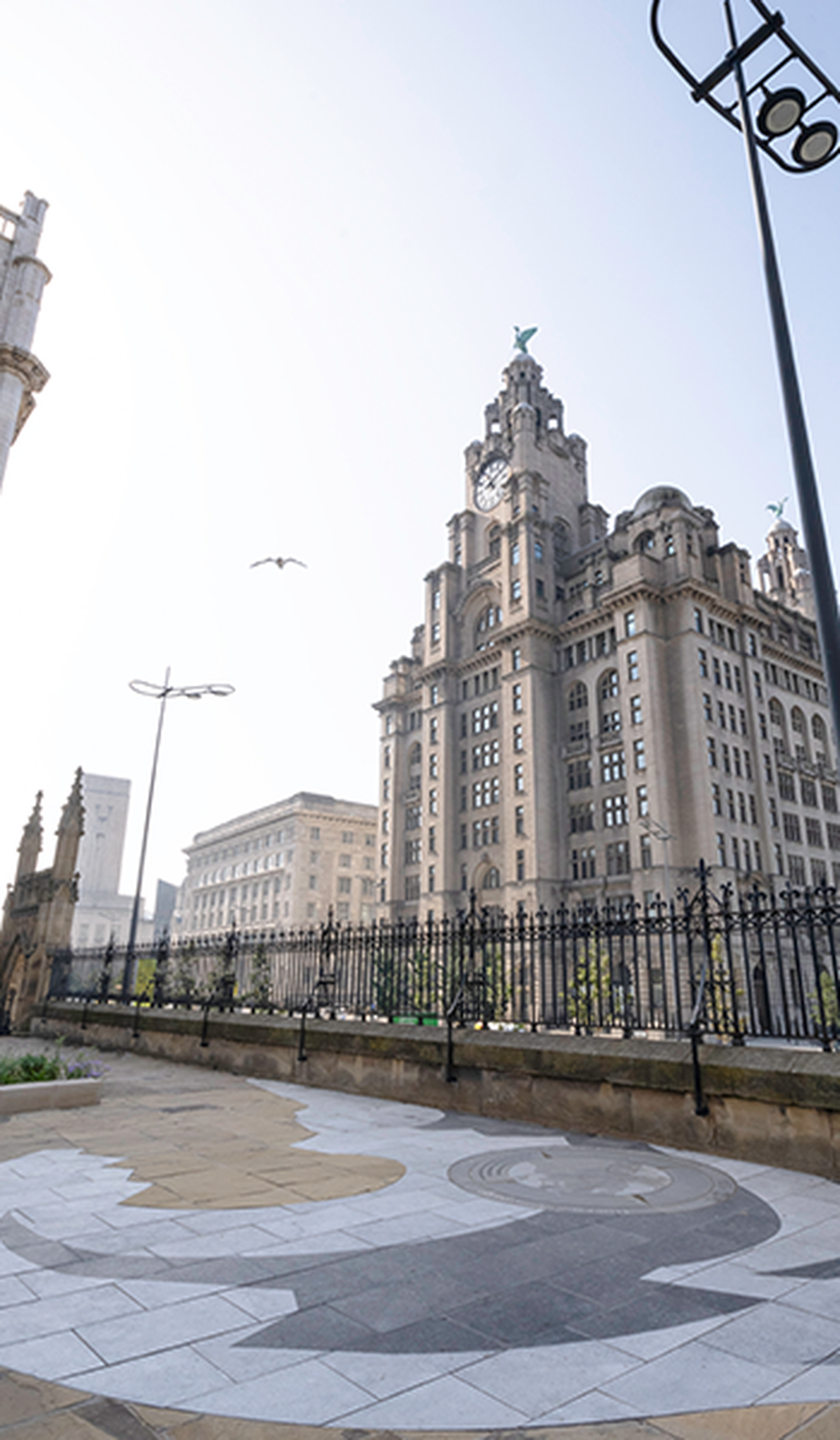
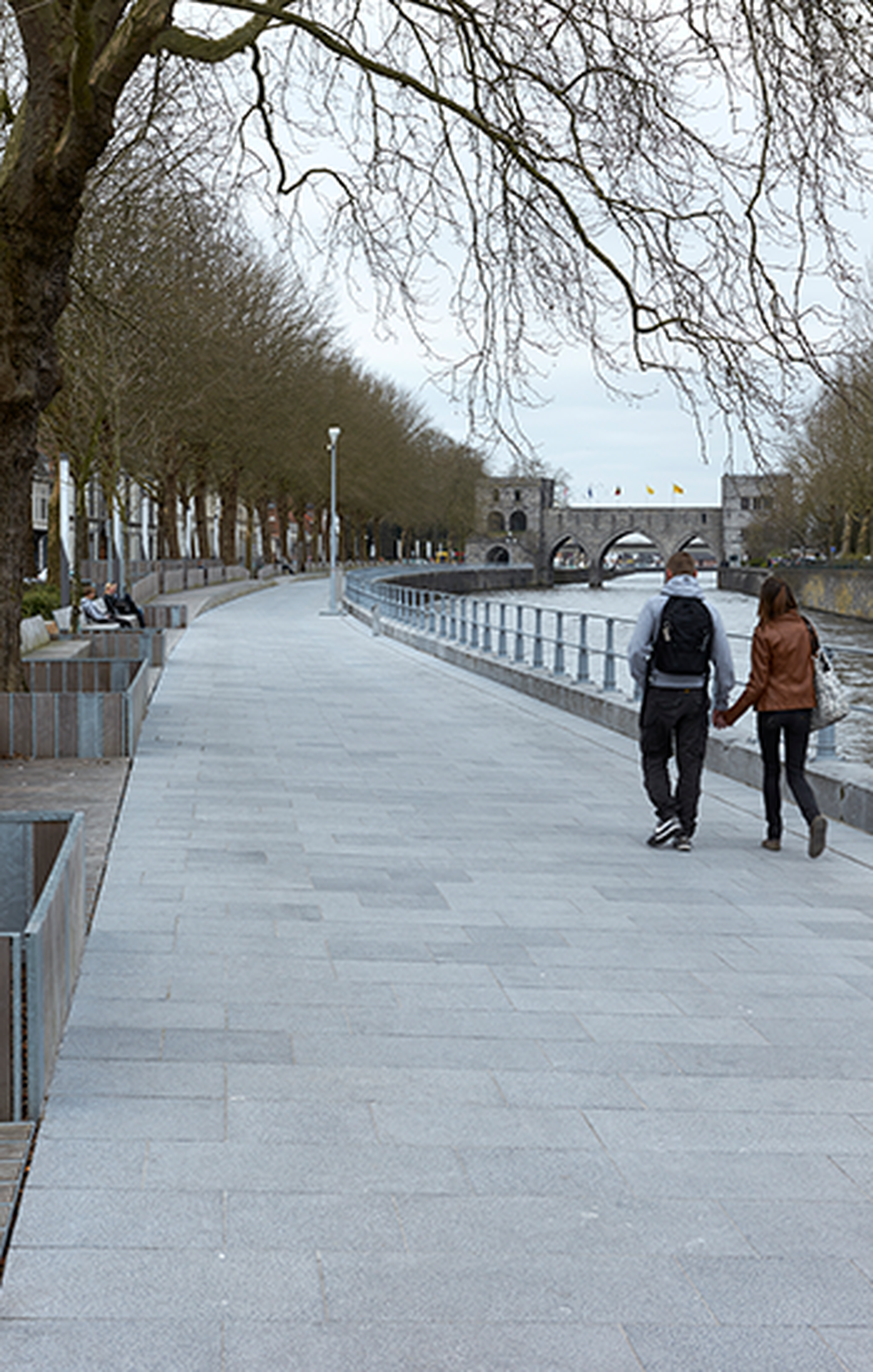
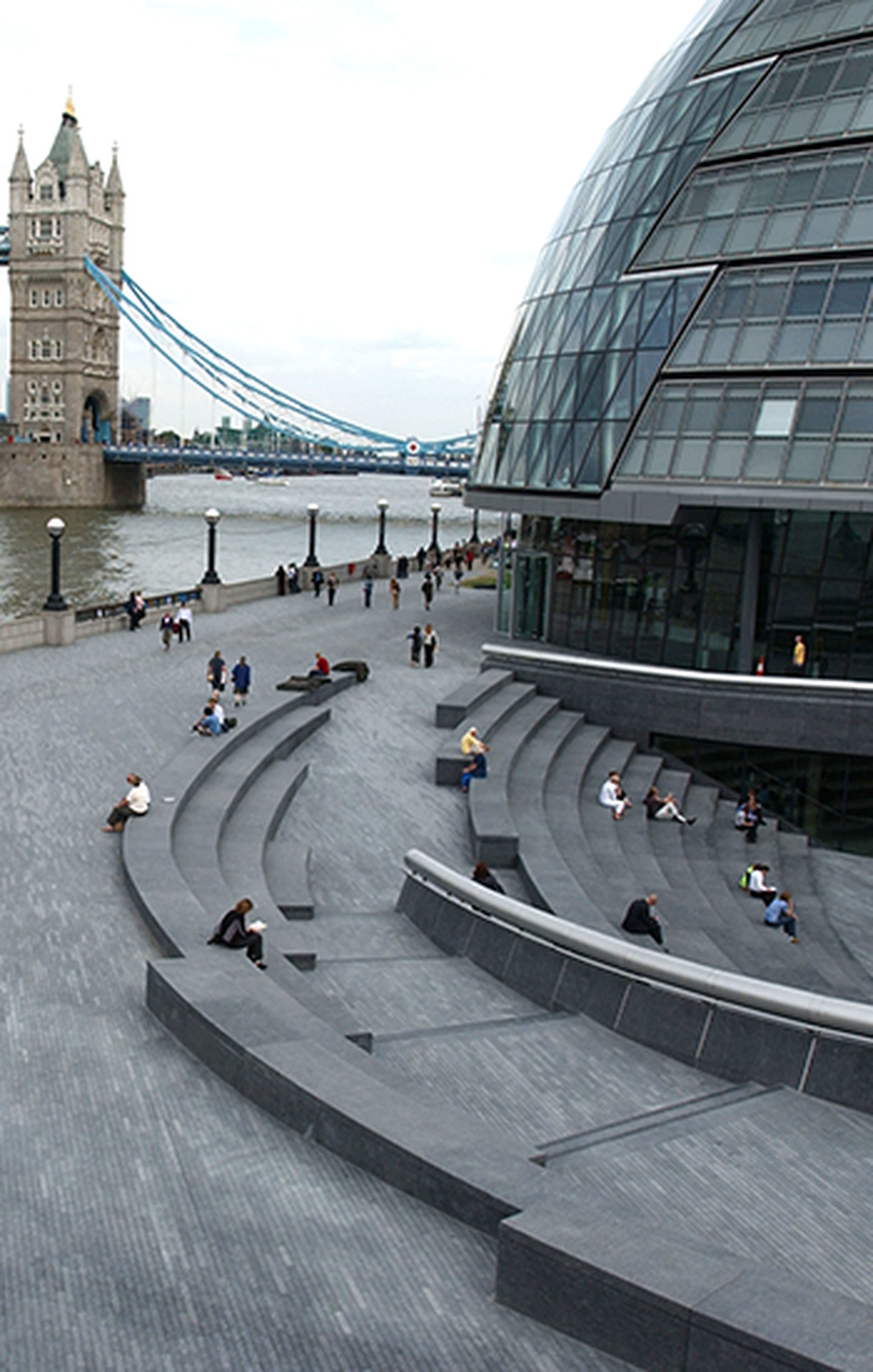
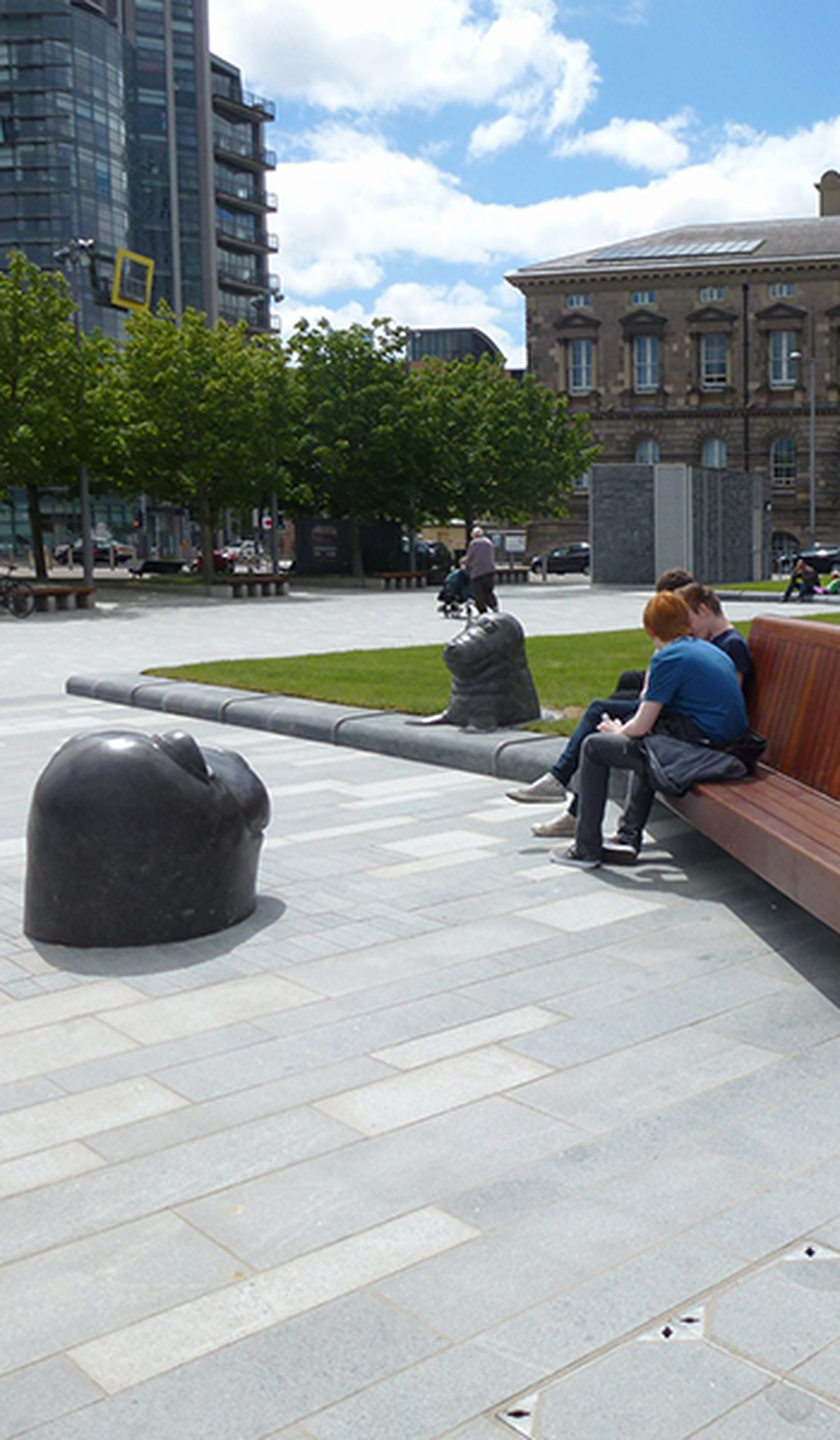
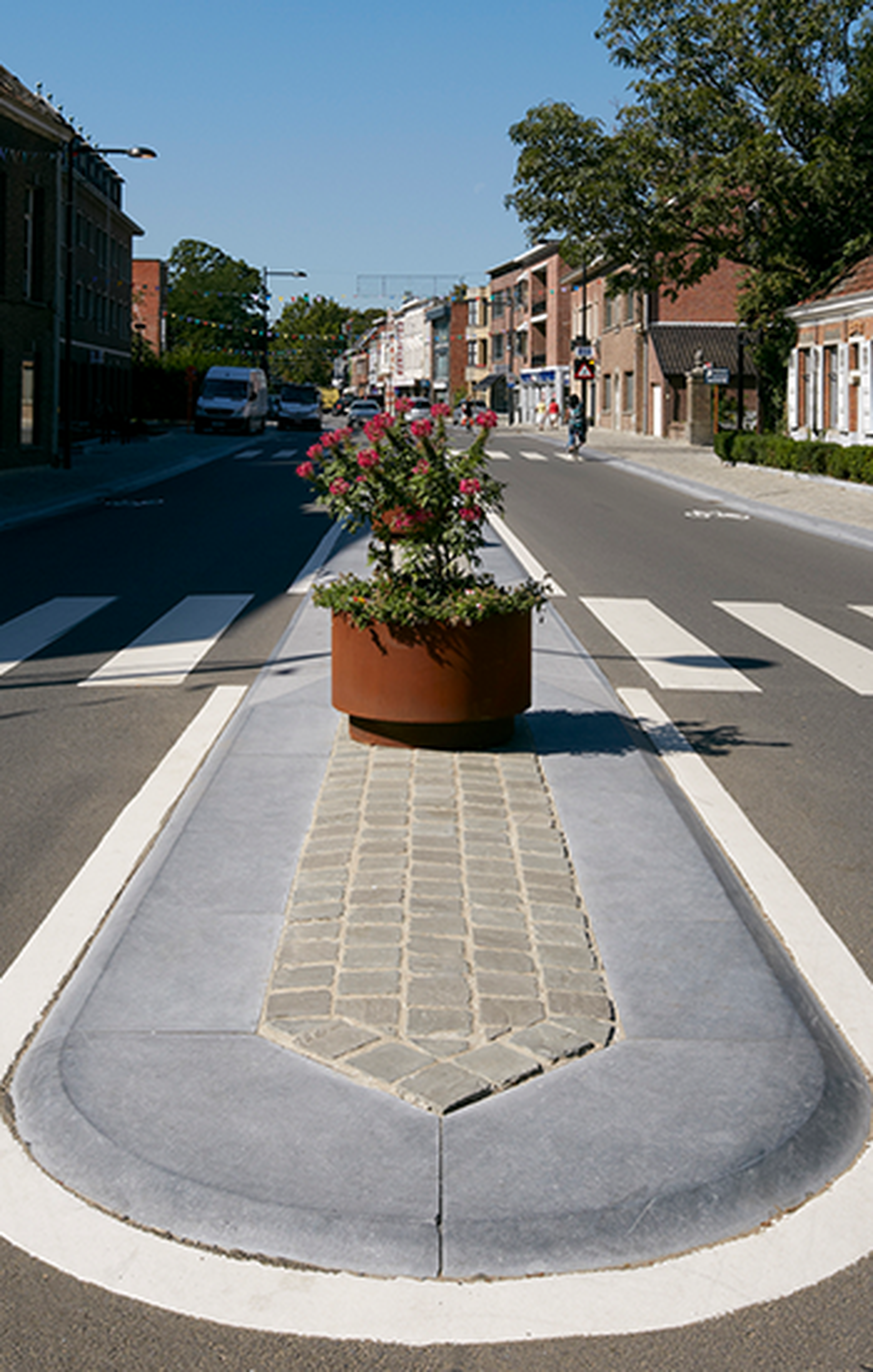
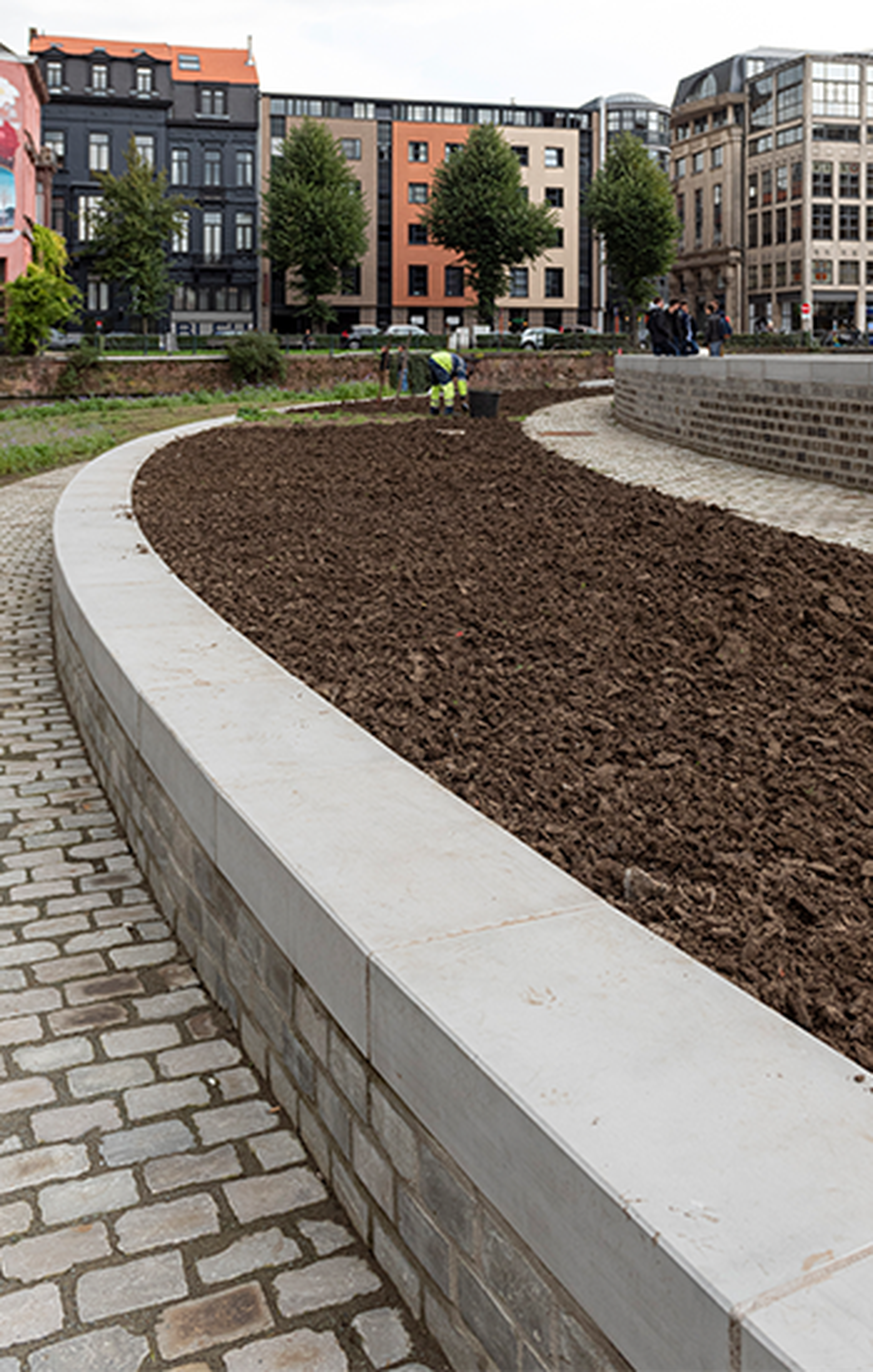
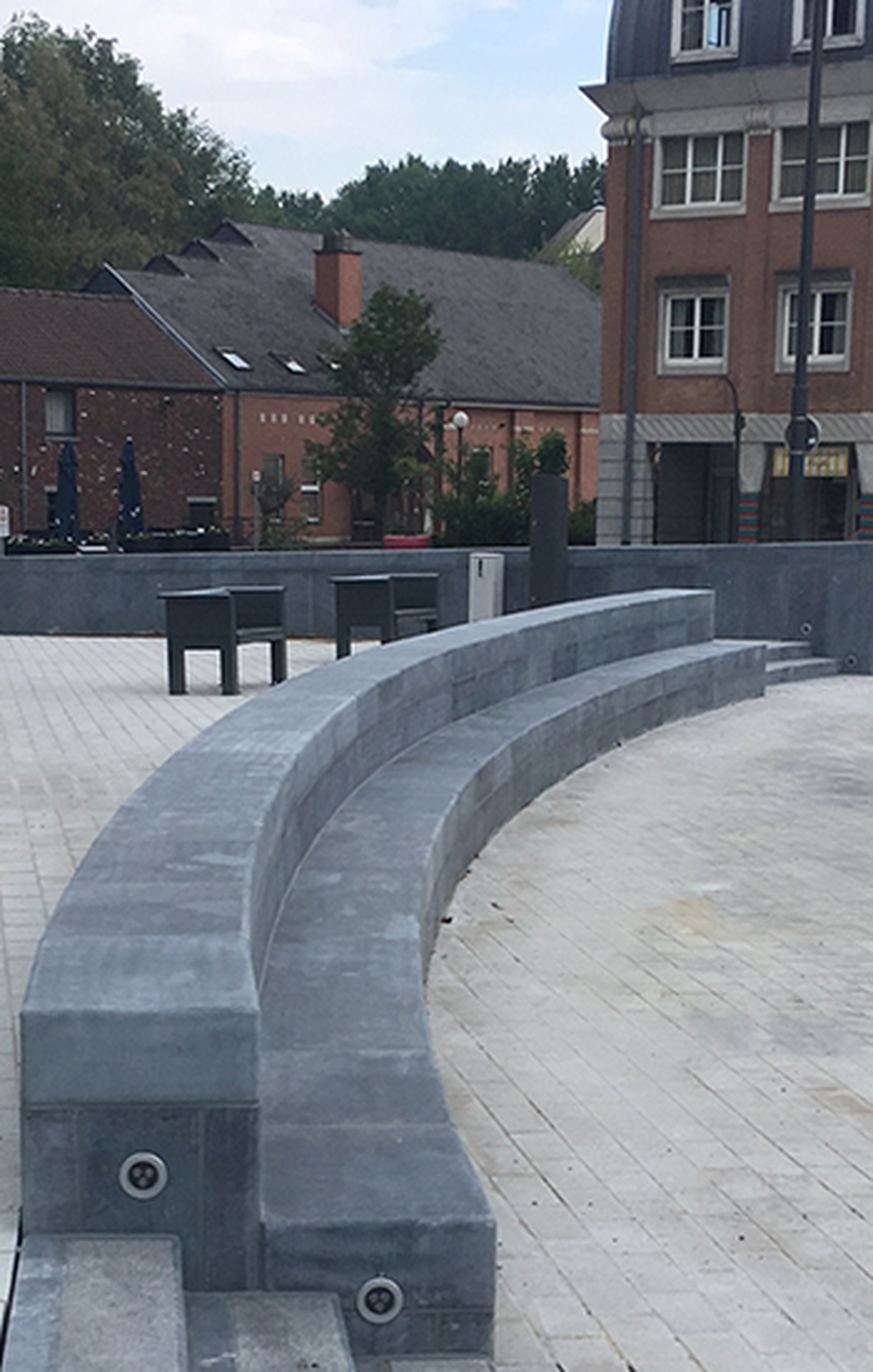
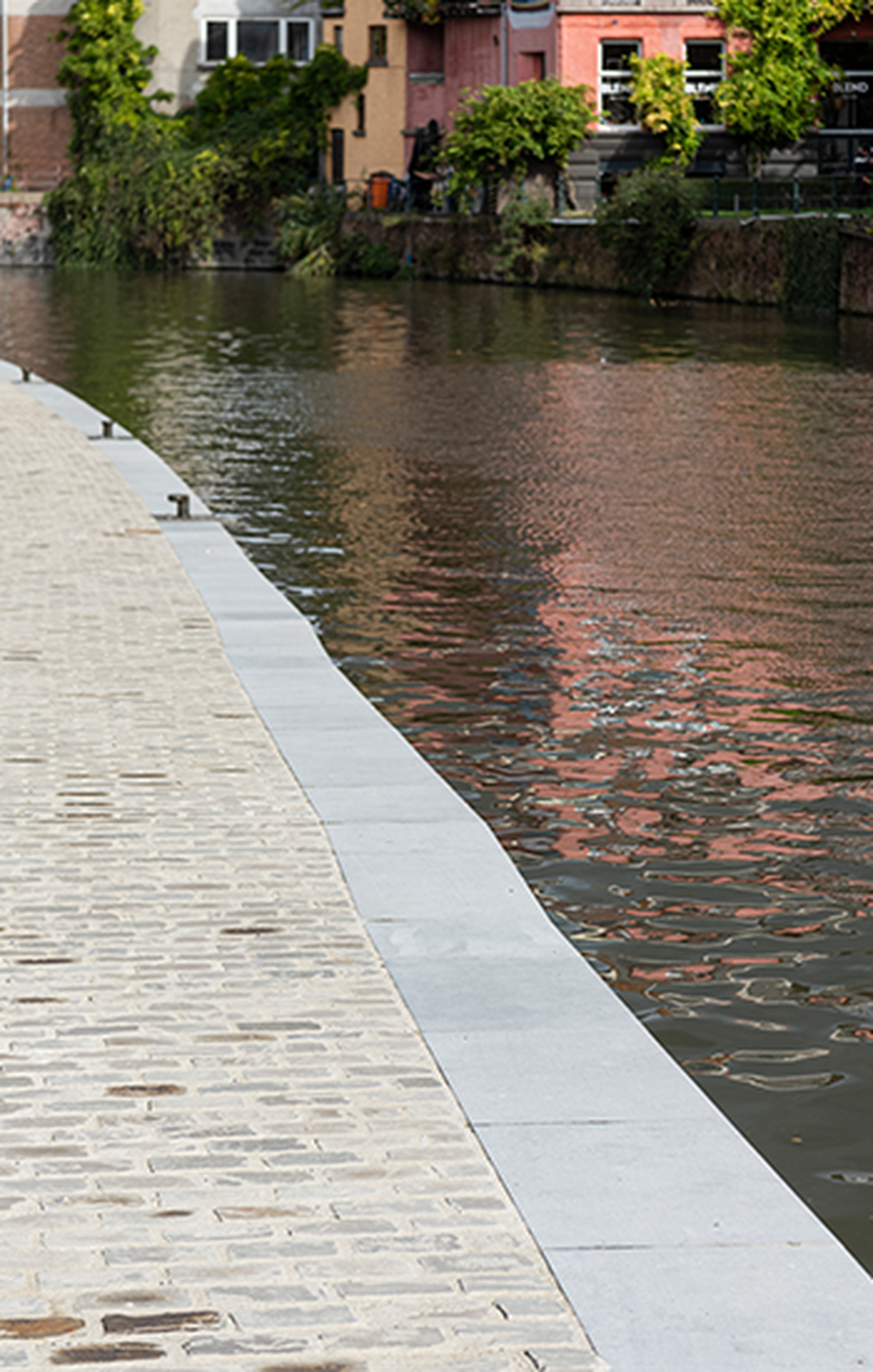
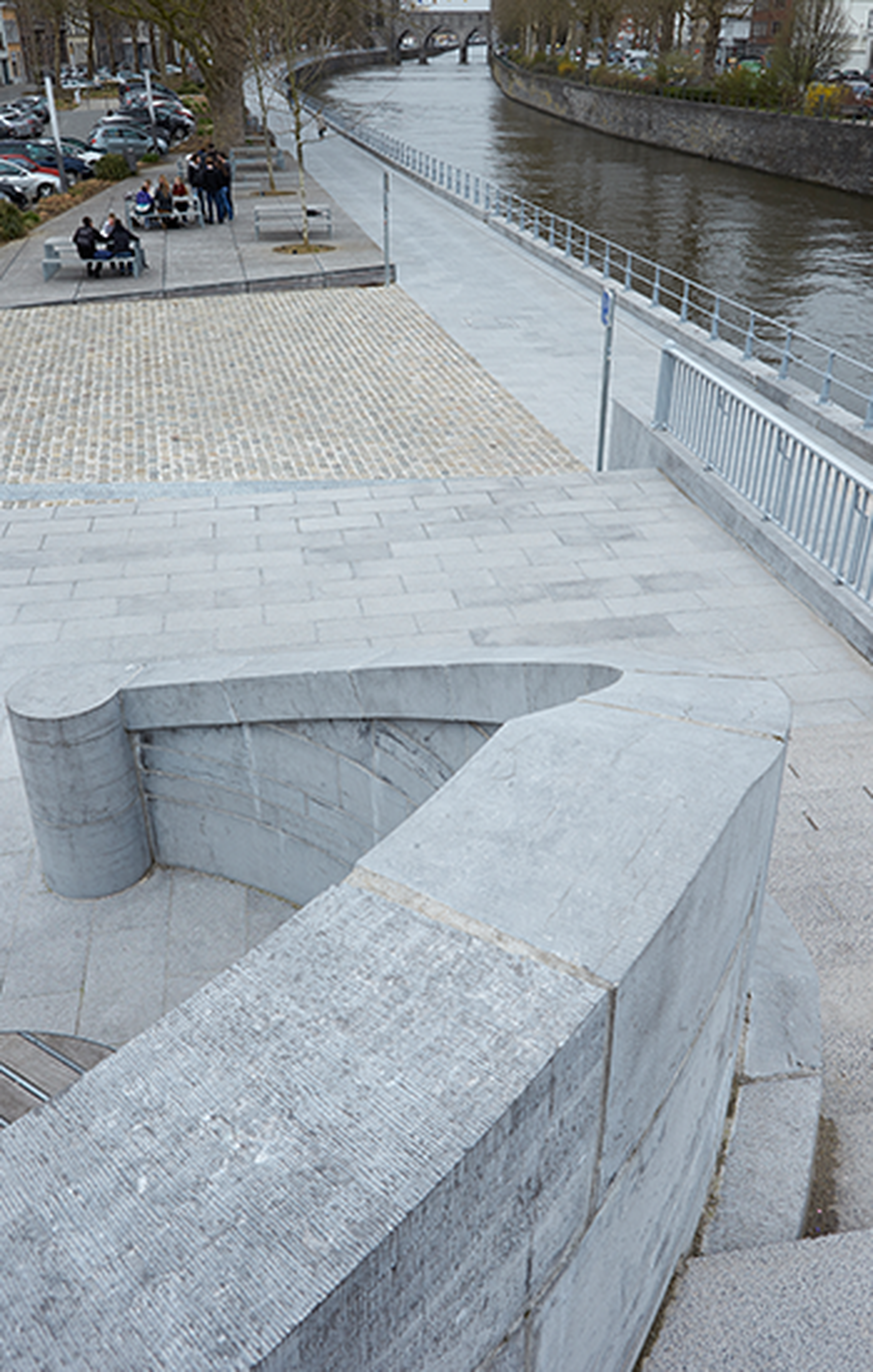
Kilkenny limestone has a strong track record in large-scale urban projects across Europe and beyond, from public squares and streetscapes to civic buildings and infrastructure. The material is regularly specified for paving, kerbstones, steps, capstones, palissades, street furniture and façade cladding, and is available in a range of formats including cube stones, strips and custom-cut elements.
Its hardness and resistance to heavy foot traffic make it well suited to high-use public environments. CE-marked and ATG-certified, Kilkenny Limestone meets the performance standards required for public procurement and civil engineering specifications.
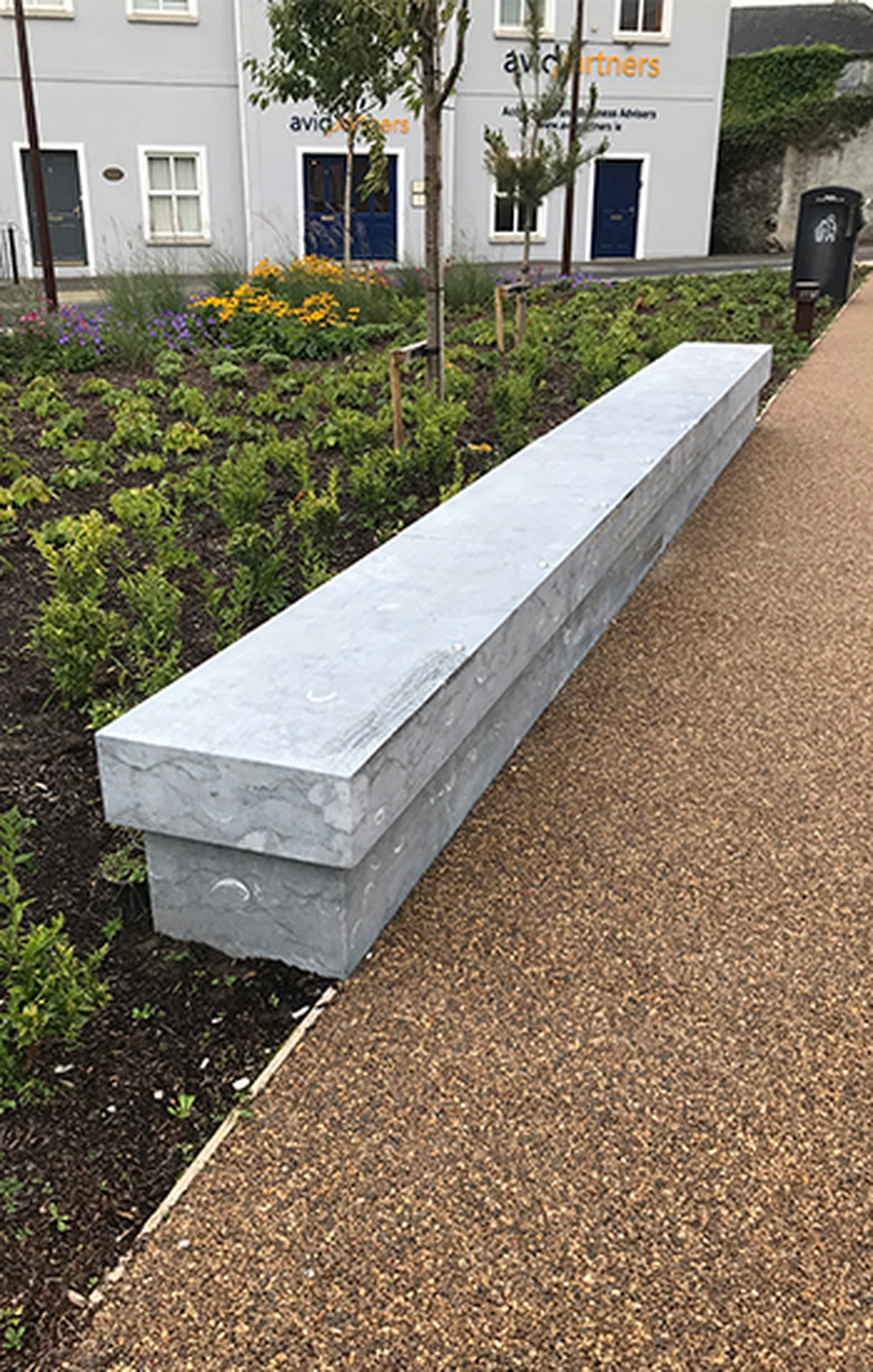
Our blue limestone products












Get inspired
Useful guides
All information on Kilkenny Limestone, Fossil Stone and our products combined in 2 brochures. Download them here!
How to clean, seal and protect a blue limestone kitchen worktop. Step-by-step maintenance guide with product recommendations.