Fair Sandstone: responsible Indian sandstone
From the quarry in Rajasthan to your project
Kandla Grey, Kandla Ochre and Kandla White Beige are among the most popular sandstones for patios, driveways and public spaces. They come from Rajasthan, India, where working and living conditions in the sandstone supply chain are not always what they should be. With Fair Sandstone, Brachot maps its supply chain all the way to the quarry and works with its suppliers on concrete improvements.
What is Indian sandstone?
Sandstone is a sedimentary rock made of sand grains, mainly quartz, bound together by natural minerals. The composition of those grains and binding minerals gives each sandstone its colour, texture and character. Indian sandstone comes mainly from quarries in Rajasthan, one of the world’s largest sandstone regions.
Indian sandstone is popular for outdoor use because it combines a natural, warm appearance with good durability and a wide range of colours. No two pieces are alike: veining, colour shifts and small fossil traces are part of the natural character of the stone.
Kandla Grey, Kandla Ochre and Kandla White Beige
Kandla Grey is one of the best-known Indian sandstones, with calm grey tones that suit both traditional and contemporary designs. Kandla Ochre has warmer, earthy tones, and Kandla White Beige is the lightest of the three.
All three are available in several finishes, such as riven (natural split surface), sawn, sandblasted and tumbled, and in formats such as flagstones for patios and paths, setts for driveways and public spaces, and kerbs, steps and copings.
Where our Indian sandstone comes from
Our Indian sandstone comes from producers in Rajasthan. Between the quarry and your project, the stone passes through factories and cobble yards, where setts are split and dressed. We know the producers in our own supply chain and visit them regularly.
The risks in the sandstone supply chain
Sandstone production in Rajasthan carries known risks: child labour, unsafe working conditions, informal employment and poor housing and sanitation. These problems are not swept under the carpet. They are reported, discussed with suppliers and tackled on site.
How we work: four steps
Transparency. We map our supply chain all the way to the quarry, including factories and cobble yards.
Risk awareness. Together with TruStone and local NGOs, we identify the main risks per site.
Action. We agree on concrete improvements with our suppliers and support them where needed, from drinking water points and safety clothing to the e-Shram card and worker committees.
Monitoring. We follow up on progress through self-assessment by our suppliers and through external parties such as the NGOs Arisa and Manjari.
TruStone in practice: our visits to Rajasthan
To follow up on our commitments, we regularly visit the Rajasthan supply chain of our Kandla sandstone, together with other TruStone members and local NGOs. Each visit shows where progress has been made and where we can still improve.
2026
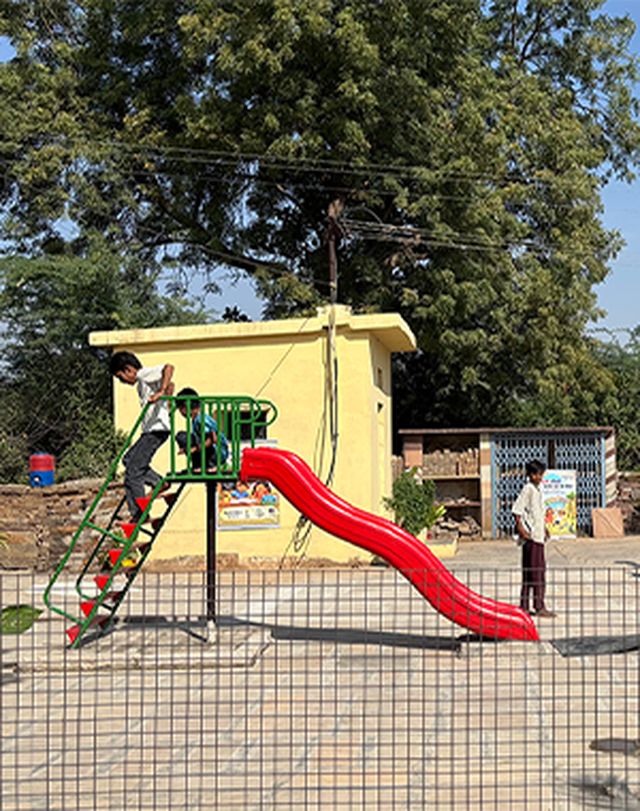
Concrete initiatives for workers and their families
Brachot returned to Rajasthan with other TruStone members, Arisa and Manjari to further map the sandstone supply chain. Producers in our own supply chain showed concrete initiatives, from a school playground to a sewerage system at a housing project.
2025
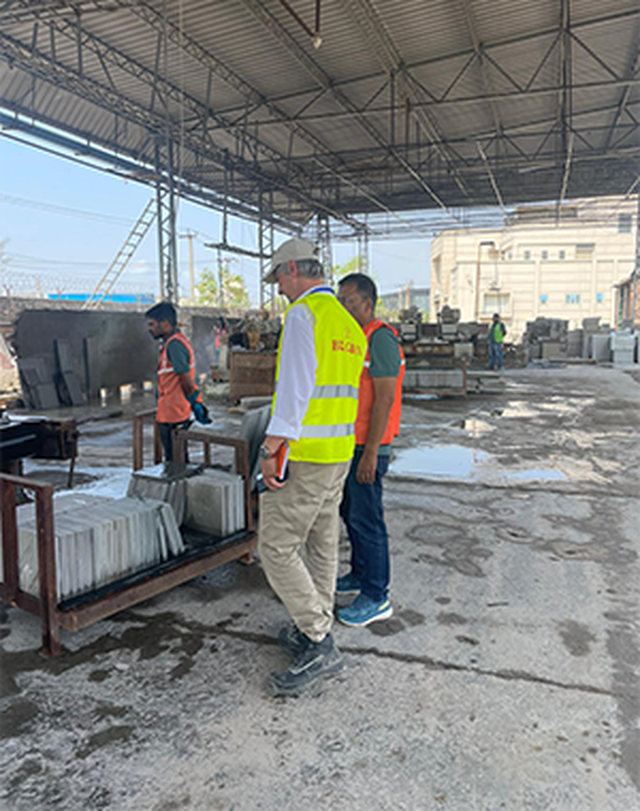
Better workplaces in our own supply chain
Together with another importer, Arisa and Manjari, Brachot visited quarries, factories and cobble yards in its own supply chain. We saw the results of risk analyses, training sessions and newly elected worker committees.
2023
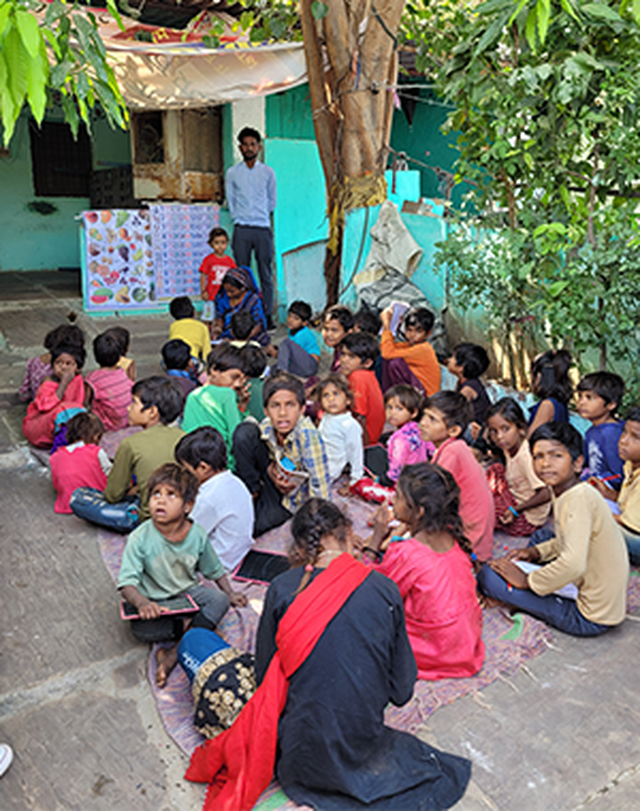
The start of an open dialogue
Brachot joined a TruStone multistakeholder dialogue with importers, NGOs and Indian producers on working conditions in sandstone production. We also visited the community centre in Budhpura that Brachot supports through the No Child Left Behind project.
Responsible sandstone in your project
Responsible sourcing is increasingly part of tender specifications from municipalities and engineering consultancies. Brachot can support your project with its IRBC policy statement and Code of Conduct. Contact us to discuss the requirements of your project.
Inspiration

Brachot signed the TruStone Initiative in May 2019. Within this covenant, the Flemish and Dutch natural stone sector works with governments, NGOs and trade unions towards responsible natural stone from countries such as India and China.
Frequently asked questions
Not by default. Sandstone quarrying in Rajasthan carries known risks, such as child labour, unsafe working conditions and informal employment. What makes the difference is whether an importer knows its supply chain and works on these risks continuously. Brachot’s Kandla sandstone comes from our own supply chain in Rajasthan, where we work with our suppliers within TruStone on better working conditions, such as transparency of employment and wages, drinking water and worker committees. We visit our supply chain regularly to follow up on progress.
Indian sandstone is a natural sedimentary stone, quarried mainly in Rajasthan. It is widely used for patios, paths, driveways and public spaces thanks to its natural appearance, durability and range of colours, such as Kandla Grey, Kandla Ochre and Kandla White Beige.