Trends 2026: Sustainable Choices, Curves & Contrast
Natural stone, quartz and porcelain surfaces shaping a more sensory, future-proof interior.
The role of natural stone in architecture and design is evolving rapidly. While the material was often used as a finishing touch in the past, today we see a clear shift towards natural stone as a fully-fledged building material. In 2026, natural stone represents sustainability and long-term value, as well as sensory appeal. These qualities are becoming increasingly important in both residential and public projects.
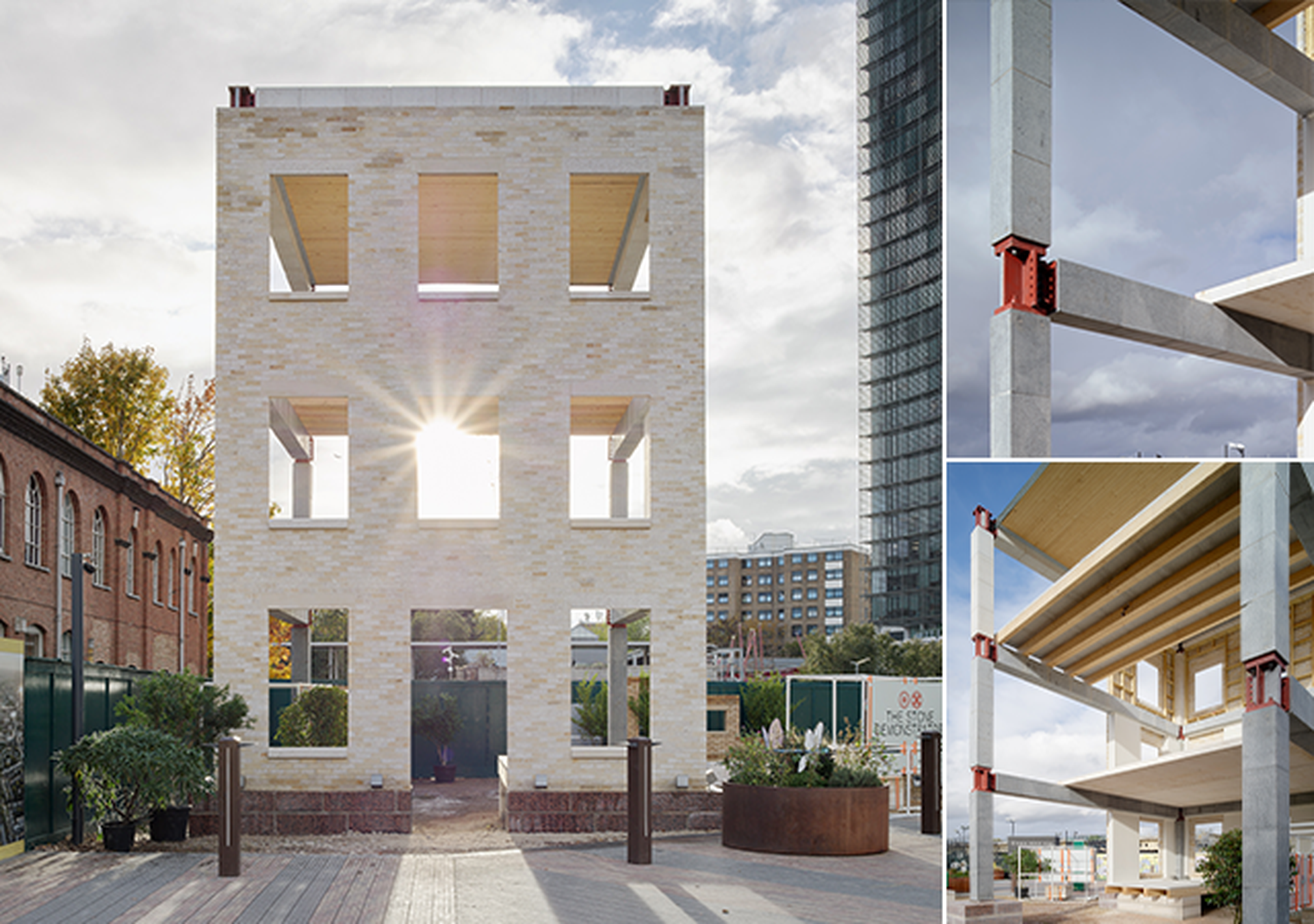
The Stone Demonstrator - © Photography by Bas Princen
Natural stone is widely recognised as a low-carbon option when sourced responsibly and used with minimal processing. Unlike many other materials, it does not require energy-intensive steps such as heating.
An inspiring example is The Stone Demonstrator in London, a research project that shows how natural stone can be used structurally in contemporary architecture. By building with solid stone elements, the project highlights the growing role of structural stone in reducing carbon within the built environment. This three-story structure reduces carbon emissions by up to 90% compared to steel and 70% compared to concrete, showcasing how innovation and sustainability can coexist.
This opens new perspectives for natural stone in urban development: not just as a decorative finish, but as a durable, load-bearing and circular solution with an exceptionally long service life.
Rounded Kitchen Worktops and Organic Shapes: The Return of Softness
A trend that will continue in 2026 is the growing use of organic, rounded, and oval shapes. What we saw last year in outdoor spaces, for example in free-form layouts and crazy paving, is now finding its way into interiors. It ties in with a broader desire for comfort, warmth and a sense of security.
In kitchens, this translates into rounded countertops, oval islands and smooth transitions between worktops and splashbacks. Natural stone, as well as porcelain surfaces, are particularly well suited to this, combining aesthetics with durability.
The inspiration partly comes from the seventies, but with a contemporary twist: the same playfulness and curves, executed in sustainable, low maintenance, and future-proof materials. Dark and earthy tones enhance the effect and align perfectly with what is often called modern minimalism: clean in shape and lines, rich in experience. This trend also builds on the Japandi style, which has remained popular in recent years thanks to its calm, balanced feel and minimalist character.
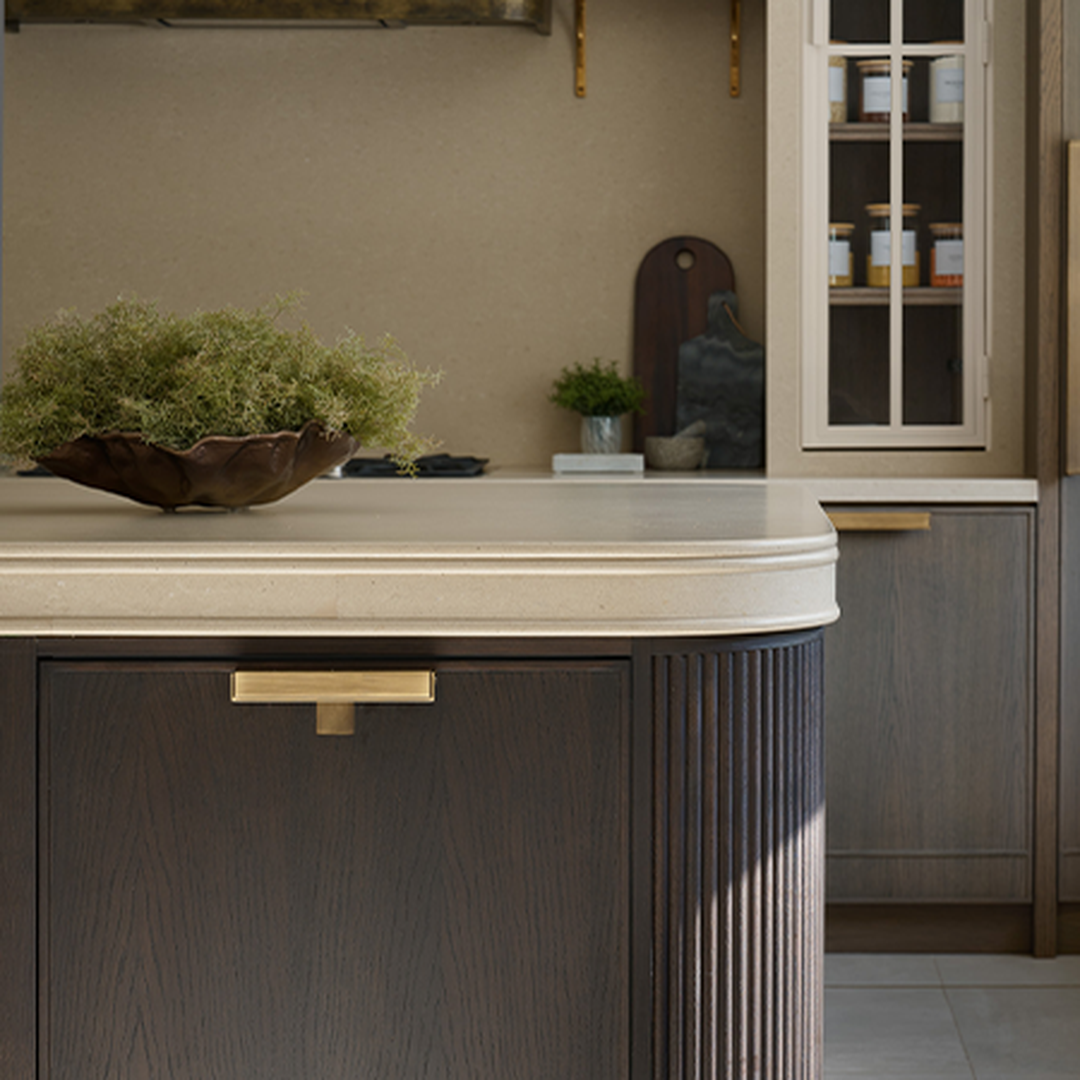
Rounded Kitchen Worktop in Unistone Sinai Pearl
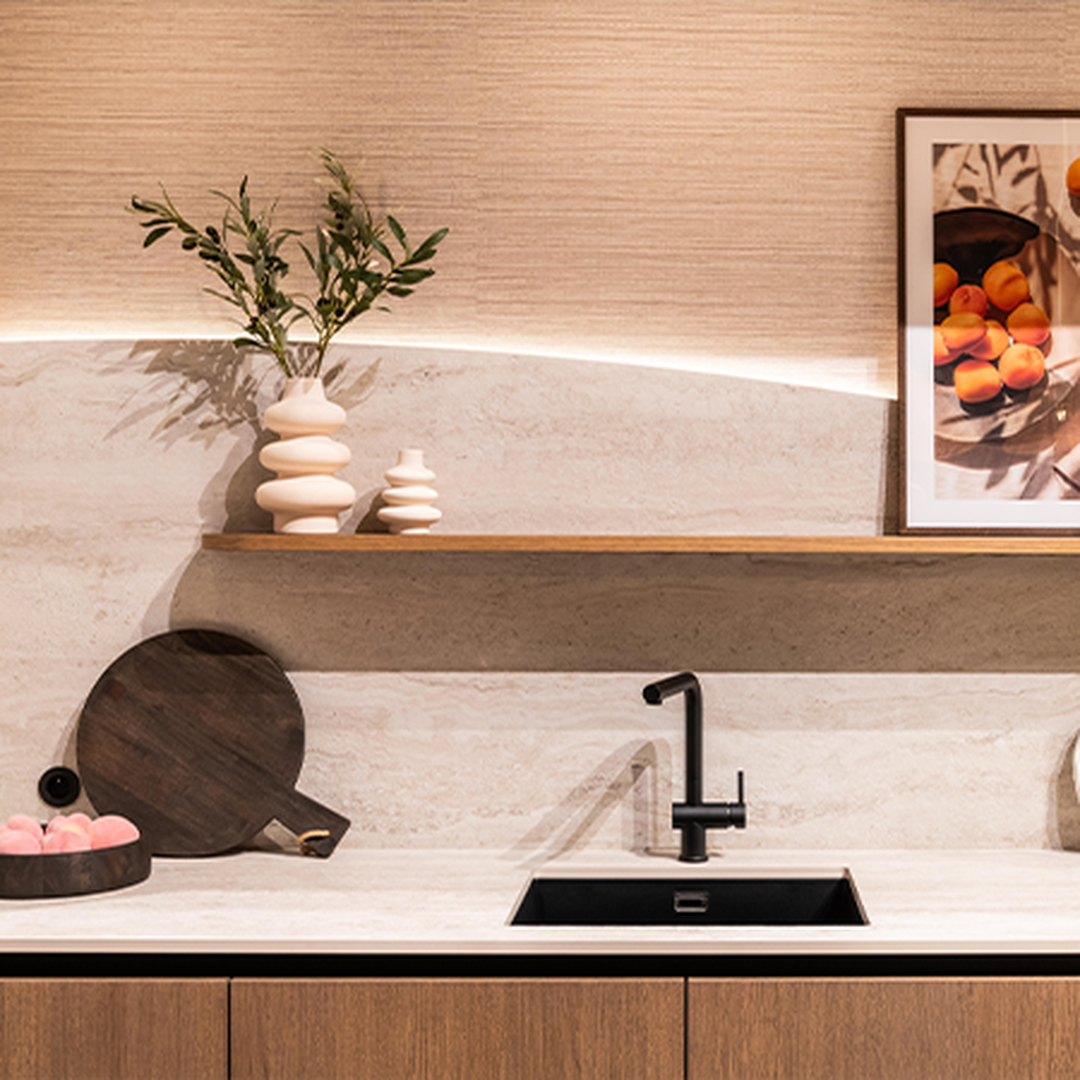
Rounded Splashback in Uniceramica Travertino Classico
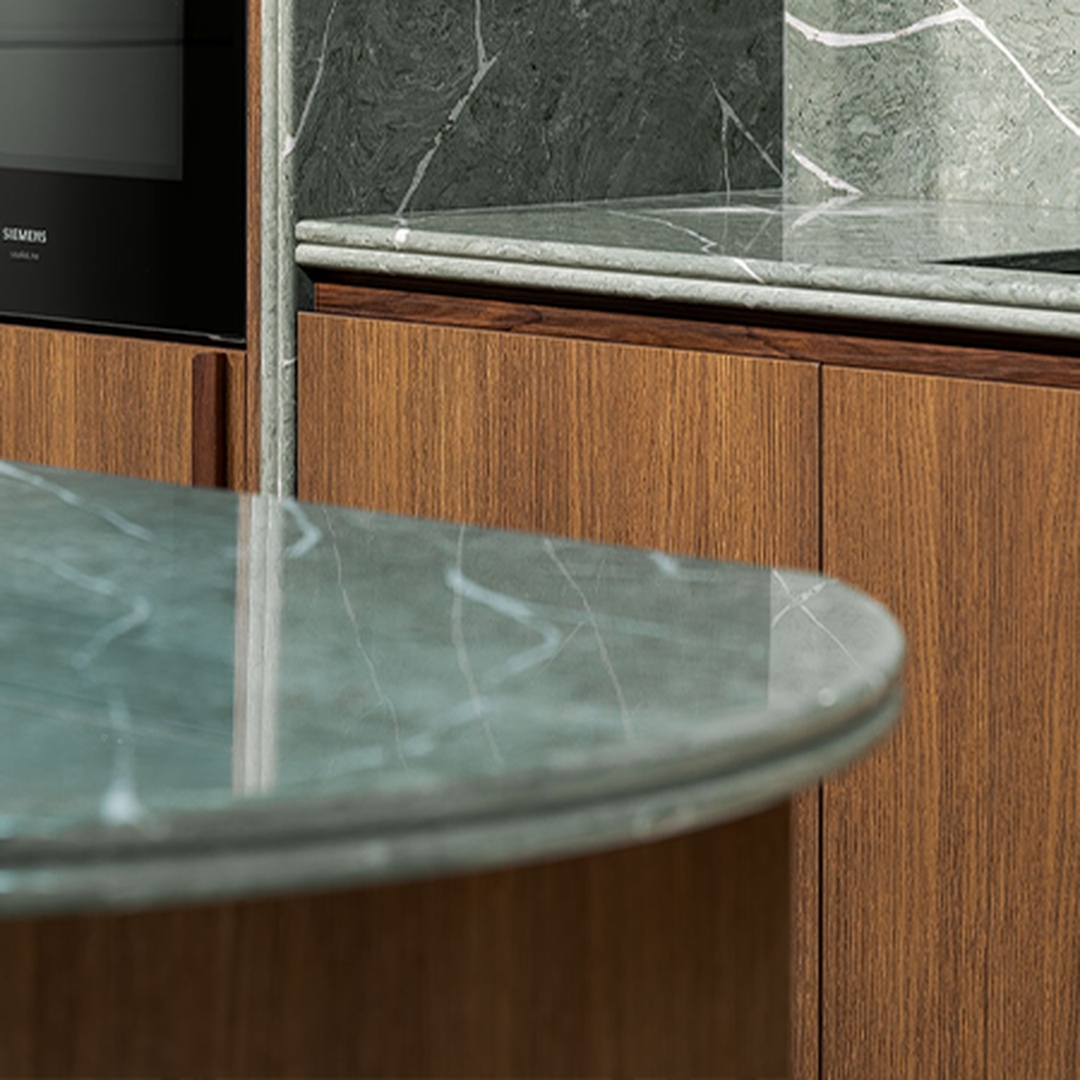
Rounded Kitchen Worktop in Unistone Vitoria Regia
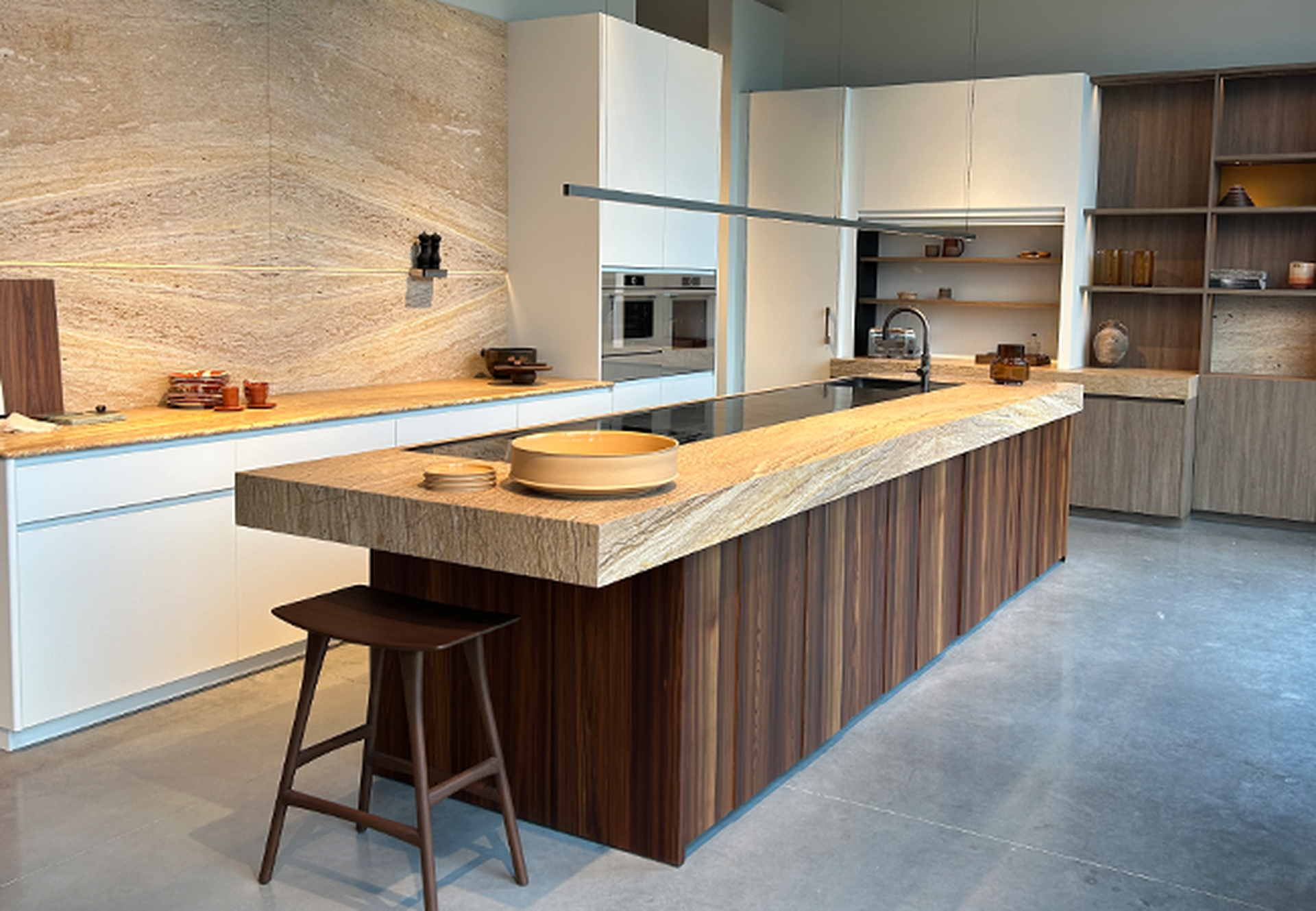
Kitchen Worktop & Splashback in Travertino Walnut
In 2026, the focus is shifting from purely visual perfection to sensory experience. Materials should not only look beautiful, but also invite touch. This is known as tactile living: an approach that values surfaces that stimulate the senses through texture and a natural appearance. Natural stone plays a key role in this evolution.
Travertine is a strong example. Thanks to its characteristic pore structure, formed by natural deposits and cavities over time, the stone has a lively, tangible feel. Natural stone finishes such as sensato and arenado or strutturata in porcelain travertine variants enhance this tactile character even further. Soft beige and cream tones add warmth, making stones such as Pietra Bicci and Sinai Pearl especially popular.
This focus on touch makes interiors feel more grounded and homely, a counterbalance to our increasingly digital lives. Rounded shapes, softer finishes and light colour accents, as discussed earlier, all contribute to an interior that conveys calm and comfort.
White Worktop, Characterful Kitchen Island
In 2026, kitchens embrace contrast with light, often white worktops paired with eye-catching elements in warm, focused tones. Deep green, ruby red, ochre brown, rich wood, or distinctive designs like Uniceramica Patagonia appear on cabinet fronts, modules, or details, creating elegance and balance. The neutral worktop brings calm, while the accent elements add depth and character, resulting in a kitchen that feels both fresh and inviting.
This trend aligns perfectly with the Pantone's Color of the Year 2026: Cloud Dancer, a soft, airy white associated with calm, clarity and quiet reflection. Paired with dark or earthy materials, it creates a strong contrast that balances refinement with warmth.
Read More About White Kitchen Worktops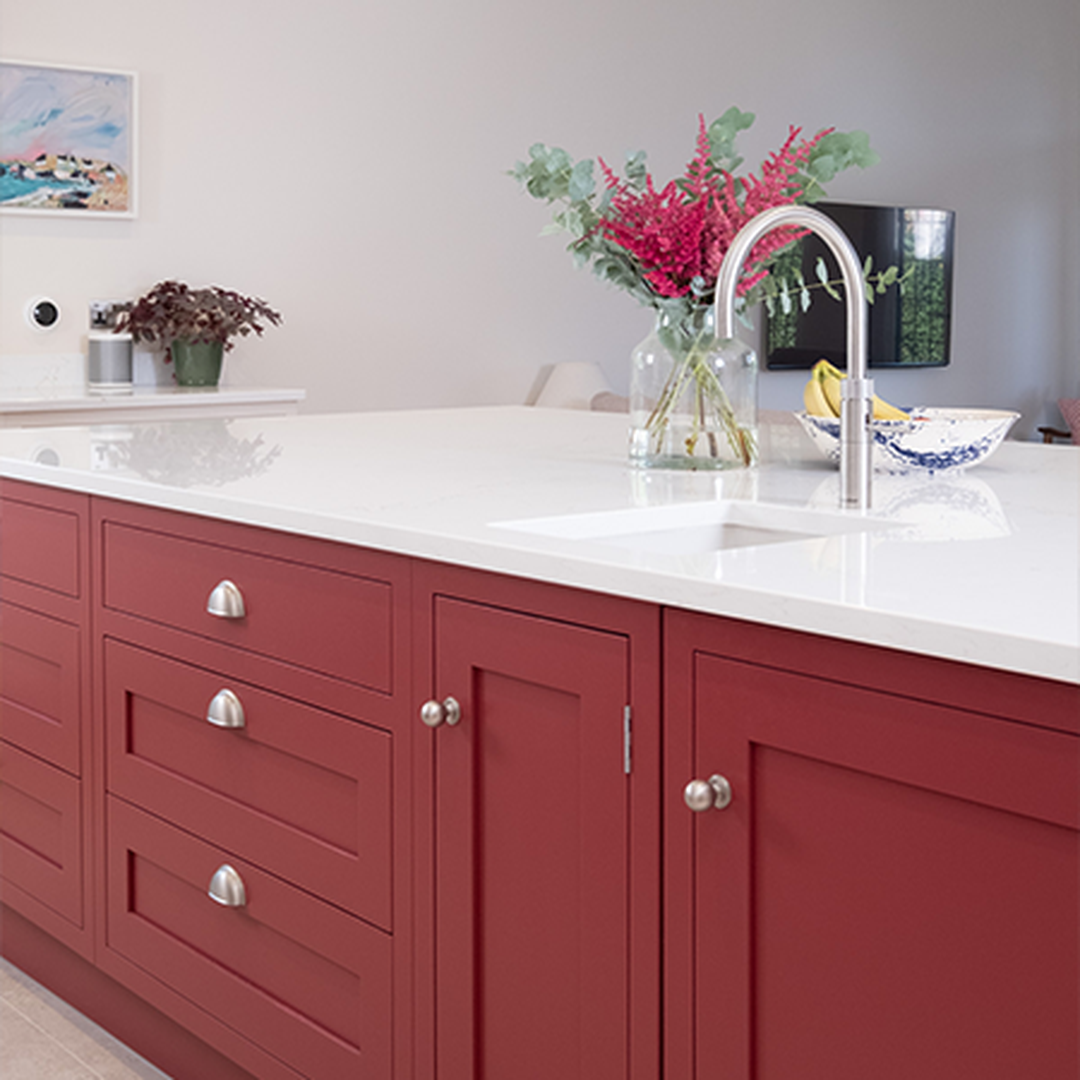
Red Kitchen Island, Worktop in Unistone Misterio Gold
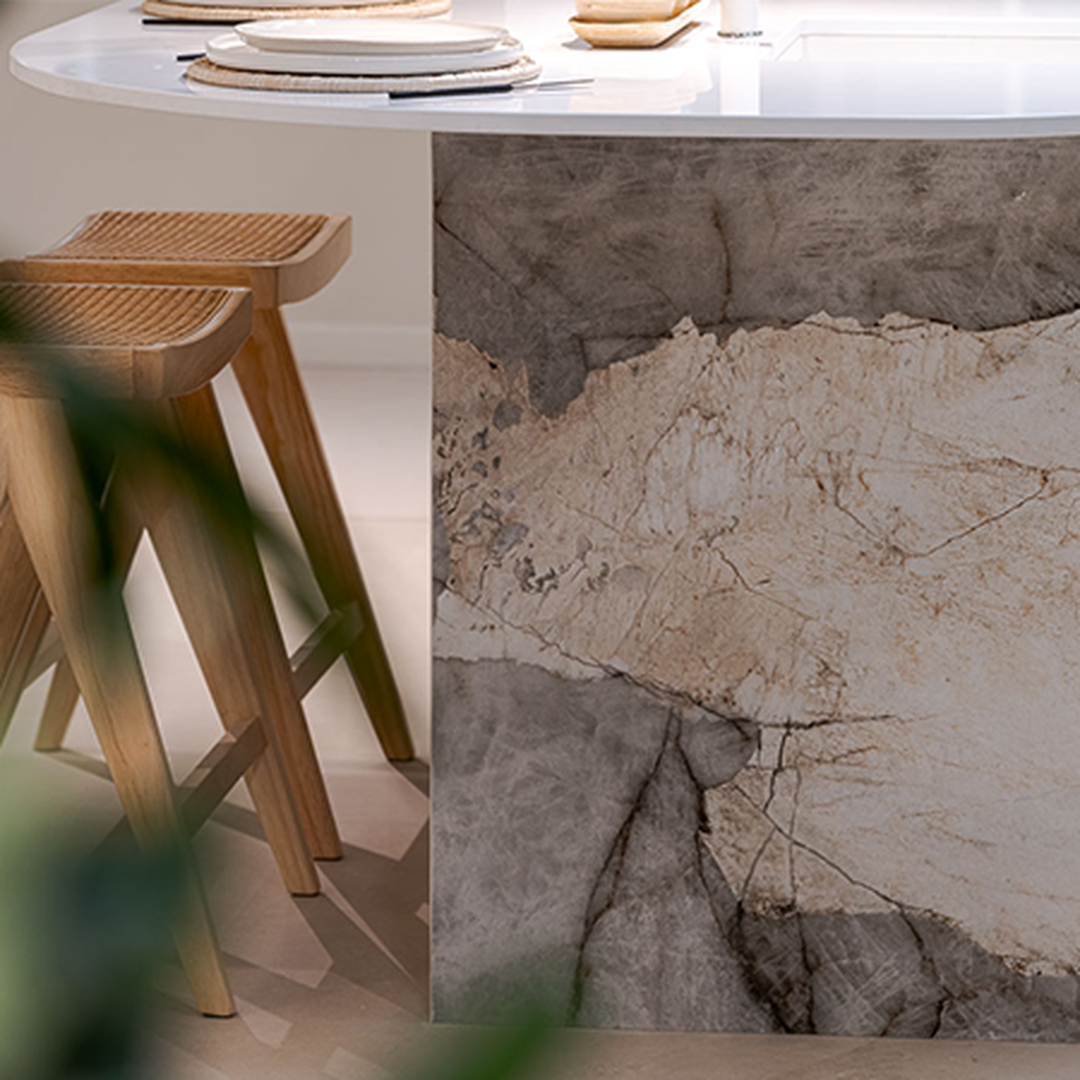
Kitchen Island in Uniceramica Patagonia, Worktop in Unistone Bianco Extreme
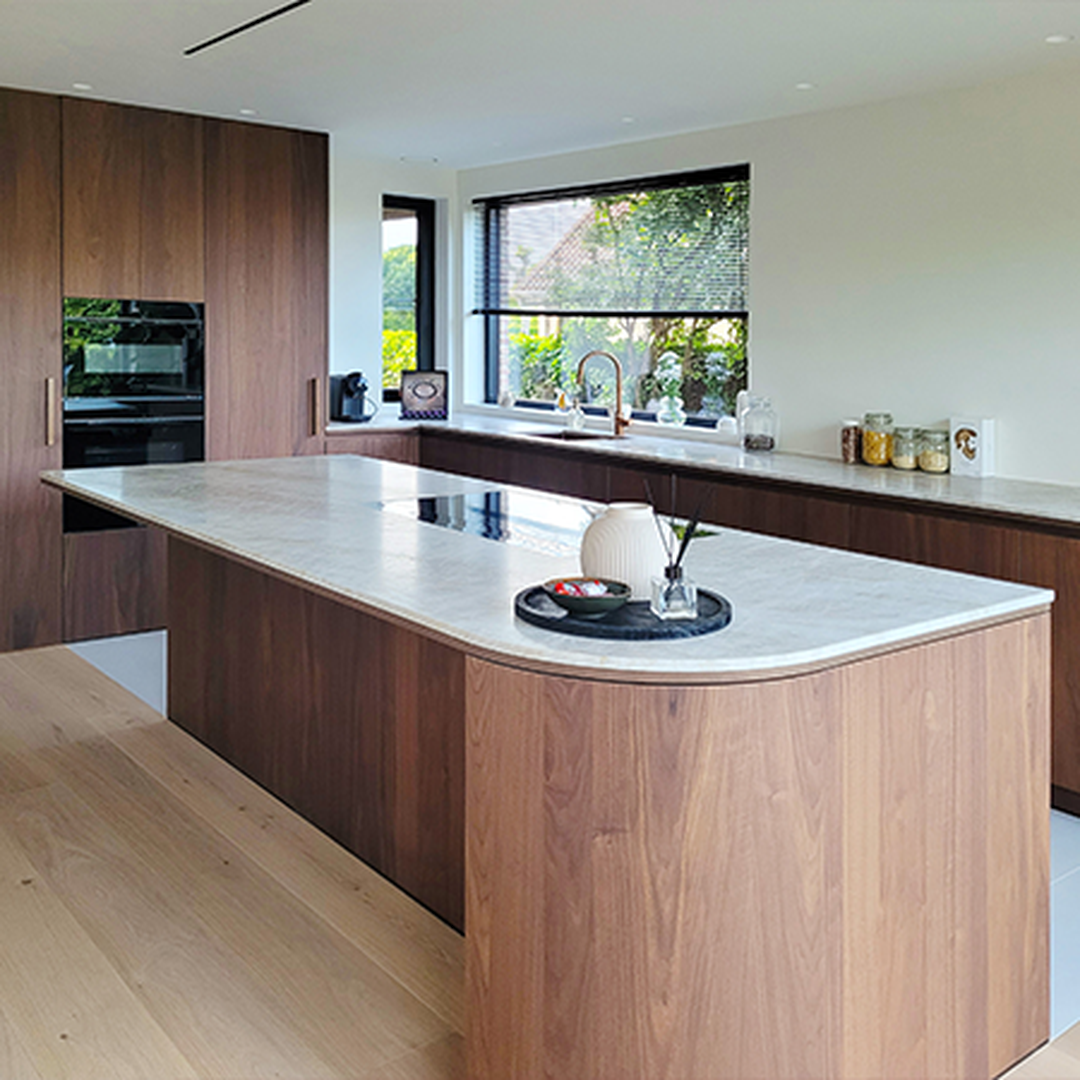
Kitchen Island in Wood, Worktop in Taj Mahal Quartzite
Earthy Tones Remain a Guiding Principle
The shift towards earthy and deeper tones will continue in 2026. Paired with organic shapes, these colours highlight the natural character of stone and bring warmth and depth to kitchens and living spaces. Think brown, sand, terracotta and deep greens, especially striking when combined with wood.
Trend Materials:
This palette also links seamlessly to Taj Mahal. With its warm beige base, delicate veining and layered texture, Taj Mahal fits naturally within the move towards soft, organic tones. Whether chosen in natural stone or in engineered alternatives, it brings a calm, luxurious feel and a warm counterbalance to darker, earthy materials.
At the heart of the trend is the white-beige, fine-grained quartzite with beige veining and a layered structure, available in a polished or letano finish. But other variants are also very popular. And the range keeps growing in popularity, with options such as Taj Mahal Uniceramica (full-body porcelain slabs), Taj Mahal Unistone (quartz) and Taj Mahal BQS (quartz), the latest addition, featuring a soft beige tone and a subtle white-beige vein pattern.
It shows how this enduring trend effortlessly adapts to different styles, applications and budgets, from kitchens to bathrooms, and from minimalist to warm and inviting interiors.
View All Our Taj Mahal Materials:
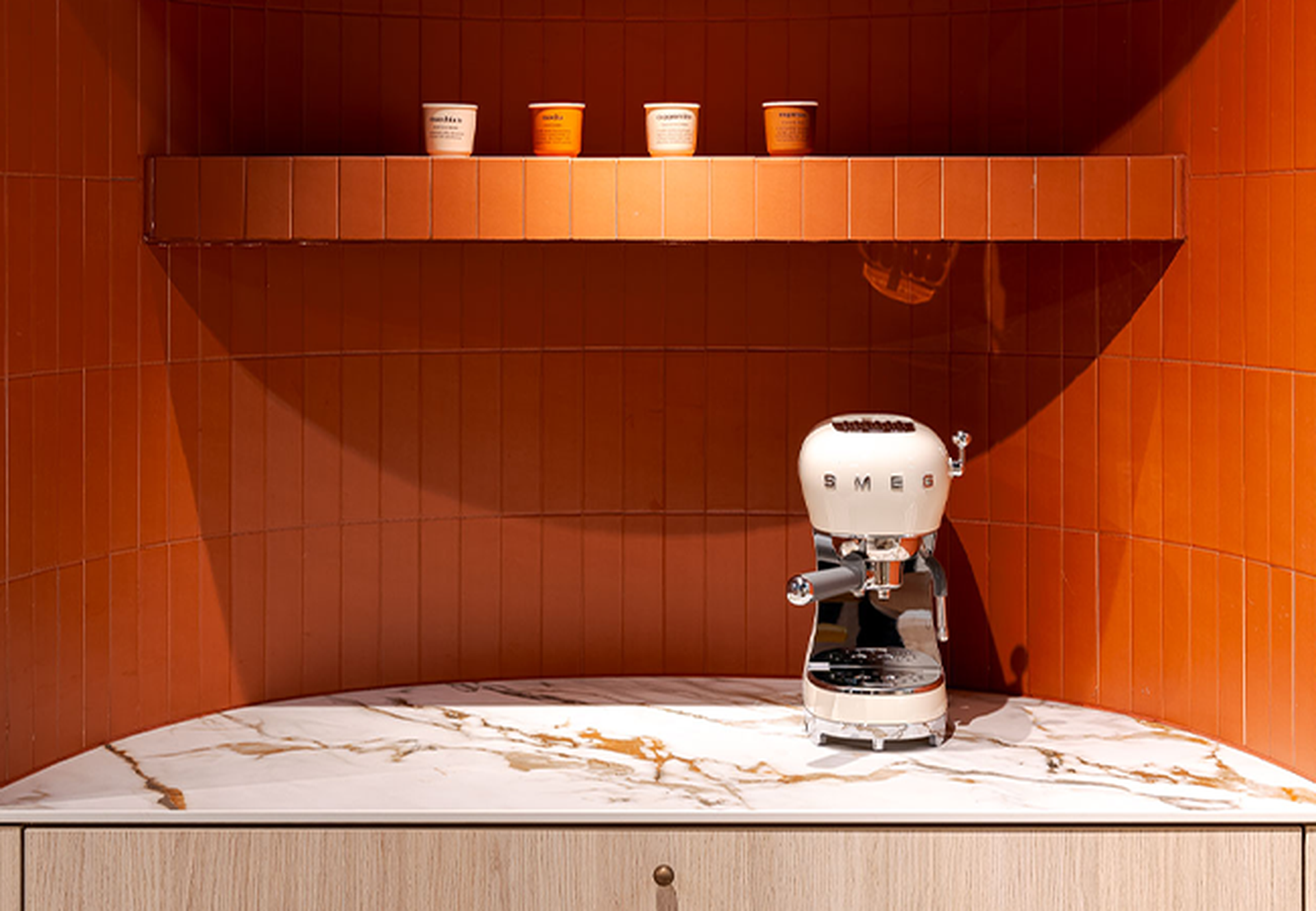
Kitchen Worktop in Uniceramica Capraia
A refined yet eye-catching application is pairing a natural stone worktop with a splashback in smaller tiles, whether colourful, tonal or handmade-look. It adds rhythm and texture, and brings a playful accent without disturbing the overall calm of the space.
Smaller tiles also create a beautiful contrast with the solid, continuous surface of stone. Think glossy mosaics, terracotta pieces, zellige-style tiles or subtle earthy tones that echo the warm palette we discussed earlier. The result feels layered and welcoming, while still staying elegant.
A good example is a porcelain worktop in Uniceramica Capraia, combined with a splashback of small, warm-toned tiles. The accent colour is subtly repeated across the space, which reinforces the character of the slab and creates a balanced mix of refined elegance and contemporary expression.
Biophilic Design: an Emotional Connection With Nature
In 2026, biophilic design continues to evolve, moving beyond plants and greenery to the way architecture and materials create a natural experience.
Rounded shapes, organic textures, and materials like natural stone, often paired with wood or darker tones, respond to their context, harmonizing with the surrounding space and enhancing the sense of place. This approach fosters an emotional connection between people and their environment, supporting wellbeing while aligning with the sustainable ambitions of contemporary design.
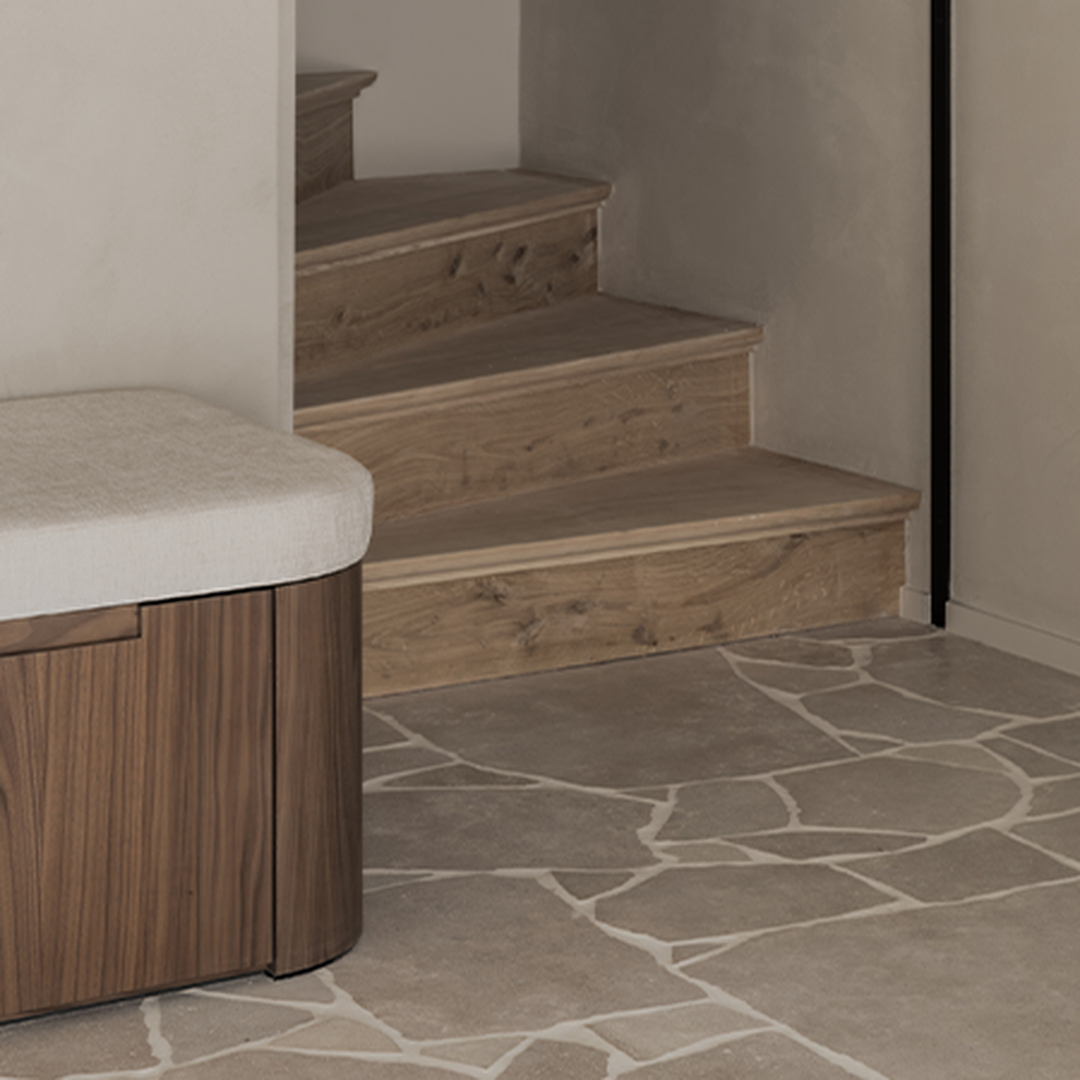
Crazy Paving in Sinai Pearl
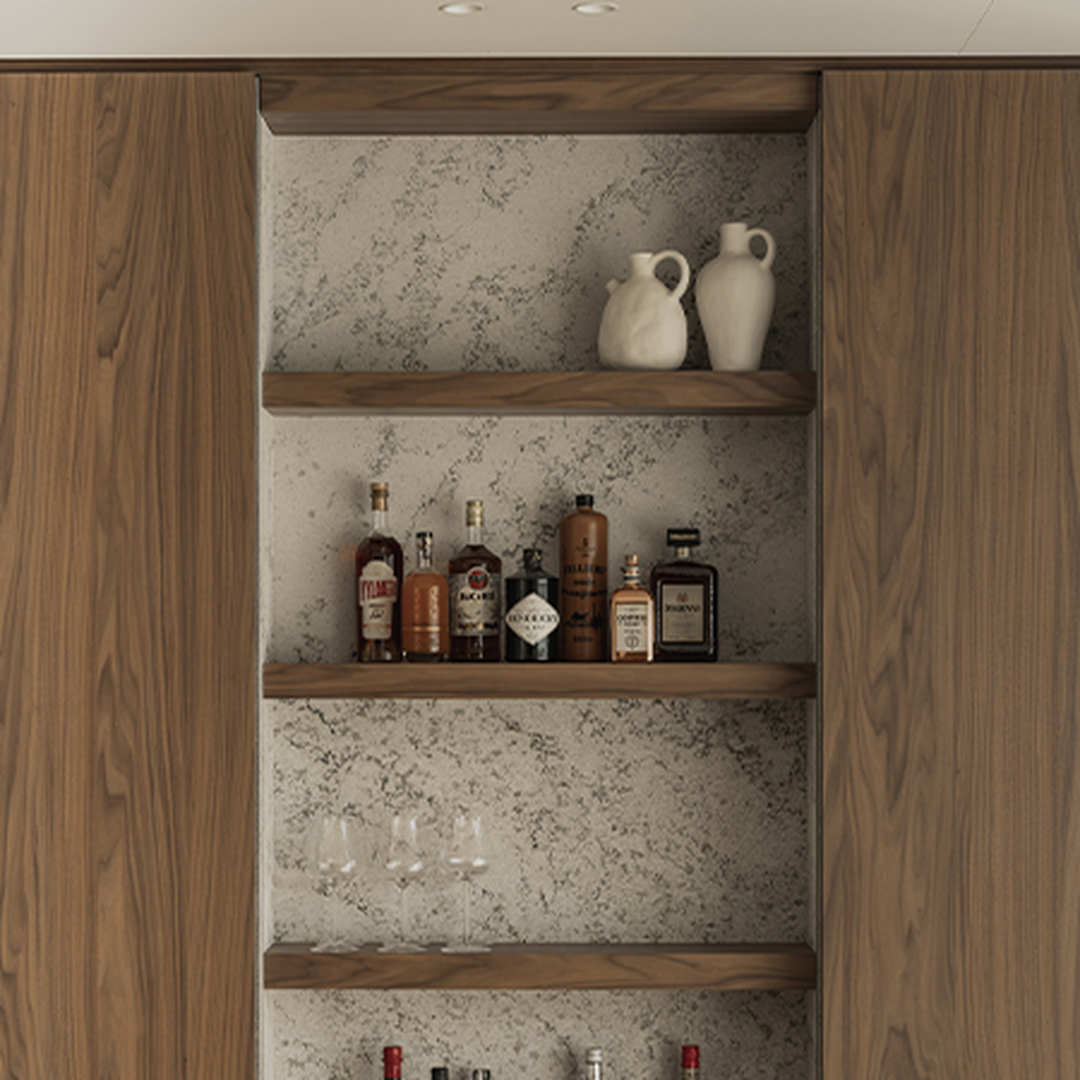
Wall Cladding in Muschelkalk Mooser
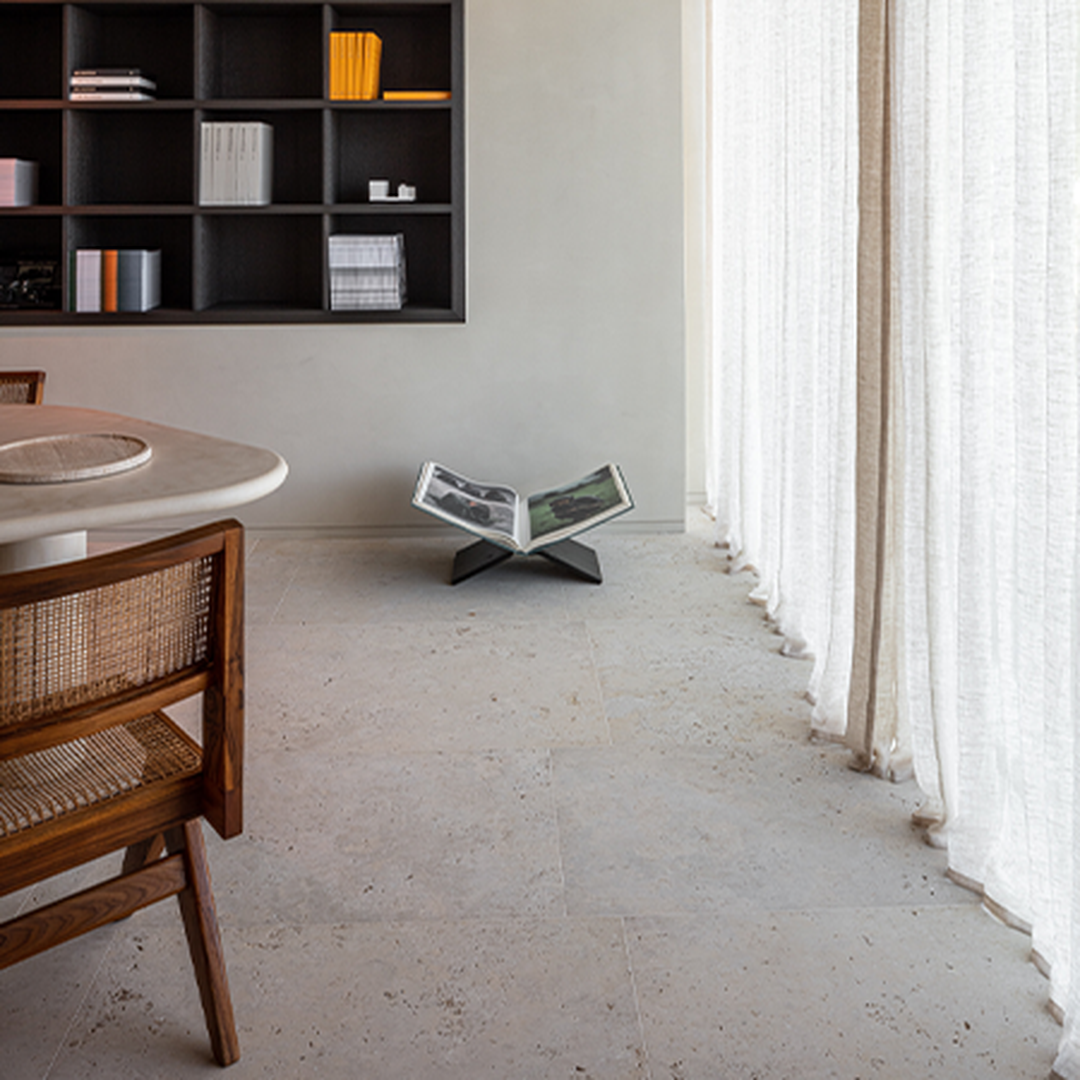
Indoor Flooring in Pietra Bicci
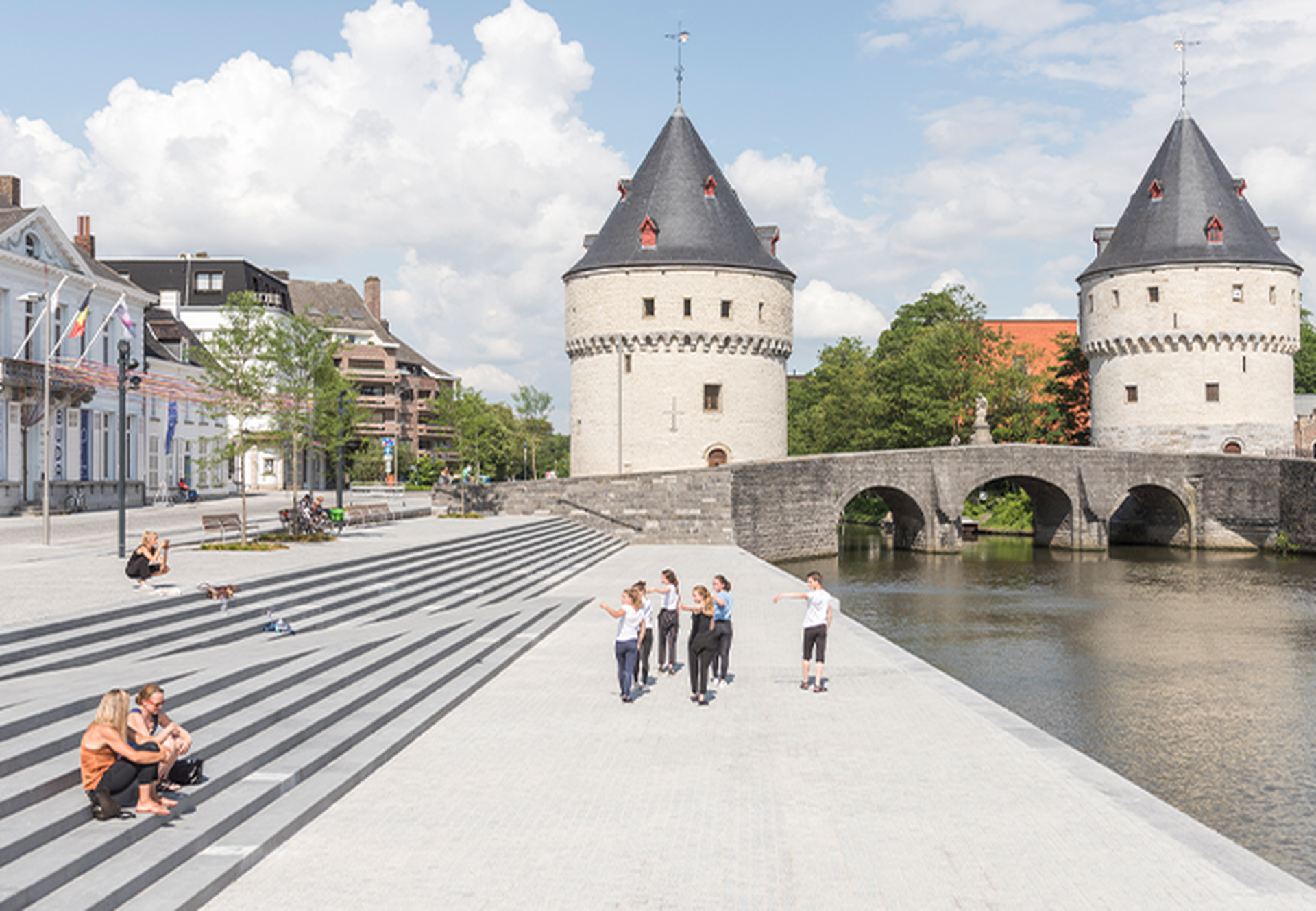
Pepperino Dark - Leieboorden, Kortrijk
Natural Stone In Public Spaces: Water, Cities and Sustainability
Natural stone is playing an increasingly important role in public space. More and more cities are giving room back to water, creating accessible squares and climate-resilient streetscapes; contexts where natural stone fits naturally thanks to its robustness, slip resistance, authencity and long service life.
Projects along rivers and waterways don’t just upgrade the cityscape; they also support biodiversity, comfort and climate adaptation. In Belgium, examples include the Cityriver project in Ostend, where Pepperino Dark was used for paving, and the Kortrijkse Leieboorden, where the city chose Pepperino Dark for the riverbanks. These projects illustrate how durable, well-chosen materials can contribute to water-oriented urban design.
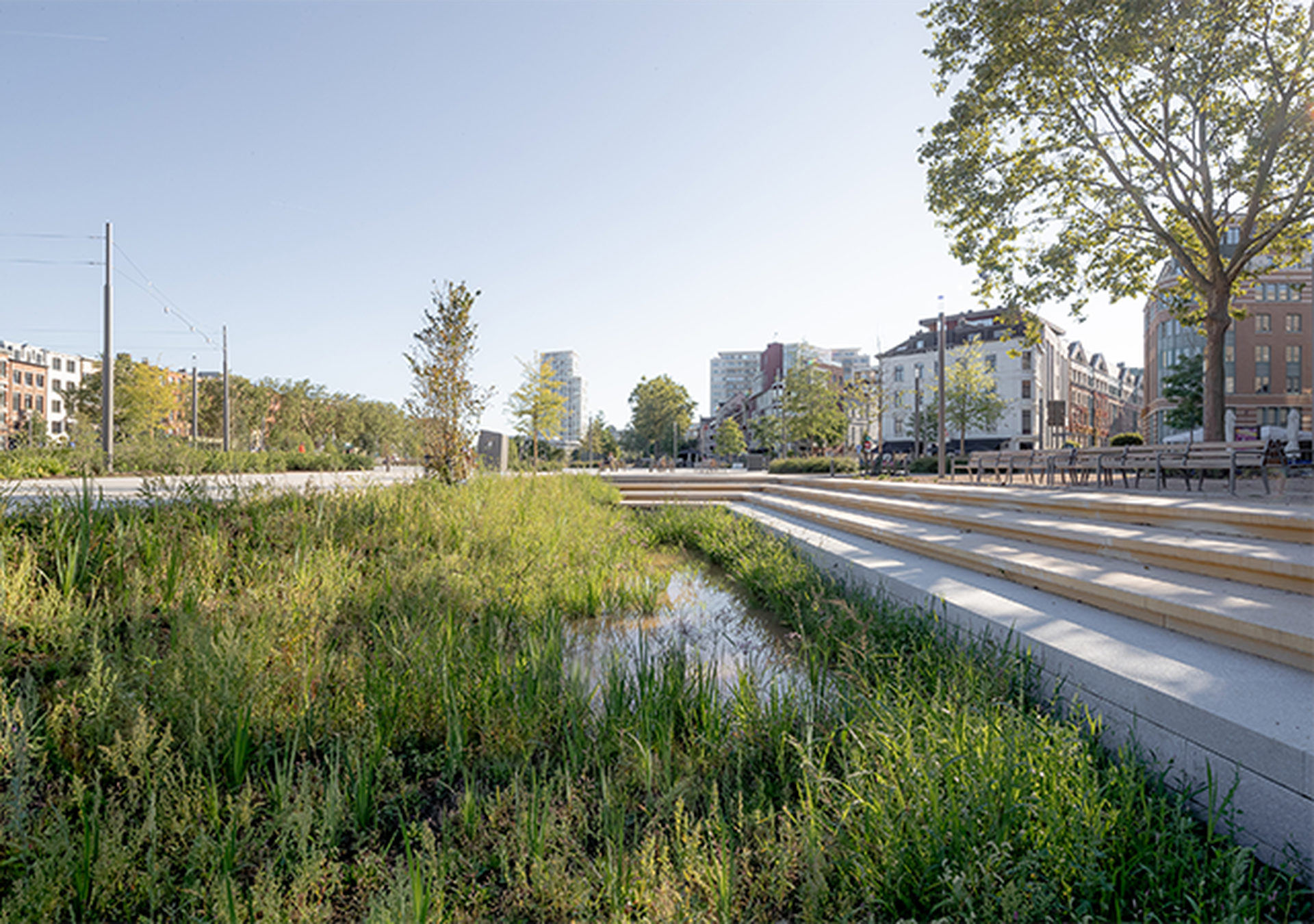
Wadi borders in Tarn - Gedempte Zuiderdokken, Antwerp
Natural stone also plays a role in Zuidpark in Antwerp (Gedempte Zuiderdokken), a project that won both the Public Space Award and the Public’s Award in 2025. Its design focuses on climate adaptation and water management, including elements such as a wadi and water storage features that help collect rainwater, allow infiltration and reduce pressure on the sewer system. In this context, natural stone supports the project with its durable, outdoor-proof performance, without compromising on the quality of the public realm.
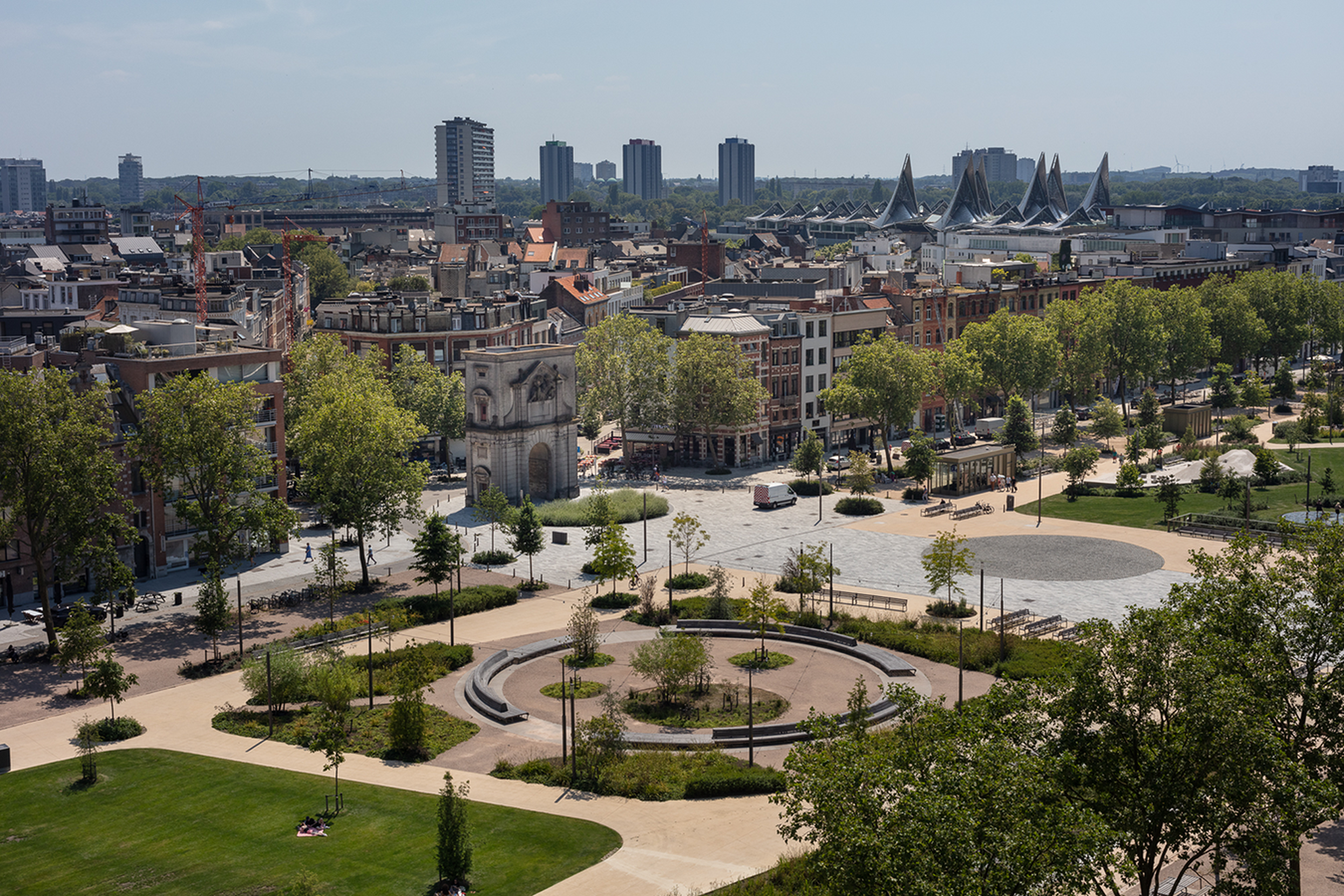
Zuidpark Antwerp - © Photography by Isabelle Pateer